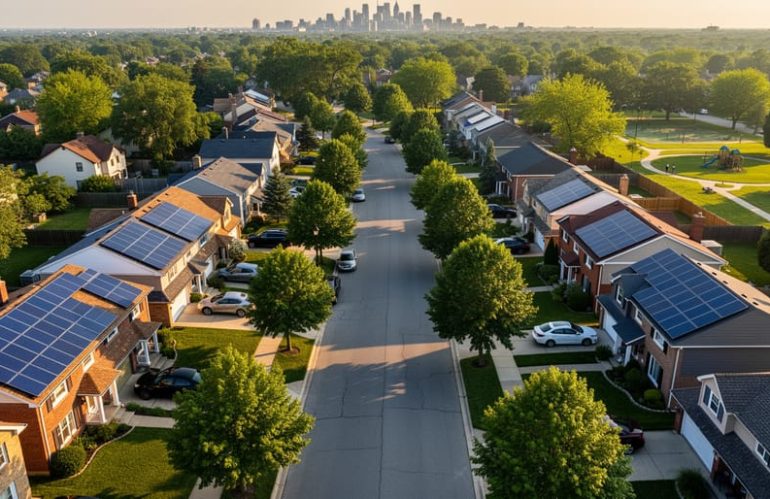
You’ve likely noticed more solar panels appearing in your neighborhood. Your friends are talking about their electricity bills dropping to nearly zero. Your coworker just became energy independent during last month’s grid outage. These aren’t random decisions—they’re part of a larger cultural shift happening right now in communities across America.
The decision to go solar isn’t just about technology or money. It reflects eight distinct cultural traits that researchers have identified in early adopters of clean energy. These characteristics explain why some homeowners immediately see solar as an obvious choice while others remain hesitant.
Understanding these traits isn’t about fitting into a stereotype. It’s about recognizing which values already guide your daily decisions—from the products you buy to the way you maintain your home—and seeing how solar naturally aligns with those priorities. Maybe you’re the type who researches major purchases thoroughly before committing. Perhaps you prioritize long-term financial planning over short-term convenience. Or you might simply want to reduce your environmental footprint while increasing your home’s value.
The homeowners already benefiting from solar share specific mindsets that made their transition smooth and rewarding. By exploring these eight cultural traits, you’ll discover which ones resonate with your own values and learn how they translate into practical advantages: lower energy costs, protection from utility rate increases, greater home resilience, and contribution to a cleaner future. Most importantly, you’ll see why your neighbors made a choice that’s working remarkably well for them.
The Culture Gap in Clean Energy Adoption

What We Mean by ‘Cultural Traits’
When we talk about cultural traits, we’re simply referring to the shared beliefs, everyday habits, and collective attitudes that shape how communities make decisions—particularly when it comes to embracing new technologies like solar energy. Think of these traits as the unspoken values that influence whether your neighbors install solar panels, how quickly new ideas spread through your community, and what makes certain neighborhoods early adopters of clean energy adoption.
These aren’t abstract academic concepts. Cultural traits are the real-world factors that determine whether homeowners see solar as a smart financial move, a way to express environmental values, or simply what forward-thinking families in their area are doing. They explain why some communities embrace solar rapidly while others take longer to warm up to the idea. Understanding these eight specific traits helps you recognize which factors might be influencing your own decision-making process—and why going solar might align perfectly with your community’s values and your personal goals for energy independence and cost savings.
The 8 Cultural Traits That Drive Solar Adoption
1. Future-Oriented Thinking
The homeowners who embrace solar energy share a common mindset: they look beyond the price tag of installation day and focus on the decades of savings ahead. While the upfront investment might seem significant, early adopters run the numbers and see a different story. They calculate what they’ll save over 25 or 30 years, factoring in rising electricity rates and the predictable, locked-in cost of solar power.
Take Sarah, a homeowner in California, who initially hesitated at the installation cost. After sitting down with a calculator, she realized her system would pay for itself in seven years, then provide free electricity for potentially two more decades. That’s thousands of dollars staying in her pocket instead of going to the utility company every single month.
This forward-thinking approach transforms solar from an expense into an investment. Early adopters understand that every monthly electric bill they avoid is money working for them. They’re not just thinking about today’s budget, they’re planning for their financial future and creating a legacy of energy independence that adds lasting value to their homes.
2. Environmental Stewardship Values
For many solar adopters, environmental values aren’t rooted in abstract climate data or policy debates. Instead, they’re deeply personal, tied to the legacy they want to leave for their children and grandchildren. These homeowners see their solar panels as a tangible way to ensure the next generation inherits cleaner air, healthier communities, and a more stable planet.
This perspective shifts solar from a purely financial decision to a meaningful family investment. You’re not just reducing your carbon footprint by thousands of pounds annually—you’re modeling responsible choices for your kids and demonstrating that individual actions matter. Many solar homeowners report feeling genuine pride knowing their home actively contributes to a cleaner future rather than passively consuming fossil fuels.
The beauty of this value is that it aligns perfectly with practical benefits. The same solar system that shrinks your environmental impact also slashes your monthly electric bills, often saving families hundreds annually. You’re not sacrificing comfort or budget for the environment—you’re improving both simultaneously. This makes environmental stewardship accessible and rewarding, proving that caring for the planet and your family’s financial well-being aren’t competing priorities but complementary goals.
3. Financial Independence Mindset
For many solar adopters, the decision comes down to one simple desire: taking control of their energy costs. When you rely entirely on the utility company, you’re at the mercy of rate increases that can arrive without warning on your monthly bill. Solar panels flip this dynamic, allowing you to generate your own electricity and lock in predictable energy costs for decades.
This financial independence mindset resonates strongly with homeowners who value stability and control over their household budget. Instead of wondering how much your next electric bill will be, you gain visibility into your energy production and consumption. You’re no longer a passive consumer but an active participant in your home’s energy future.
Beyond the numbers, this trait connects to a deeper cultural value of self-sufficiency. Just as growing your own vegetables or managing home repairs provides satisfaction and autonomy, producing your own clean energy offers tangible independence. You’re less vulnerable to market fluctuations and infrastructure issues while protecting yourself from utility rate hikes that have consistently outpaced inflation in many regions. This combination of financial predictability and personal empowerment makes solar adoption a natural choice for those who prioritize control over their household expenses and long-term security.
4. Community Influence and Social Proof
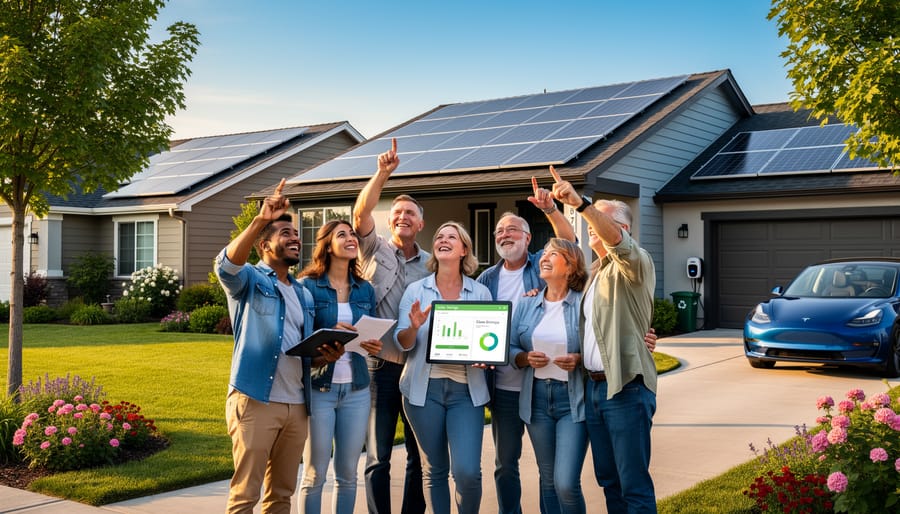
You’ve probably noticed it yourself: once one house on your street gets solar panels, suddenly three more follow suit. This isn’t coincidence—it’s the powerful neighbor effect in action. When we see people in our community making a change, it normalizes that decision and makes it feel less risky and more achievable.
Research shows that each new solar installation increases the likelihood of nearby homes going solar by up to 63% within the first year. Seeing those panels on your neighbor’s roof provides instant social proof that solar works, that it’s a smart financial move, and that it’s something people like you actually do.
This ripple effect creates entire solar-friendly neighborhoods. In California, some communities have seen block after block transform as homeowners realize they’re not pioneers taking a leap—they’re simply joining a practical trend that’s already working for families just like theirs.
The neighbor effect works because it answers questions you didn’t even know you had. You can see the panels aren’t an eyesore. You notice your neighbor isn’t complaining about reliability issues. You realize that if they could navigate the process, so can you. This visible proof removes psychological barriers and transforms solar from an abstract concept into a concrete, achievable reality that’s already benefiting people in your immediate community.
5. Openness to Technology
Some communities thrive on innovation while others prefer tried-and-true methods. This mindset significantly influences solar adoption rates. Homeowners who embrace new solutions tend to see solar panels as an exciting upgrade rather than a risky experiment.
The good news? Solar technology isn’t experimental anymore. With over 3 million residential installations in the U.S. alone, it’s become mainstream. Modern panels are more efficient, affordable, and reliable than ever before, backed by 25-year warranties that provide peace of mind.
If you consider yourself tech-savvy or early-adopter-curious, solar fits naturally into that mindset. You’re not abandoning tradition—you’re choosing a smarter way to power your home. Many homeowners discover that switching to solar feels less like a leap into the unknown and more like a logical next step, similar to upgrading to a smartphone or smart thermostat. The technology works quietly in the background while you enjoy lower bills and energy independence.
6. Trust in Expert Guidance
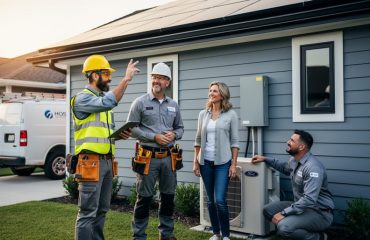
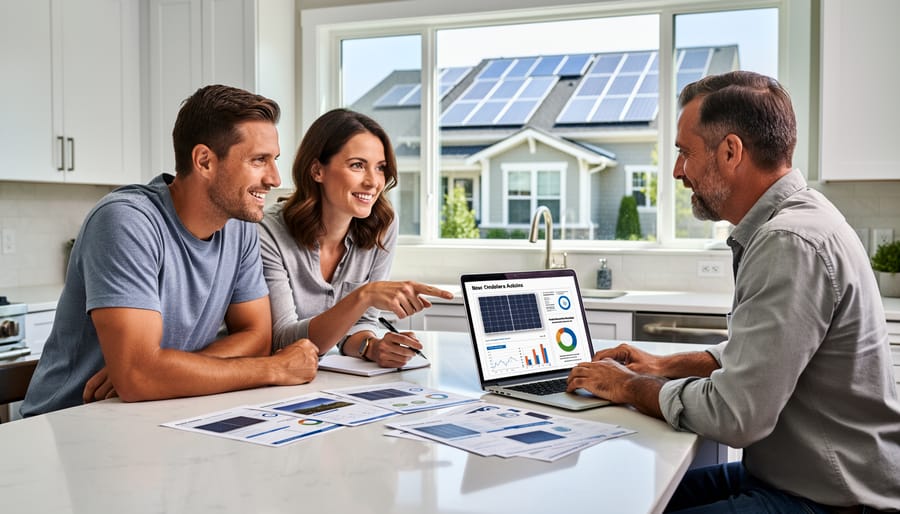
Making the switch to solar can feel overwhelming with so much information available online. That’s where trusting expert guidance becomes incredibly valuable. Homeowners who succeed in their solar journey recognize that professional consultations cut through the noise and misconceptions that often hold people back.
Many myths still circulate about solar energy—from outdated beliefs about cost to misunderstandings about how panels perform in different climates. The reality is that solar technology has advanced dramatically, yet these old stories persist. By consulting with certified solar professionals, you get accurate, current information tailored to your specific home and energy needs.
Think of it like working with a financial advisor or contractor for home renovations. You wouldn’t rely solely on internet forums for major decisions affecting your home’s value and your family’s finances. Solar experts can assess your roof’s orientation, calculate your actual savings potential, and explain available incentives in plain language.
This doesn’t mean abandoning your own research. The most successful solar adopters combine their own learning with professional guidance. They ask questions, seek second opinions, and choose installers with proven track records. This balanced approach helps you feel confident in your decision while avoiding costly mistakes based on incomplete or misleading information.
7. Home Pride and Investment Mentality
For most homeowners, your house is more than just shelter—it’s your biggest financial asset and a reflection of your values. You invest in upgrades that enhance both your daily living and your home’s worth. Whether it’s renovating the kitchen, updating landscaping, or adding a deck, these improvements serve a dual purpose: they make your life better now while building equity for the future.
Solar panels fit perfectly into this investment mentality. Like replacing old windows or upgrading HVAC systems, solar improves your home’s functionality while increasing its market value. Studies consistently show that homes with solar installations sell faster and command premium prices. Buyers appreciate lower energy bills and the environmental benefits that come with the home.
The beauty of solar is that it delivers immediate quality-of-life improvements—lower monthly expenses and energy independence—while appreciating as an asset. Unlike purely aesthetic upgrades, solar actively pays you back through reduced utility costs, sometimes eliminating electricity bills entirely.
When you view your home through an investment lens, solar makes perfect sense. It’s not an expense; it’s a strategic upgrade that enhances your property value, reduces ongoing costs, and provides pride of ownership. Just as you’d proudly show guests your renovated kitchen, solar panels represent a smart homeowner who invests wisely in their property’s future.
8. Action-Oriented Rather Than Status Quo Bias
The biggest obstacle to going solar isn’t cost or technology—it’s the tendency to wait. Many homeowners get stuck in “analysis paralysis,” endlessly researching options while energy bills continue piling up. Those who successfully make the switch share a common trait: they’re comfortable taking informed action even when they don’t have every answer.
Think about it this way: staying with your current utility company is also a decision—one that costs you money every month with zero long-term benefit. Meanwhile, households that overcome inertia and move forward with solar adoption start saving immediately and lock in decades of predictable energy costs.
The good news? You don’t need perfect conditions to start. Modern financing options mean you can begin with little or no upfront investment. Installation typically takes just a few days. And most systems pay for themselves within 7-10 years while lasting 25-30 years.
The families who’ve already made the switch weren’t necessarily braver or wealthier—they simply recognized that waiting rarely makes the decision easier. Energy prices keep rising, but solar technology costs have stabilized. The best time to start saving is now, not “someday when everything aligns perfectly.”
Which Traits Do You Share?
Here’s a quick self-assessment: Which of these traits resonate with you? Maybe you love researching before making big decisions, or perhaps you’re the person in your neighborhood who tries new things first. You might prioritize long-term savings over immediate costs, or you simply care deeply about reducing your environmental footprint.
Good news: you don’t need all eight traits to be a great fit for solar energy. In fact, most successful solar homeowners we work with strongly identify with just two or three of these characteristics. If you’re reading this article right now, you’re already demonstrating the research-oriented and information-seeking traits that make someone perfect for solar adoption.
Think about which traits describe you best. Are you financially savvy and drawn to investments that pay off over time? That forward-thinking mindset is exactly what makes solar such a smart choice. Do you value community and want to be part of a larger movement toward sustainability? You’re not alone—millions of homeowners are joining the clean energy transition.
The beauty of solar technology today is that it meets people where they are. Whether your primary motivation is saving money, protecting the environment, gaining energy independence, or increasing your home’s value, solar delivers on all these fronts. You don’t need to check every box on a cultural traits list. You just need to recognize how your existing values and priorities align naturally with the benefits solar provides.
If you recognize even a few of these traits in yourself, you’re already part of a cultural movement toward energy independence and sustainability. Going solar isn’t just about installing panels on your roof—it’s about aligning your home with your values and taking control of your energy future.
The good news? You don’t need to embody all eight traits to make the switch. Whether you’re motivated by financial savings, environmental responsibility, community leadership, or simply the desire to be more self-reliant, solar energy offers tangible benefits that match your priorities. Thousands of homeowners have already made the transition, discovering that solar fits seamlessly into their lives while delivering real savings and peace of mind.
Recognizing these cultural traits in yourself is the first step. The next step is exploring how solar can work for your specific home and budget. The technology is proven, the financial incentives are available, and the community of solar homeowners continues to grow. Your journey toward energy independence can start today.