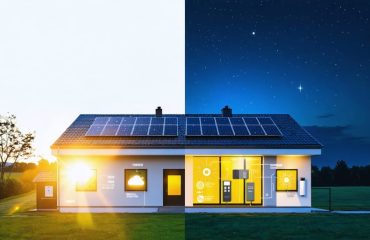
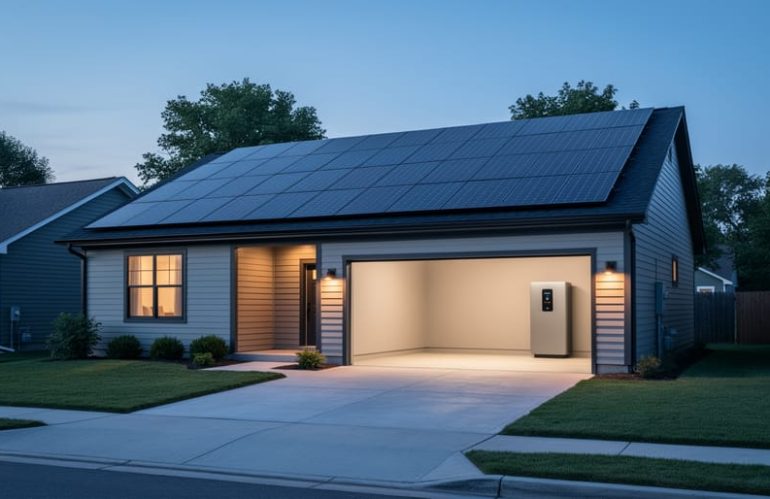
A 7kW solar system with battery backup delivers enough electricity to power the average American home while protecting you from grid outages and rising utility costs. This system size typically generates 28-35 kilowatt-hours daily, covering everything from air conditioning and appliances to electric vehicle charging, while storing excess energy for nighttime use or emergencies.
The battery component transforms your solar investment from simple bill reduction into complete energy independence. When the grid goes down, your home stays powered. When electricity rates spike during peak hours, you draw from your stored solar energy instead of expensive grid power. This means predictable energy costs for decades, not just modest savings.
Expect total installation costs between $21,000 and $28,000 before incentives, with the federal solar tax credit immediately reducing that by 30 percent. Most homeowners see payback within 7-10 years through eliminated electric bills, with systems lasting 25-30 years. The math is straightforward: if you currently pay $150-250 monthly for electricity, you’re looking at $45,000-75,000 in savings over the system’s lifetime.
The reality is simpler than you might think. Professional installers handle permitting, equipment selection, and grid connection. Your main decisions involve choosing between battery brands, determining backup priorities, and selecting financing options. Within weeks, you’ll generate and store your own clean energy while watching your utility meter run backward.
What Makes a 7kW Solar System Right for Your Home
A 7kW solar system is like having a personal power plant on your roof that’s perfectly sized for the typical American home. If you live in a 2,000 to 2,500 square foot house with a family of three to five people, this system size likely matches your energy needs beautifully.
Let’s put this in perspective. A 7kW system generates roughly 28 to 35 kilowatt-hours of electricity per day, depending on your location and sun exposure. That’s enough to comfortably run your refrigerator, air conditioning, washing machine, dishwasher, lights, computers, and television without breaking a sweat. You could even charge an electric vehicle while keeping everything else humming along.
Think about your current electricity bill. If you’re paying for 800 to 1,000 kilowatt-hours per month, a 7kW system should cover most, if not all, of your energy consumption during sunny months. With battery backup included, you’ll have power stored for nighttime use and cloudy days, maximizing your independence from the grid.
How do you know if this size is right for you? Start by looking at your recent utility bills. Check your average monthly kilowatt-hour usage over the past year. If you consistently use between 700 and 1,100 kWh monthly, a 7kW system hits the sweet spot. Homes with electric heating or cooling in extreme climates might need slightly more capacity, while energy-efficient homes could thrive with this setup.
The beauty of a 7kW system is that it’s not too small to make a real difference, yet not oversized and wasteful for typical household needs. It strikes that perfect balance between generating substantial savings on your electricity bills and avoiding unnecessary upfront costs. For most families living in moderately-sized homes with standard appliances and lifestyle habits, this system delivers exactly what you need to embrace energy independence confidently.
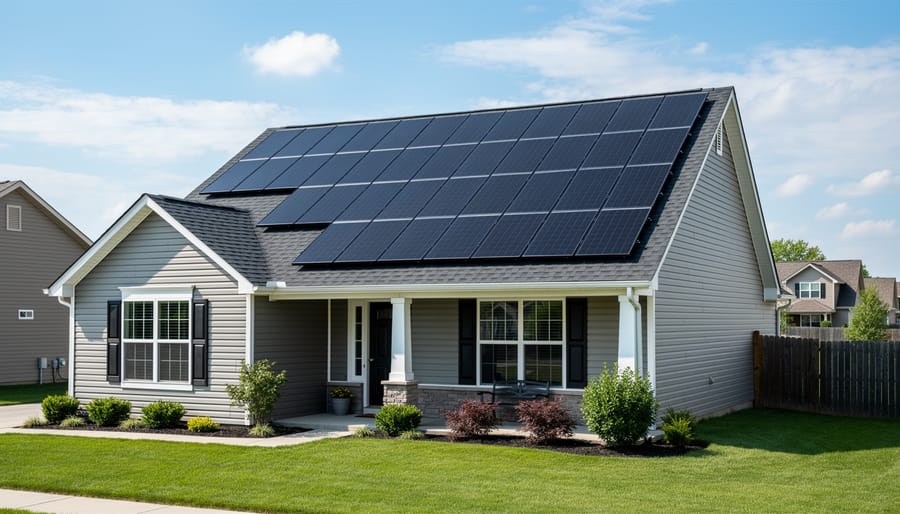
Battery Backup: Your Safety Net When the Grid Goes Down

How Much Power Can You Store?
Most 7kW solar systems pair beautifully with battery banks ranging from 10 to 15 kilowatt-hours (kWh). To put that in perspective, think of it like a fuel tank for your home—the larger the capacity, the longer you can run on stored sunshine when the grid goes down or after sunset.
A 10kWh battery typically provides 8 to 12 hours of backup power for essential appliances, depending on your usage. This means you can keep your refrigerator humming, lights on, WiFi router running, and charge your devices through the night. A 15kWh system extends that coverage even further, potentially powering your home through an entire day of typical use or multiple days if you’re conservative with energy.
Here’s what you can realistically run during an outage: your refrigerator (which cycles on and off), several LED lights throughout your home, your internet setup for remote work, a few laptops and phones charging, and even your coffee maker for that essential morning brew. Many homeowners can also run a window AC unit or space heater intermittently.
Understanding how battery storage works helps you make smarter decisions about which appliances to prioritize. The beauty of this setup is the peace of mind—knowing you won’t lose food during extended outages or be left in the dark when your neighborhood loses power. Plus, you’re maximizing the value of every ray of sunshine your panels capture.
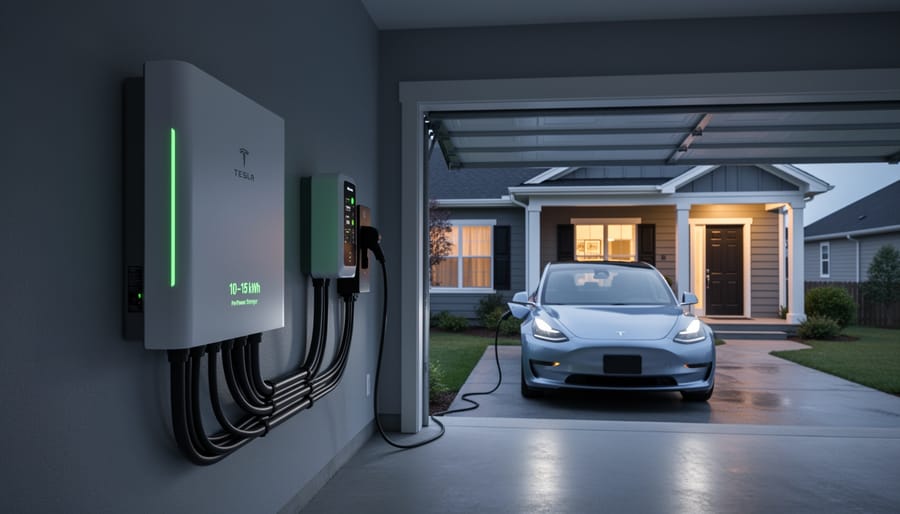
Choosing the Right Battery Size for Your Needs
The right battery size depends entirely on what you want to keep running during an outage. Think of it as prioritizing your power needs rather than trying to back up everything at once.
Start by considering two main approaches. Whole home backup means powering your entire house during outages, which typically requires 20-30 kWh of battery storage or more. This option gives you complete peace of mind but comes with a higher upfront cost. Essential loads backup focuses on keeping critical items running, usually requiring 10-15 kWh of storage, making it more budget-friendly while still protecting what matters most.
Here’s how different households might approach battery sizing:
A family of four prioritizing essentials would typically need around 10-13 kWh to run their refrigerator, a few lights, WiFi router, phone chargers, and maybe one window AC unit for 12-24 hours. This covers the basics without breaking the bank.
A home office professional who relies on stable power for work might opt for 13-15 kWh to support their computer equipment, internet connection, home office lighting, and essential appliances throughout the workday and overnight.
Households with medical equipment or elderly family members often choose 15-20 kWh or more to ensure uninterrupted power for critical devices, climate control, and full kitchen access during extended outages.
Your 7kW solar system can charge most battery sizes effectively during daylight hours, extending your backup time significantly beyond just stored battery power. The sweet spot for many homeowners pairing with a 7kW system falls between 10-15 kWh, balancing cost with practical backup coverage. Consider your must-have items, typical outage duration in your area, and budget to find your ideal match.
The Financial Benefits That Keep Adding Up
Monthly Savings on Your Electric Bill
A 7kW solar system with battery backup can significantly reduce your monthly electric bills, with most homeowners saving between $80 to $150 per month depending on their location and energy usage. Over the course of a year, that translates to roughly $960 to $1,800 back in your pocket.
The savings come from two main sources. First, you’re generating your own electricity during the day instead of buying it from the utility company. Second, through a process called net metering, many utility companies will actually credit your account when your system produces more power than you use. Think of it like rolling over unused cell phone minutes. When your panels generate excess electricity on sunny days, that power flows back to the grid, and your meter literally runs backward, giving you credits to use when you need power at night or during cloudy periods.
The battery backup adds another layer of savings by reducing your reliance on the grid during expensive peak hours. Many utilities charge more for electricity in the evening when demand is highest. Your battery stores excess solar energy generated during the day and releases it during these pricier times, helping you avoid those premium rates.
Beyond the monthly dollar savings, you’re also protecting yourself from rising electricity costs. While utility rates typically increase 3-5% annually, your solar production costs stay predictable and stable for decades to come.
Incentives and Tax Credits Working in Your Favor
Here’s the good news: going solar costs significantly less than you might think, thanks to financial incentives that are genuinely easy to access. The federal solar Investment Tax Credit (ITC) currently offers 30% back on your total system cost, including the battery. That means if your 7kW solar system with battery costs $25,000, you’ll receive $7,500 as a credit on your federal taxes. This isn’t a deduction—it’s a dollar-for-dollar reduction in what you owe.
Beyond federal savings, many states offer additional incentives that stack on top of the ITC. These vary by location but can include state tax credits, property tax exemptions, and sales tax waivers. Some states provide performance-based incentives that pay you for the clean energy you generate over time.
Your local utility company may also offer rebates for installing solar with battery backup. These programs recognize that home batteries help stabilize the grid during peak demand times, so utilities reward you for being part of the solution.
Accessing these incentives is straightforward. Reputable solar installers handle most of the paperwork and ensure you claim everything available. You’re not navigating complex bureaucracy alone—your installer becomes your guide through the process. The key is acting while these programs remain available, as some incentives have end dates or funding limits. These are real dollars returning to your pocket, making your transition to energy independence more affordable today.
What to Expect for Total Investment
A complete 7kW solar system with battery backup typically ranges from $20,000 to $35,000 before incentives. The exact price depends on your panel choice, battery size, roof complexity, and location. Solar panels usually account for 60-70% of the total cost, while battery costs make up the remainder.
Think of this as an investment in your home, not just an expense. With federal tax credits reducing costs by 30% and state incentives potentially lowering them further, most homeowners see their systems pay for themselves in 7-12 years. After that, you’re generating free electricity while protecting yourself from rising utility rates and power outages. The system adds value to your property too, often increasing resale appeal for energy-conscious buyers.
System Components: What You’re Actually Getting
Solar Panels That Do the Heavy Lifting
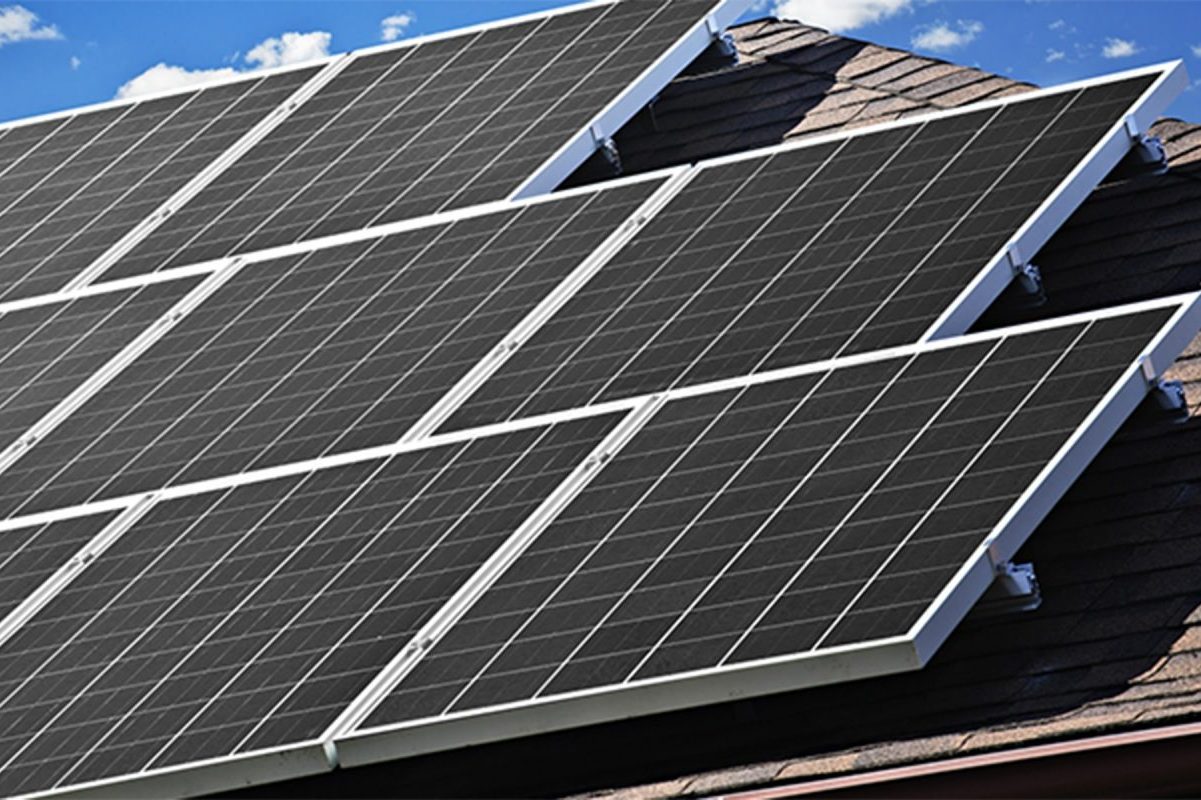
Your typical 7kW system needs between 18 and 22 solar panels, depending on each panel’s wattage. Modern panels usually range from 320 to 400 watts, with higher-wattage options meaning fewer panels on your roof.
Here’s the good news: today’s solar panels are built to last. Quality panels come with 25-year performance warranties, guaranteeing they’ll still produce at least 80% of their original output after a quarter-century. Most manufacturers also offer 10-15 year product warranties covering defects.
When choosing panels, look for brands with strong track records and tier-one certifications. These panels undergo rigorous testing for extreme weather, from hailstorms to high winds. They’re designed to keep working through whatever Mother Nature throws at them.
Maintenance is refreshingly simple. Rain typically handles the cleaning, though you might occasionally need to hose off dust or debris in particularly dry climates. No moving parts means nothing wears out. Your panels essentially sit there quietly generating power for decades, asking very little in return. It’s the kind of set-it-and-forget-it investment that actually delivers on that promise.
Inverter and Battery Technology
The heart of your battery backup system is the hybrid inverter, which acts like a smart traffic controller for your electricity. It converts the DC power from your solar panels into AC power your home uses, while also managing when to store energy in your battery and when to pull from it. Think of it as the brain that decides whether to use solar power immediately, store it for later, or draw from the grid when needed.
When it comes to batteries, lithium-ion technology has become the gold standard for home solar systems. These are similar to what powers your smartphone or electric car, but scaled up for your home. Lithium-ion batteries last longer (typically 10-15 years), charge faster, and maintain their capacity better than older lead-acid alternatives. They’re also compact and require virtually no maintenance.
Quality matters significantly here. A reliable inverter and battery ensure your backup system works when you need it most, whether that’s during a power outage or peak evening hours. Premium components may cost more upfront, but they deliver better performance, longer warranties, and greater peace of mind. The good news? Prices have dropped considerably in recent years, making quality battery backup more accessible than ever before.
Smart Monitoring at Your Fingertips
Modern solar energy management systems put complete control in your pocket. Through simple smartphone apps, you can track exactly how much energy your panels are producing, what your home is using, and how much power remains in your battery—all in real-time. These user-friendly interfaces display your data through easy-to-read graphs and charts, so you don’t need a degree in engineering to understand your system’s performance. You’ll receive helpful notifications when your battery is fully charged or if something needs attention. Many homeowners find checking their solar app becomes a satisfying daily habit, watching their savings grow while their carbon footprint shrinks. This transparency helps you make smarter decisions about when to run major appliances, maximizing your energy independence.
Installation: Easier Than You Think
Good news: installing a 7kW solar system with battery backup is much more straightforward than most homeowners imagine. Gone are the days of complicated, drawn-out installations that disrupt your daily life for weeks on end.
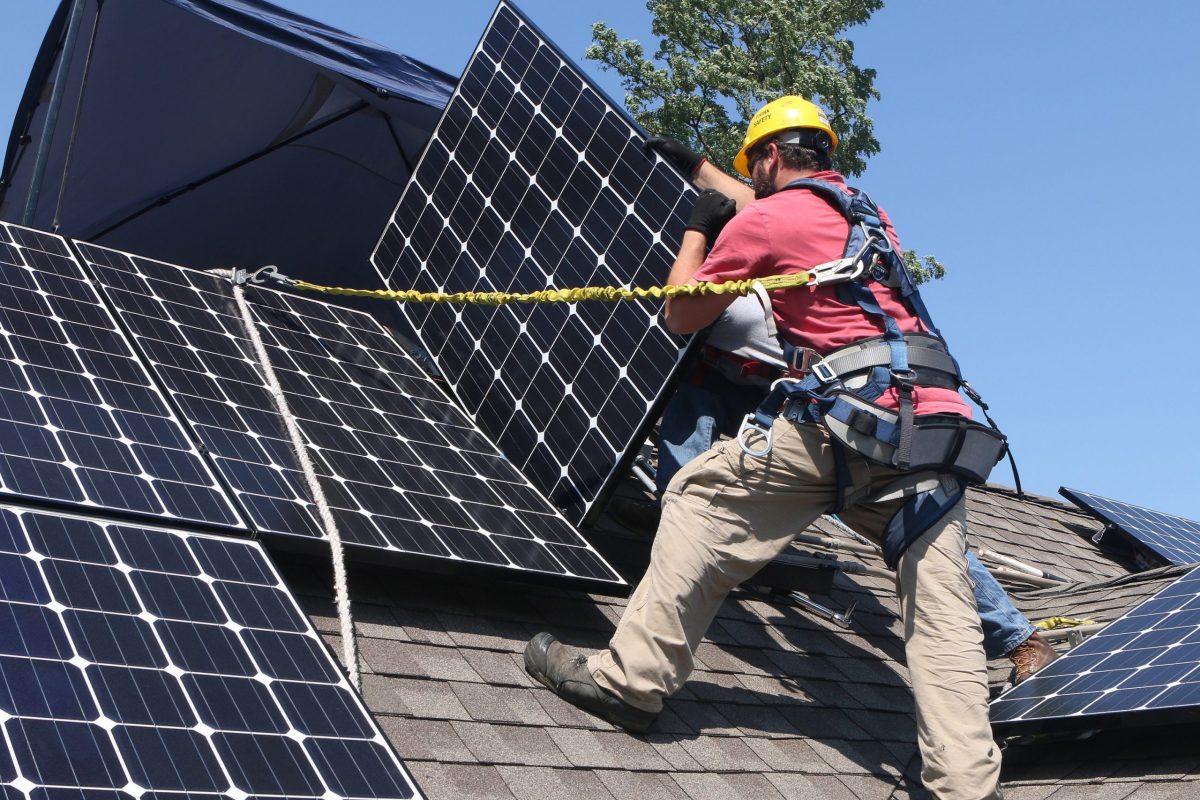
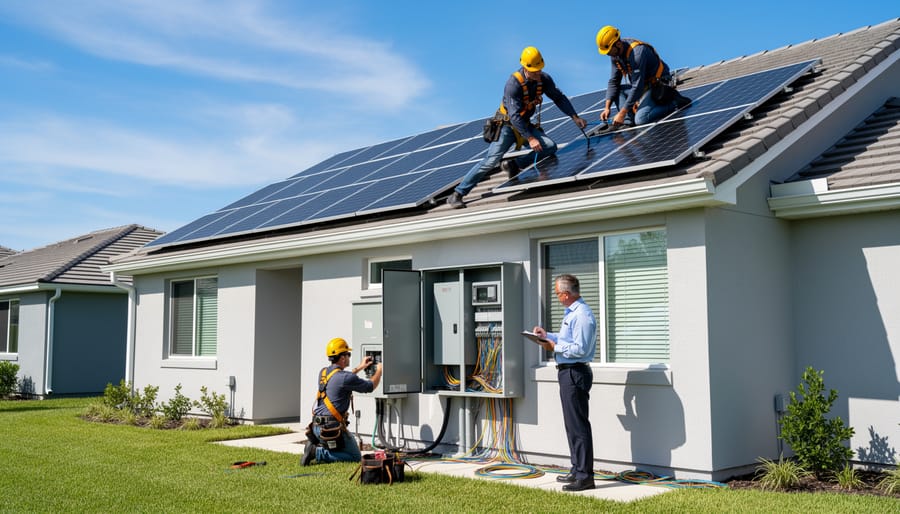
Most residential installations take just one to three days to complete, depending on your roof configuration and local permitting requirements. Your installation team handles everything from mounting the panels to connecting the battery system and integrating it with your home’s electrical panel. You won’t need to become an expert or manage the technical details yourself.
Here’s what the typical process looks like. After your initial consultation and site assessment, your solar provider handles the paperwork, including permits and utility applications. Once approved (usually within two to six weeks), the installation crew arrives to mount your panels, install your battery backup unit, and connect everything to your home’s power system. A local inspector then verifies the work meets code requirements, and you’re ready to start generating clean energy.
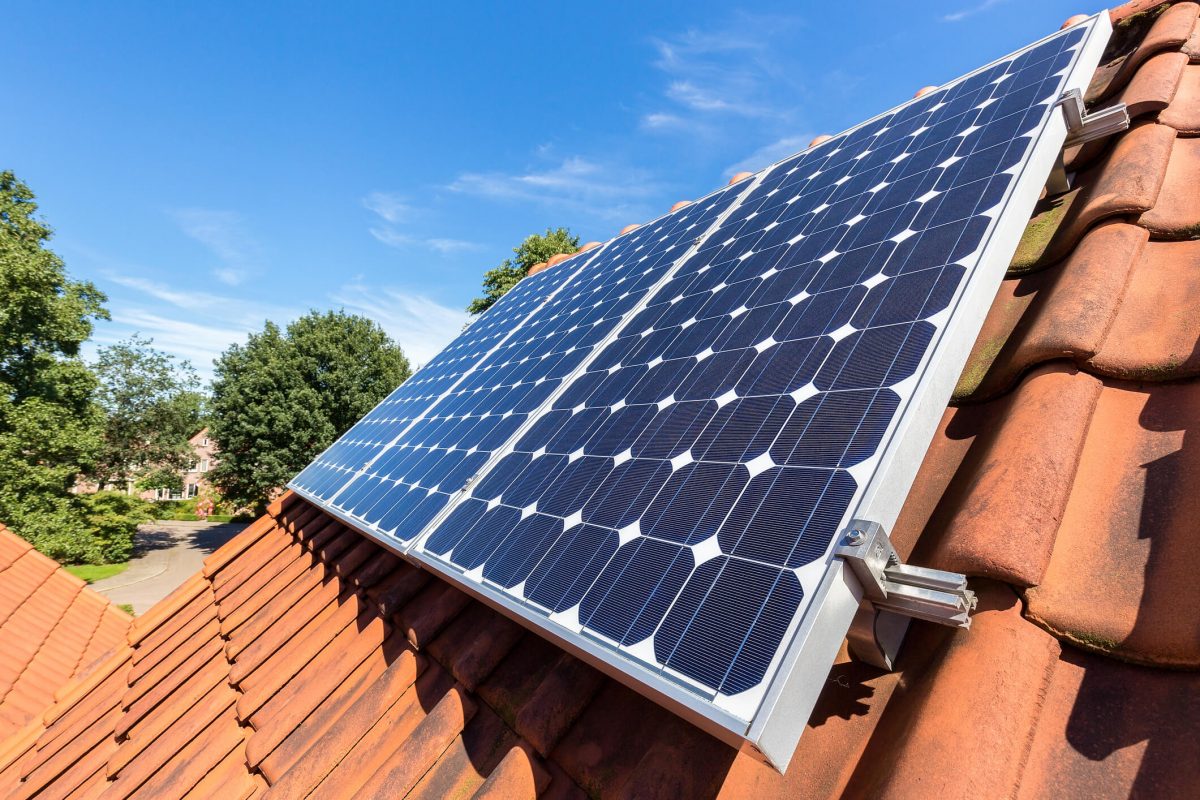
Many homeowners worry about roof damage or structural issues, but professional installers are trained to preserve your roof’s integrity. They use specialized mounting systems designed to protect against leaks and distribute weight evenly. Your installer will assess your roof’s condition during the site visit and address any concerns before moving forward.
The battery component adds minimal complexity. Modern battery systems are compact, often wall-mounted units that integrate seamlessly with your solar panels. Your installer configures the system to automatically switch to battery power during outages, so you don’t need to flip switches or monitor anything manually.
Throughout this process, you’re supported by experienced professionals who’ve completed hundreds of installations. They answer your questions, coordinate with local authorities, and ensure your system operates at peak performance. You’re investing in both equipment and expert guidance, making the transition to solar energy surprisingly hassle-free.
Busting Common Myths About Solar Battery Systems
Let’s set the record straight on some persistent myths that might be holding you back from enjoying the benefits of a 7kW solar system with battery backup.
The “batteries are too expensive” concern was valid years ago, but the landscape has changed dramatically. Battery prices have dropped by over 80% in the past decade, and when you factor in federal tax credits, state incentives, and utility rebates, the actual cost becomes quite manageable. More importantly, batteries pay for themselves through electricity bill savings, protection from rising utility rates, and avoiding costly power outages. Many homeowners find their investment returns within 7-10 years, with systems lasting 25+ years.
Another common misconception is that solar doesn’t work well in cloudy climates. Here’s the truth: solar panels generate electricity from daylight, not just direct sunshine. Germany, one of the cloudiest countries in Europe, is also one of the world’s solar leaders. Your 7kW system will produce energy even on overcast days, and this is where battery backup becomes especially valuable. It stores excess energy from sunny periods to use when production is lower, ensuring consistent power availability regardless of weather conditions.
Many people worry that maintenance will be complicated and expensive. The reality is refreshingly simple: modern solar battery systems are designed for minimal upkeep. Solar panels need occasional cleaning (rain often does this naturally) and an annual inspection. Today’s lithium batteries are virtually maintenance-free, with sophisticated monitoring systems that alert you to any issues before they become problems. Most homeowners spend less time maintaining their solar system than they do on their lawn.
Finally, some believe the technology is too new and unproven. Solar technology has been around for decades and is now thoroughly tested and reliable. Battery systems have evolved from the same technology powering millions of electric vehicles worldwide. Major manufacturers offer warranties of 10-15 years on batteries and 25+ years on panels because they’re confident in the technology’s longevity and performance.
The bottom line? Today’s solar battery systems are affordable, reliable, and easier to own than ever before. The myths simply haven’t kept pace with the impressive advances in solar technology.
Making the switch to a 7kW solar system with battery backup isn’t just a smart financial decision—it’s an investment in your independence and peace of mind. You’ve seen how this system can slash your electricity bills, protect you during power outages, and pay for itself over time through savings and incentives. The best part? This isn’t some futuristic technology reserved for tech enthusiasts or the wealthy. It’s a practical, achievable solution for average homeowners like you.
The twin benefits are clear: real financial savings that add up year after year, and the freedom to generate and store your own clean energy. You’re no longer at the mercy of rising utility rates or unexpected blackouts. And while the environmental impact—reducing your carbon footprint and contributing to a cleaner planet—is an incredible bonus, the immediate benefits to your wallet and your daily life are reason enough to move forward.
The solar industry has matured significantly, making installation straightforward and financing options more accessible than ever. Whether you choose to buy outright, finance, or lease, there’s a path that fits your budget. The hardest part is simply taking that first step: getting quotes from reputable installers and seeing exactly what this system can do for your specific home. Your energy independence starts with one decision, and that decision is well within reach.