New Hampshire homeowners have a new reason to pay attention to the clean energy revolution unfolding in their backyard. Q Hydrogen, a groundbreaking company based in the Granite State, is pioneering technology that transforms everyday water into clean-burning hydrogen fuel using renewable electricity. This isn’t science fiction—it’s happening now, and it could reshape how you power your home and vehicle within the next decade.
The company’s innovative approach centers on electrolyzer systems that split water molecules into hydrogen and oxygen, creating a carbon-free fuel that can be stored and used when solar panels aren’t producing power. Think of it as a battery alternative that never degrades and can fuel both your home’s heating system and your future hydrogen vehicle. While Q Hydrogen focuses on commercial and industrial applications today, their technology represents the same solar-to-hydrogen technology that experts predict will eventually reach residential markets.
For New Hampshire residents already considering solar panels, understanding Q Hydrogen’s work provides valuable context for the energy landscape ahead. The company’s presence signals that hydrogen infrastructure is developing locally, which means future homeowners might have access to hydrogen heating systems or refueling stations sooner than expected. More immediately, their innovations highlight why investing in solar energy today positions you perfectly for tomorrow’s hydrogen-powered homes, creating a clear pathway from current renewable options to the next generation of clean energy independence.
What Makes Q Hydrogen Different from Traditional Energy Storage
From Sunlight to Hydrogen: The Simple Process
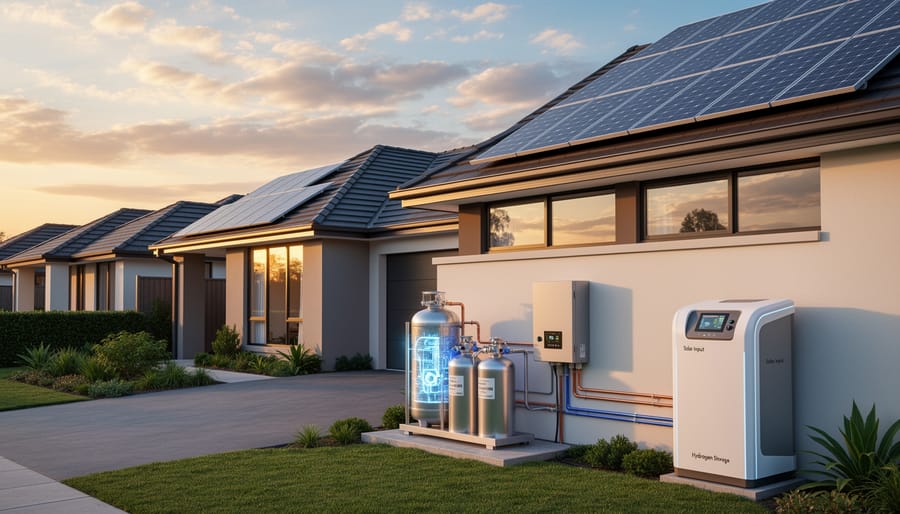
The solar-to-hydrogen process is surprisingly straightforward. When your solar panels produce more electricity than your home needs, that excess energy typically goes back to the grid. With hydrogen technology, that surplus power can instead be put to work creating fuel for later use.
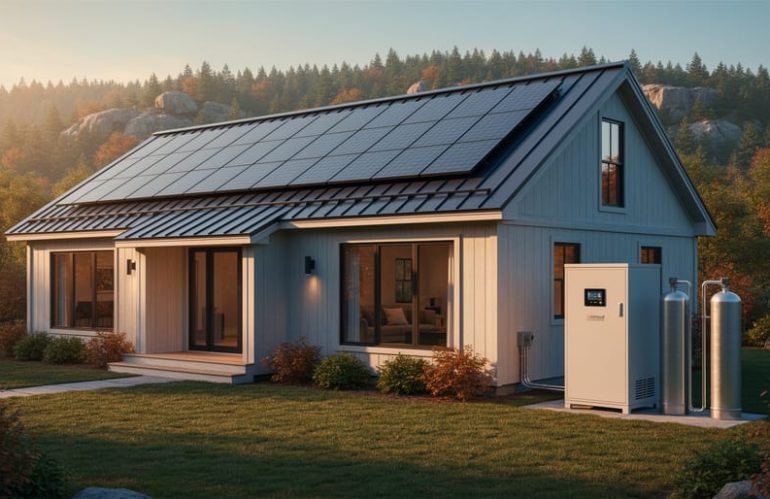
Here’s how it works: excess solar electricity powers a device called an electrolyzer, which splits ordinary water into hydrogen and oxygen. The hydrogen gas is then safely stored in tanks, ready to be converted back into electricity when the sun isn’t shining or when your energy demand is high. Think of it like charging a battery, but instead of storing electricity directly, you’re creating a clean fuel that can hold energy for weeks or even months.
The beauty of this system is its simplicity. You start with three abundant resources: sunlight, water, and air. Through a clean process with zero emissions, you end up with storable energy that gives you true independence from the grid. No harmful byproducts, no carbon emissions, just pure hydrogen fuel waiting to power your home when you need it most.
Why New Hampshire Is Leading This Energy Shift
New Hampshire offers unique advantages that make it an ideal testing ground for hydrogen innovation. The state’s progressive clean energy policies, combined with its commitment to renewable energy targets, create a supportive environment for emerging technologies. New Hampshire homeowners already show strong interest in energy independence, with solar adoption rates climbing steadily over the past decade.
The region’s climate presents real-world conditions that test hydrogen systems thoroughly, ensuring any technology developed here can handle diverse weather patterns. Additionally, New Hampshire’s strong network of research institutions and technology companies provides the expertise needed to refine and scale hydrogen solutions. The state’s compact size allows for efficient pilot programs that can demonstrate results quickly.
For homeowners, this means you’re in a state that values energy innovation and creates opportunities for early adoption of cost-saving technologies. While large-scale hydrogen deployment may be years away, the groundwork being laid today positions New Hampshire residents to benefit from multiple clean energy options as they become available and affordable.
How Power-to-X Technology Benefits Your Home
Year-Round Energy Independence
New Hampshire’s dramatic seasons create a unique energy challenge: solar panels generate abundant electricity during long summer days, but production plummets precisely when winter heating demands peak. This is where hydrogen technology becomes a game-changer for true energy independence.
Think of hydrogen storage as a seasonal battery for your home. During sunny months, excess solar power that would otherwise go unused converts water into hydrogen fuel through a simple process. This hydrogen safely stores all that summer sunshine in compact tanks. When winter arrives and your solar panels slow down, the stored hydrogen converts back into electricity and heat exactly when you need it most.
Unlike traditional batteries that lose charge over time, hydrogen can store energy for months without degradation. This means the surplus energy your panels create in July can warm your home in January. For New Hampshire homeowners, this solves the frustrating reality of buying expensive grid power in winter despite having solar panels. With hydrogen storage, you’re not just reducing your energy bills during peak production months—you’re achieving genuine year-round independence from rising utility costs and unpredictable rate hikes.
Lower Energy Bills Without Sacrificing Comfort
New Hampshire homeowners making the switch to renewable energy solutions are seeing real financial results. On average, households report saving $100 to $200 monthly on electricity costs after transitioning to solar energy systems. That adds up to $1,200 to $2,400 annually that stays in your wallet instead of going to the utility company.
The best part? These savings come without turning down the thermostat in winter or limiting air conditioning use during humid New Hampshire summers. Many homeowners actually report improved comfort levels because modern energy-efficient systems paired with solar generation provide consistent, reliable power without the guilt of high bills.
Consider a typical Portsmouth family who reduced their annual energy costs by 70 percent while still running multiple computers for remote work, charging electric vehicles, and maintaining comfortable indoor temperatures year-round. Their lifestyle didn’t change, but their monthly expenses did dramatically.
These cost reductions become even more significant as traditional utility rates continue climbing. By locking in lower energy costs now, you’re protecting yourself from future rate hikes while contributing to a cleaner environment. It’s genuinely possible to live better while spending less.
Real-World Applications: What This Means for Homeowners
Pairing Solar Panels with Hydrogen Storage
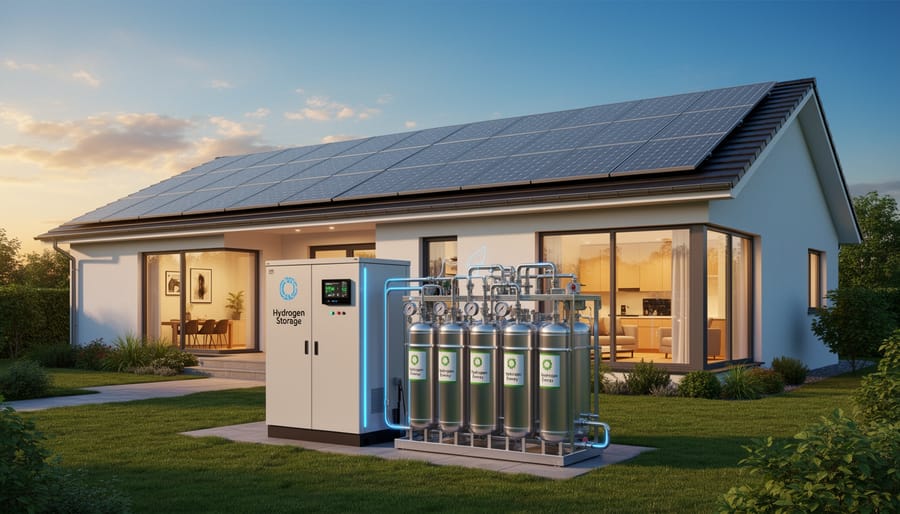
If you already have solar panels on your roof, you’re ahead of the curve in energy independence. The exciting news is that hydrogen storage could eventually complement your existing system, turning your home into an even more resilient energy hub.
Here’s the simple idea: your solar panels generate electricity during sunny days, sometimes more than you can use. Currently, excess power either feeds back to the grid or charges a battery if you have one installed. In the future, that surplus electricity could split water into hydrogen and oxygen through a process called electrolysis. The hydrogen gets stored for later use, giving you backup power during winter months when solar production drops or during extended cloudy periods.
Think of hydrogen storage as a long-term energy savings account, while traditional batteries handle day-to-day transactions. Batteries excel at short-term storage but lose charge over time. Hydrogen can sit for months without losing energy, making it ideal for seasonal storage.
While hydrogen home systems aren’t widely available yet, Q Hydrogen’s work in New Hampshire is paving the way. For now, installing solar panels positions you perfectly to add hydrogen storage when the technology becomes accessible and affordable for residential use.
Backup Power That Lasts Days, Not Hours
When your neighborhood loses power, traditional battery backup power systems typically keep your lights on for just a few hours, maybe a day if you’re lucky. Hydrogen storage changes that equation entirely. Because hydrogen can store significantly more energy in a smaller space than batteries, systems like Q Hydrogen’s technology can potentially power your home for days or even weeks during extended outages.
Think of it this way: a standard home battery might store enough energy to run your essentials through one night, while hydrogen storage acts more like having a full fuel tank that lasts much longer. This extended capacity means real peace of mind during severe weather events, which are becoming increasingly common in New Hampshire. You won’t need to worry about rationing power or choosing between keeping your refrigerator running and charging your phone. With hydrogen backup, you get true energy security that protects your family and your food supply when you need it most.
Heating Your Home with Solar-Made Hydrogen
New Hampshire winters demand serious heating solutions, and hydrogen offers an exciting possibility for the future. While natural gas currently heats most homes, hydrogen can work through the same infrastructure with modifications, potentially providing clean, renewable warmth without fossil fuels. The beauty of this approach lies in its year-round efficiency: your solar panels generate electricity during sunny months, which can create hydrogen for storage and use during darker, colder periods when heating demand peaks. Though widespread hydrogen heating remains a few years away, this technology addresses a real challenge for northern homeowners seeking complete energy independence. For now, pairing solar panels with modern heat pumps delivers immediate savings while positioning your home for future hydrogen integration.
Busting the Myths About Hydrogen Energy
Safety: Hydrogen vs. Natural Gas
Let’s clear up a common misconception: hydrogen is often perceived as more dangerous than natural gas, but the reality might surprise you. Both fuels require proper handling, but hydrogen actually has several safety advantages.
Hydrogen is the lightest element, meaning it disperses rapidly into the atmosphere if there’s a leak—unlike natural gas, which can pool in enclosed spaces. This quick dispersion significantly reduces explosion risk. Additionally, hydrogen requires more energy to ignite than natural gas, making accidental ignition less likely under normal conditions.
The main concern people have stems from hydrogen’s association with dramatic historical events, but modern hydrogen systems incorporate multiple safety features including leak detection, automatic shutoffs, and reinforced storage tanks. These technologies have been refined over decades of industrial use.
Natural gas, which millions of Americans use daily without incident, poses its own risks—carbon monoxide poisoning, for example, isn’t a concern with hydrogen since it burns cleanly into water vapor. Q Hydrogen’s approach focuses on implementing proven safety protocols that meet or exceed industry standards, ensuring homeowners can benefit from clean energy without compromising on safety. The key takeaway? With proper installation and maintenance, hydrogen systems can be just as safe as the conventional energy sources you’re already comfortable with.
Cost Reality: Investment vs. Long-Term Savings
Let’s be honest: hydrogen technology for homes isn’t quite ready for your wallet today. Current systems remain in the research and development phase, with costs that put them out of reach for most homeowners. However, understanding the trajectory helps you make smarter energy decisions now.
The good news? While we wait for hydrogen technology to mature and become affordable, solar energy offers immediate savings and a proven return on investment. Today’s solar systems typically pay for themselves within 7-10 years through reduced electricity bills, and New Hampshire’s net metering policies sweeten the deal even further.
Think of it this way: investing in solar now positions you perfectly for future energy innovations. Solar panels last 25-30 years and can integrate with emerging technologies as they become available. You’re not choosing between solar and hydrogen—you’re building a foundation for energy independence that adapts as technology evolves.
The real cost reality is simple: waiting for tomorrow’s technology means missing today’s savings. Solar delivers immediate financial benefits while keeping your options open for future advancements in hydrogen and other clean energy solutions.
Timeline: When Can Homeowners Access This Technology?
If you’re excited about Q Hydrogen’s potential, it’s important to set realistic expectations about when this technology might power your home. Currently, Q Hydrogen’s solar-to-hydrogen system is in the commercial development and pilot phase, primarily targeting larger-scale applications like businesses and industrial facilities.
For residential homeowners, widespread access to integrated solar-to-hydrogen systems is likely still 5-10 years away. The technology needs to overcome several hurdles before reaching your neighborhood, including cost reduction, safety certifications for home use, and the development of standardized installation practices. Right now, the infrastructure for hydrogen storage and conversion in residential settings is still being refined.
However, this timeline shouldn’t discourage you from taking action today. The solar panels that would eventually feed a hydrogen system are already available and proven. By installing traditional solar panels now, you’re positioning yourself to upgrade to hydrogen storage capabilities when they become commercially viable. Think of it as building the foundation first.
In the meantime, pilot programs are underway in select locations, though New Hampshire hasn’t announced specific residential hydrogen initiatives yet. Keep an eye on local energy news and connect with solar installers who stay current with emerging technologies.
The best approach? Don’t wait for tomorrow’s technology when today’s solar solutions already offer significant savings and environmental benefits. You can always add hydrogen capabilities later, but you can start reducing your energy bills and carbon footprint right now with conventional solar installations that are ready, affordable, and time-tested.
Preparing Your Home for the Hydrogen Future
Start with Quality Solar Panels Today
You don’t need to wait for hydrogen technology to become mainstream before taking action. Installing solar panels today creates the perfect foundation for future hydrogen integration. When Q Hydrogen’s technology becomes commercially available for residential use, homeowners with existing solar systems will be ideally positioned to adopt it seamlessly.
Think of solar panels as your first step toward complete energy independence. Your panels generate clean electricity now, lowering your utility bills immediately. Later, that same solar infrastructure can power hydrogen production systems, allowing you to store energy for days or weeks rather than hours. Many emerging solar innovations are designed with future upgrades in mind, making the transition smoother.
By acting now, you’ll enjoy immediate savings while building the infrastructure needed for tomorrow’s energy storage solutions. Solar panels installed today aren’t just a current investment—they’re your gateway to the next generation of home energy systems.

Design Considerations for Future Energy Storage
While hydrogen energy storage is still emerging for residential use, you can prepare your home now for future energy storage options. When planning your current solar installation, designate a potential storage area—typically a garage wall or basement space measuring approximately 4×6 feet. Ensure this location has adequate ventilation and isn’t prone to temperature extremes.
Work with your electrician to install a dedicated 200-amp electrical panel with extra capacity beyond your immediate needs. This foresight costs little now but saves significantly later when adding battery systems or other storage solutions. Consider running conduit during initial installation to minimize future disruption.
Think about your energy goals too. Track which appliances you’d want powered during outages and calculate your typical daily usage. This information helps you make informed decisions when storage technology becomes more accessible. The good news? Installing solar panels today positions you perfectly to integrate whatever storage solution makes sense for your family tomorrow, whether that’s lithium batteries or emerging hydrogen systems.
Q Hydrogen’s groundbreaking work in New Hampshire represents an exciting glimpse into the future of clean energy, but you don’t need to wait for hydrogen technology to become mainstream to start your journey toward energy independence. The innovations happening right here in our state show that renewable energy is advancing rapidly, and the foundation for that future begins with solar power today.
By installing solar panels on your home now, you’re taking the first practical step toward the kind of energy independence that Q Hydrogen envisions on a larger scale. The benefits are immediate and tangible: lower electricity bills that put money back in your pocket, reduced carbon emissions that protect our environment, and increased property value that makes financial sense for your family’s future.
The path forward is clearer than ever. New Hampshire homeowners can take advantage of current solar incentives and technology that’s proven, affordable, and ready to install. You’ll be joining a growing community of residents who have discovered that energy independence isn’t a distant dream but an achievable reality.
Think of solar installation as planting a tree. The best time might have been yesterday, but the second-best time is today. Every month you wait is another month of utility bills and missed savings. Whether hydrogen technology becomes part of your home energy system in five years or fifteen, having solar panels already generating clean power means you’re ahead of the curve, saving money, and making a positive environmental impact right now.