
Map your customer’s decision journey from initial curiosity to signed contract, then place educational content at each hesitation point. When prospects first discover solar, they’re wondering if it actually saves money—address this immediately with simple savings calculators and real homeowner stories. As they move closer to commitment, confusion about installation processes and equipment reliability creates drop-off, so provide transparent timelines and warranty explanations before they need to ask.
Segment your educational content by customer readiness level rather than dumping everything at once. New visitors need myth-busting basics about solar feasibility and costs, while serious shoppers want financing comparisons and site assessment details. Deliver the right depth at the right moment through targeted email sequences, progressive website content, and sales conversations that build on previous touchpoints rather than repeating generic information.
Create feedback loops that turn early adopters into your most effective educators. Customers who’ve completed installation become credible voices for those still deciding—capture their experiences through video testimonials, case studies, and referral programs that let them share actual bills and savings data. This peer-to-peer validation consistently outperforms company messaging because it addresses the real concerns prospects share with neighbors, not just the objections they voice to salespeople.
Measure adoption success through behavioral indicators, not just conversion rates. Track which educational resources prospects consume before requesting quotes, how many touchpoints occur before signing, and where customers stall in the journey. These patterns reveal exactly where additional education removes friction and which content formats drive forward momentum versus passive engagement.
The Real Reason Homeowners Hesitate

When Confusion Costs You Customers
Every day, homeowners ready to explore solar energy hit an invisible wall built from confusing terminology and overwhelming information. When your sales team talks about “kilowatt-hours,” “inverter efficiency ratings,” or “net metering policies” without context, potential customers tune out or worse—they walk away to competitors who speak their language.
Research shows that most homeowners abandon their solar journey at three critical points. First, they struggle to understand whether their roof actually works for solar panels. Second, they get lost trying to calculate real savings versus upfront costs. Third, they feel overwhelmed by financing options that sound more complicated than getting a mortgage.
The cost of this confusion is significant. One solar company found that 40% of interested homeowners never moved past the initial consultation simply because they felt the process was “too technical to understand.” Another discovered that families spending more than 20 minutes trying to figure out system sizing on their website almost never converted to customers.
The solution isn’t dumbing down your message—it’s translating complex concepts into everyday benefits that homeowners actually care about, like lower monthly bills and energy independence.
The Trust Gap That Education Fills
Installing solar panels represents one of the biggest investments most homeowners will make in their property. That significant price tag creates natural hesitation, especially when people don’t fully understand what they’re buying. The reality is that confusion breeds doubt, while knowledge creates confidence.
When homeowners grasp how solar panels actually work, how much they’ll genuinely save, and what maintenance truly involves, they move from uncertain to empowered. This isn’t about overwhelming people with technical specifications. It’s about answering the questions that keep them awake at night: Will this really cut my energy bills? What happens when it rains? Is my roof suitable?
Education bridges the gap between interest and action. Clear communication builds trust by removing the mystery around solar technology. When you provide straightforward answers and realistic expectations, homeowners feel respected rather than pressured. They’re making an informed choice instead of taking a leap of faith, which dramatically increases their comfort level with moving forward and transforms skeptical browsers into confident buyers.
Building Education Into Every Touchpoint
First Contact: Making Solar Make Sense
Your website and initial conversations are where homeowners first decide whether solar feels approachable or overwhelming. The key is meeting them where they are, not where you wish they were in their knowledge journey.
Start by addressing the elephant in the room: most people visiting your site want to know if solar will actually work for their home and whether they can afford it. Skip the technical specifications about photovoltaic cells and lead with clarity. Create a simple visual calculator that shows estimated savings based on their zip code and average electric bill. This gives immediate, personalized value without requiring a sales call.
Your FAQ section should tackle real concerns in plain language. Questions like “What happens on cloudy days?” or “Will this damage my roof?” deserve straightforward, honest answers. Avoid industry jargon like “inverters” and “kilowatt-hours” unless you immediately translate them into everyday terms.
Consider implementing a brief qualifying quiz that feels helpful rather than salesy. Questions about roof age, average monthly bills, and homeownership status accomplish two things: they help homeowners understand their readiness for solar while giving your team valuable context before the first conversation.
Most importantly, make your educational content scannable. Homeowners researching solar are often juggling information from multiple companies. Use short paragraphs, bullet points, and clear benefit statements. When someone leaves your site, they should feel more informed and confident, not more confused. That confidence is what brings them back when they’re ready to move forward.
During Consultation: Empowering Decision-Making
The consultation phase is your golden opportunity to transform uncertainty into confidence. Rather than overwhelming homeowners with technical specifications, successful solar consultations focus on visual, hands-on learning that demystifies the process.
Start by bringing your homeowner’s energy data to life. Use simple visual tools like before-and-after energy bill comparisons or interactive 3D roof models showing exactly where panels would sit on their unique property. These concrete visuals help people see themselves in the solution, making abstract concepts tangible and personal.
Every personalized solar journey benefits from clear, jargon-free explanations. Instead of discussing kilowatt-hours and inverter efficiency ratings, frame conversations around real outcomes: “This system typically cuts your summer electricity costs by about 80%” or “You’ll generate enough power to run your AC guilt-free on hot days.”
Encourage questions and create space for concerns without judgment. When homeowners understand not just what you’re proposing but why it works for their specific situation, they feel empowered to make confident decisions. This consultative approach builds trust and significantly reduces buyer hesitation, turning interested prospects into committed customers.

Between Agreement and Installation: Maintaining Momentum
The weeks between contract signing and installation day are critical for maintaining customer excitement and preventing buyer’s remorse. This waiting period presents an opportunity to deepen the relationship and prepare homeowners for what’s ahead.
Start by sending a welcome packet that outlines the installation timeline in simple terms. Break down what happens during permitting, utility approvals, and scheduling. When customers understand why the process takes time, they’re less likely to feel anxious about delays.
Regular check-ins make a significant difference. A quick email or text every week or two sharing progress updates keeps your company top-of-mind and demonstrates that work is happening behind the scenes. Share practical preparation tips like clearing the installation area or trimming nearby trees.
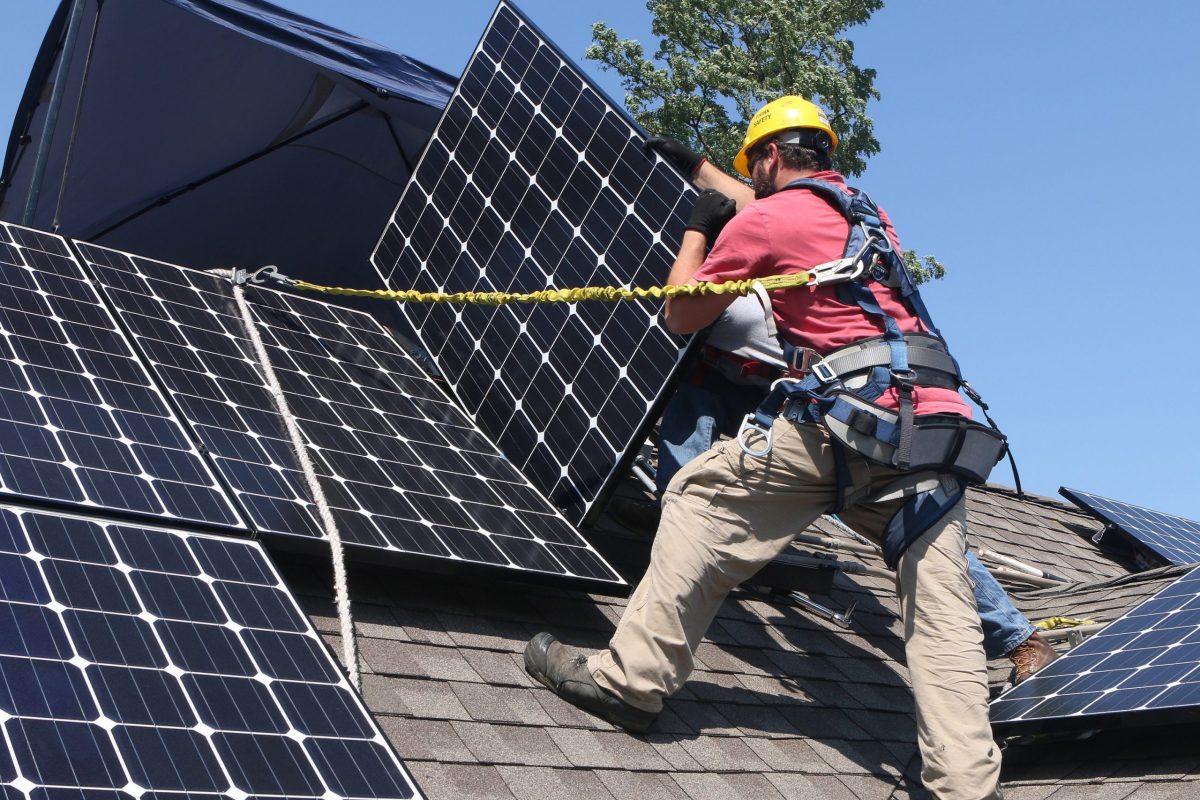
Consider creating short video content showing what installation day looks like. When homeowners see the actual process, crew size, and timeline, they feel more prepared and confident. Address common concerns proactively, such as roof protection measures and noise levels.
This is also an ideal time to introduce customers to their monitoring app and explain how they’ll track their energy production. Building familiarity now means they’ll engage with the technology immediately after installation, reinforcing the value of their investment from day one.
The Myth-Busting Advantage
Cost Myths That Keep Homeowners on the Fence
The biggest barrier to solar adoption isn’t the technology—it’s the sticker shock. Many homeowners believe solar costs $50,000 or more upfront, when today’s average system runs between $15,000-$25,000 before incentives. After the federal tax credit, that drops to around $10,500-$17,500 for most homes.
The “I can’t afford it” objection often stems from outdated information. When you break down the numbers using digital tools like payment calculators, homeowners discover monthly loan payments typically match or fall below their current electric bills. That’s not an expense—it’s a lateral move with ownership benefits.
Another myth: solar takes decades to pay off. With today’s energy rates and incentives, most systems reach breakeven in 6-8 years, then generate free electricity for 25+ years. That’s nearly two decades of pure savings.
The financing fear is equally unfounded. Zero-down loans and leases mean homeowners can start saving immediately without touching their savings accounts. When customers see actual monthly payments compared to their current utility bills—often showing immediate positive cash flow—the financial fog lifts. The key is presenting these real numbers early, before misconceptions cement into deal-breakers.
Performance Myths That Create Doubt
Many homeowners hesitate because they’ve heard solar panels don’t work on cloudy days or that maintenance costs are through the roof. Let’s set the record straight with real numbers.
Solar panels actually work in overcast conditions, producing 10-25% of their maximum output even on gray days. Think of it like getting a tan through clouds—less intense, but it still happens. In states like Washington and Oregon, where cloudy weather is common, thousands of homes successfully run on solar power year-round.
The weather dependency concern often stems from outdated information. Modern panels are designed for diverse climates and deliver reliable energy across all four seasons. Your annual production matters more than daily fluctuations, and net metering credits you for excess power generated during sunny periods.
Regarding reliability, solar systems have no moving parts and typically come with 25-year warranties. Compare that to your traditional HVAC system that needs regular servicing. Most homeowners spend less than $150 annually on basic cleaning and inspections.
When educating customers, share local installation data specific to your region’s weather patterns. Show actual production graphs from nearby homes during different seasons. This tangible evidence dissolves abstract concerns and builds confidence in solar’s consistent performance, regardless of zip code.
Tools That Make Learning Easy
Visual Calculators and Personalized Projections
Nothing transforms a homeowner’s interest into commitment quite like seeing their own numbers. Generic savings estimates rarely motivate action, but personalized calculators that use a homeowner’s actual roof space, location, and current energy bills make the benefits impossible to ignore. These interactive tools turn vague promises into concrete projections that show exactly when they’ll break even and how much they’ll save over the system’s lifetime.
The most effective calculators go beyond dollars and cents. They translate energy production into meaningful metrics: “Your system will offset the equivalent of planting 120 trees” or “You’ll prevent 4 tons of CO2 emissions annually—like taking a car off the road.” This dual approach addresses both financial motivations and environmental values.
Smart solar companies integrate these calculators early in the customer journey, often as the first touchpoint after initial interest. The key is making them genuinely useful, not just lead capture tools. Homeowners should receive instant results without waiting for a sales call, building trust through transparency. When prospects can explore scenarios, adjust variables, and visualize their specific situation, they arrive at conversations already convinced of the value—your team simply helps them choose the right system.
Before-and-After Stories That Inspire
Real stories from actual customers provide the most compelling educational content. When prospective buyers hear from someone just like them—a neighbor, a parent worried about rising bills, or a retiree on a fixed income—the abstract concept of going solar becomes tangible and achievable.
Feature authentic testimonials that focus on the learning journey. Sarah from Ohio might share how she initially thought solar was too expensive until she discovered available tax credits and financing options. Mike from Texas could explain how monitoring his energy production became unexpectedly rewarding, turning him into an advocate among friends.
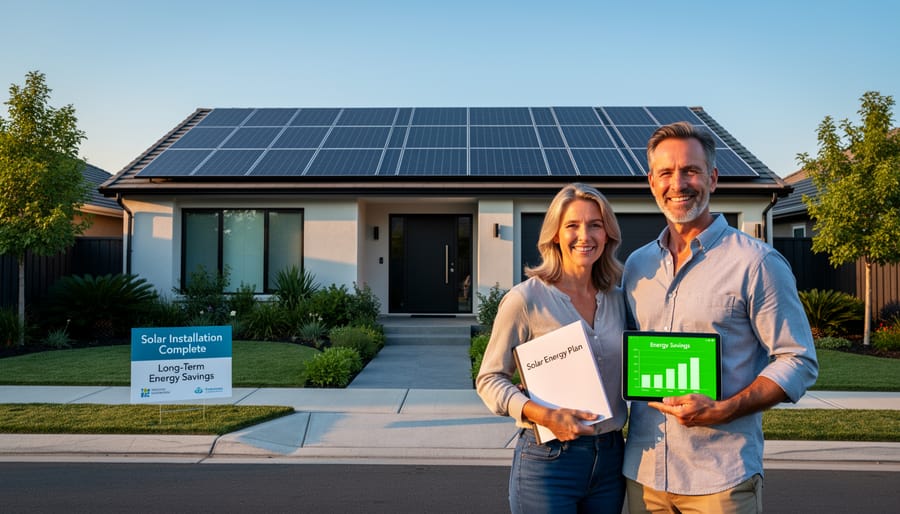
Case studies work best when they highlight the educational moments that mattered most. Show the numbers: how much energy bills dropped in the first year, how long payback periods actually took, and what surprised customers most about the experience. Include photos of real homes and families to build trust.
These stories serve double duty—they educate new prospects while validating decisions for those already considering solar, effectively moving both groups closer to adoption.
Simple Guides for Complex Processes
Complex solar concepts become manageable when you present them in bite-sized formats your customers can easily digest. Short explainer videos work exceptionally well—think two-minute clips showing how net metering works or what happens during installation day. These visual resources help homeowners understand the process without feeling overwhelmed by technical details.
Infographics simplify information about system components, savings timelines, and maintenance schedules into visually appealing one-pagers customers can reference anytime. Create downloadable FAQ sheets addressing common concerns like “Will solar work on cloudy days?” or “What happens if I need a new roof?” These resources empower homeowners to find answers independently, reducing anxiety and building confidence in their decision.
The key advantage of these formats is flexibility. Customers learn at their own pace, revisiting materials when questions surface weeks or months later. This self-service approach respects their time while ensuring they have reliable information readily available, ultimately leading to more informed, satisfied customers who feel supported throughout their solar journey.
Measuring Education Impact on Adoption
Understanding whether your educational efforts are working isn’t just about tracking website visits. You need to measure whether homeowners are actually moving closer to making a decision. Start by looking at engagement depth rather than surface-level metrics. Are people downloading your solar savings calculator? How many pages of your educational content do they view in a single session? These behaviors signal growing confidence and interest.
One of the most telling indicators is question quality. When homeowners progress from asking basic “how does solar work?” questions to specific queries about their roof type or local incentives, you’re witnessing real educational progress. Track this through your customer service interactions, chat logs, and consultation notes. You’ll notice patterns that show which educational materials are moving people forward.
Monitor your consultation-to-proposal conversion rates closely. If your educational content is effective, homeowners should arrive at consultations better prepared and more decisive. They’ll spend less time on fundamental questions and more time discussing their specific situation. This typically translates to shorter sales cycles and higher conversion rates.
Pay attention to referral rates too. Homeowners who truly understand solar’s benefits become natural advocates. When your educational approach builds genuine confidence, people share what they’ve learned with friends and neighbors. Track how often customers mention specific educational resources when referring others.
Consider implementing simple post-education surveys asking homeowners to rate their understanding and confidence level. Questions like “How confident do you feel about solar’s financial benefits?” provide direct feedback. Compare these confidence scores against actual installation rates to validate which educational touchpoints deliver the strongest results. This data helps you refine your approach and focus resources where they create the most impact.
The path forward is clear: educated customers become confident customers, and confident customers say yes. When homeowners understand how solar works, what savings they can expect, and what the installation process looks like, those intimidating unknowns transform into exciting opportunities. Education isn’t just a nice-to-have in your customer journey—it’s a strategic investment that drives both customer success and business growth.
The most successful solar companies recognize that every touchpoint is a teaching moment. From that first website visit to the final system activation, each interaction either builds confidence or allows uncertainty to linger. By closing those educational gaps, you’re not just improving conversion rates—you’re creating satisfied customers who become enthusiastic advocates for solar energy.
Take a moment to audit your current customer journey. Where might potential customers feel confused or overwhelmed? What questions go unanswered until too late in the process? Identifying and addressing these educational gaps can be the difference between a hesitant maybe and an enthusiastic yes. Start small, measure the impact, and watch as informed customers transform your business.