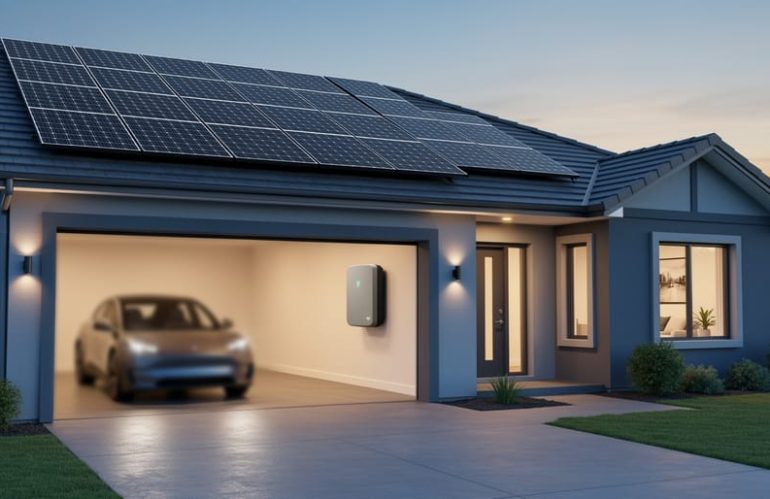
Your solar panels generate clean energy during the day, but what happens when the sun goes down or the grid fails? Home solar battery storage systems solve this critical gap by capturing excess solar energy and making it available exactly when you need it most. If you’ve already made your solar investment worth it, adding battery storage can increase your energy independence by up to 80% and slash your utility bills even further.
The transformation is real: families across the country are powering through blackouts, avoiding peak electricity rates, and breaking free from utility company control. Yet confusion about costs, compatibility, and actual benefits keeps many homeowners on the fence. The truth is simpler than you think. Modern battery systems have dropped dramatically in price, most integrate seamlessly with existing solar setups, and the financial payback now makes sense for more households than ever before.
This guide cuts through the noise to give you straight answers about how these systems work, what they actually cost, and whether one belongs in your home. You’ll discover which battery type fits your situation, how to maximize your savings, and what realistic returns to expect. No technical jargon, no sales pressure, just clear information to help you make a confident decision about powering your home’s future.
What Home Solar Battery Storage Actually Does
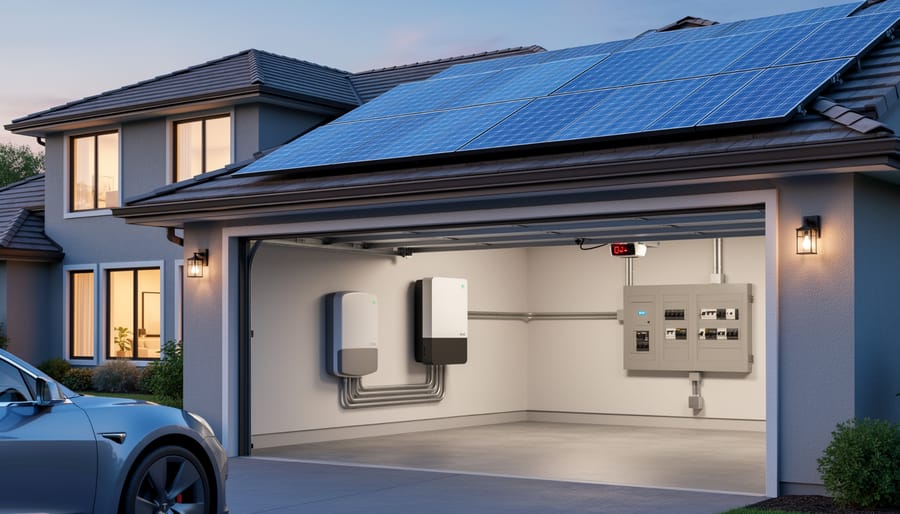
The Day-to-Night Energy Shift
Here’s the reality most solar owners discover: your panels produce the most electricity during sunny midday hours when you’re probably at work or school. Meanwhile, your household’s energy demand peaks in the early morning and evening—exactly when the sun isn’t shining. This timing mismatch means that without storage, much of your solar energy flows back to the grid instead of powering your home.
A battery storage system flips this equation entirely. Throughout the day, your batteries quietly store excess solar energy that would otherwise go unused. Then, when you arrive home and start cooking dinner, running the dishwasher, or turning on the air conditioning, your home draws from this stored energy instead of pulling expensive electricity from the grid. It’s like having a personal energy reservoir that captures the afternoon sunshine and delivers it exactly when your family needs it most.
This shift transforms solar panels from a daytime-only solution into a round-the-clock energy source, maximizing your investment and slashing those evening peak-rate charges that drive up monthly bills.
What Happens Without Storage
Without battery storage, your solar panels create an interesting financial paradox. During sunny afternoons when your system produces the most energy, you’re typically using very little power. That surplus electricity flows back to the grid, and your utility company credits your account through net metering. Sounds fair, right? Here’s the catch: those credits usually reimburse you at wholesale rates, often just 3-5 cents per kilowatt-hour. Fast forward to evening when you’re cooking dinner, running the dishwasher, and streaming your favorite shows. Your solar panels have stopped producing, so you’re buying electricity from the grid at retail rates, typically 15-30 cents per kilowatt-hour. You’re essentially selling low and buying high, which means you’re leaving money on the table every single day. This cycle represents a significant financial leak that adds up to hundreds or even thousands of dollars annually, depending on your energy consumption patterns.
The Real Benefits of Adding Battery Storage
Slash Your Evening Energy Costs
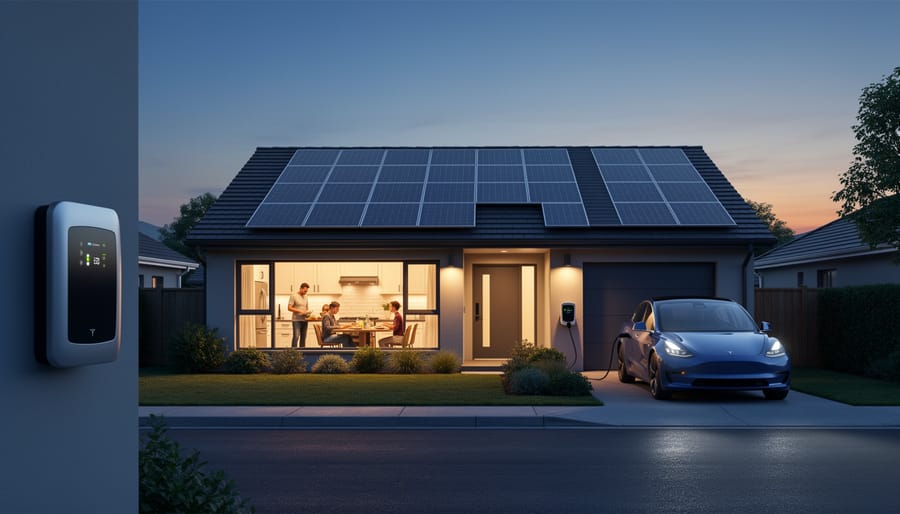
Here’s the thing about electricity rates: they spike right when you need power most. Between 4 PM and 9 PM, when families come home, cook dinner, run appliances, and turn on lights, utility companies charge their highest rates. This is exactly when your solar panels produce little to no electricity.
A home battery system flips this scenario in your favor. Instead of buying expensive grid power during peak hours, you’re using the energy your panels stored earlier in the day when the sun was shining. Picture this: you’re cooking dinner at 6 PM while running your air conditioning and dishwasher, but your meter isn’t spinning because your battery is powering everything.
For a typical family, evening hours account for roughly 40-60% of daily energy use. By covering this period with stored solar power, you’re eliminating charges during the most expensive time window. Over a month, this translates to substantial savings on your bill. You’re essentially paying yourself back for energy you already generated, rather than buying it from the utility company at premium prices.
Keep the Lights On When the Grid Goes Down
When the power grid fails, your home doesn’t have to. Solar battery storage systems automatically kick in during outages, keeping your essential appliances running without the noise, fuel costs, or maintenance headaches of traditional generators.
Here’s the reality: a properly sized battery system can power your refrigerator, lights, internet router, and other critical devices for anywhere from several hours to multiple days, depending on your battery capacity and usage. Most homeowners find that a mid-range system easily handles overnight outages and can stretch through extended disruptions when used thoughtfully.
The best part? You won’t even notice when the switch happens. Modern battery systems detect outages in milliseconds and seamlessly take over, so your Wi-Fi stays connected and your food stays cold. Unlike generators that require manual starting, fuel runs, and regular maintenance, batteries work silently in the background with zero effort on your part.
One common worry is whether batteries provide enough power during emergencies. The truth is, you have complete control over what gets backed up. During installation, you can prioritize which circuits receive power, ensuring your most important needs are always covered, even during extended outages.
Take Control of Your Energy Future
Rising electricity rates aren’t slowing down, but you don’t have to remain at their mercy. A home battery storage system shields you from future utility price hikes by letting you use stored solar energy instead of purchasing power during expensive peak hours. Think of it as locking in today’s energy costs for tomorrow’s needs. You’re essentially creating your own private power reserve that isn’t subject to rate increases, seasonal surcharges, or time-of-use pricing schemes. Over 20-30 years, this protection becomes increasingly valuable as grid electricity costs climb while your solar investment stays constant. Beyond the financial hedge, there’s real peace of mind in knowing you control where your power comes from, reducing dependence on external suppliers and volatile energy markets.
Common Myths About Solar Batteries (That Cost You Money)
“Batteries Are Too Expensive to Be Worth It”
Let’s clear up this common misconception: while battery storage does require an upfront investment, the math is more favorable than you might think. Federal tax credits currently cover up to 30% of your battery system costs, and many states offer additional rebates that can knock thousands off the price tag. When you factor in these incentives, the actual out-of-pocket expense drops significantly.
The real value appears over time through multiple revenue streams. You’ll save money by using stored energy during expensive peak hours instead of buying from the grid. If your utility offers time-of-use rates, these savings add up quickly. You’re also protecting yourself against rising electricity costs and potential outages, which have real financial value that traditional ROI calculations often overlook.
Modern batteries last 10-15 years with minimal degradation, meaning your savings compound year after year. Many homeowners see payback periods of 7-10 years, and everything after that is pure savings. Think of it less as an expense and more as an investment in energy independence. When you consider the financial benefits alongside the peace of mind from backup power, the value proposition becomes much clearer than the sticker price alone suggests.
“Solar Batteries Don’t Last Long Enough”
This concern might have been valid a decade ago, but today’s solar batteries are built to go the distance. Modern lithium-ion battery systems typically last between 10 to 15 years, with many manufacturers offering warranties that guarantee at least 70% capacity retention throughout that period. That means your battery will still hold most of its charge even after a decade of daily use.
The technology has improved dramatically from earlier models. Today’s batteries undergo thousands of charge cycles before showing significant degradation, easily outlasting their warranty periods in most home applications. Many homeowners find their batteries perform well beyond the warranty timeframe, making them a solid long-term investment.
When you consider that most systems pay for themselves within 7 to 10 years through energy savings and backup power benefits, that 10-15 year lifespan becomes even more attractive. You’re not just buying a battery; you’re investing in energy independence that will serve your household reliably for years to come.
“I Can Just Rely on Net Metering”
Net metering lets you send excess solar power back to the grid for credit on your bill, which sounds ideal. However, many utilities are reducing their net metering rates, meaning you get back far less than what you pay for electricity. Some states have already slashed rates by 75% or more, making those credits significantly less valuable than storing your own power.
More importantly, net metering provides zero backup power during outages. When the grid goes down, your solar panels automatically shut off for safety reasons, even on sunny days. You’re left in the dark despite having solar panels on your roof. A battery storage system keeps your lights on during blackouts while maximizing the value of every kilowatt-hour your panels produce, letting you use that energy when electricity rates are highest rather than selling it back for pennies.
Types of Home Battery Storage Systems
AC-Coupled vs. DC-Coupled Systems
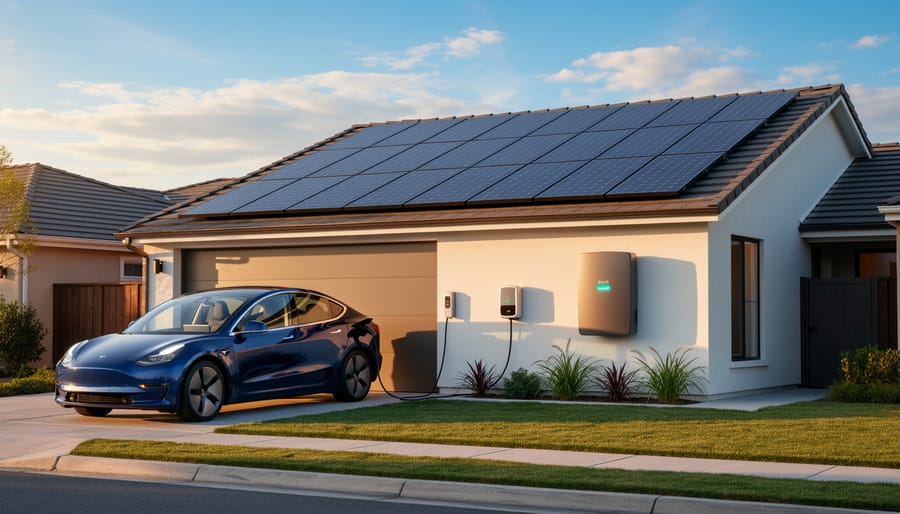
When adding battery storage to your solar setup, you’ll encounter two connection methods: AC-coupled and DC-coupled systems. Understanding the difference helps you make the right choice for your home.
DC-coupled systems connect batteries directly to your solar panels before the electricity converts to household power. This approach is more efficient because electricity only converts once. It’s ideal for new solar installations since everything integrates seamlessly from the start, and you’ll maximize the energy your panels capture.
AC-coupled systems connect batteries after the conversion process, working alongside how solar inverters work. While slightly less efficient due to double conversion, they’re perfect for retrofitting batteries to existing solar systems. You won’t need to replace your current equipment, making installation simpler and often more affordable.
The bottom line? Planning a complete solar and battery system from scratch? Go DC-coupled for maximum efficiency. Already have solar panels and want to add storage? AC-coupled systems offer hassle-free compatibility. Both deliver excellent backup power and bill savings—the best choice simply depends on your current setup.
Whole-Home Backup vs. Partial Backup
When choosing battery backup, you’ll decide between whole-home and partial backup systems. Whole-home backup powers your entire house during outages, running everything from air conditioning to appliances just like normal. These systems require larger battery capacity, which means higher upfront costs, but they offer complete peace of mind and uninterrupted comfort.
Partial backup systems support only essential circuits you designate beforehand, like your refrigerator, lights, internet router, and a few key outlets. This practical approach costs less and still keeps your home functional during power failures. Most families find that powering essentials covers their actual needs without the expense of running every circuit.
Your choice depends on your budget and lifestyle. If you work from home, have medical equipment, or experience frequent lengthy outages, whole-home backup might justify the investment. For occasional short outages, partial backup typically provides excellent value while protecting what matters most.
Capacity Considerations
Start by reviewing your electricity bills from the past year to understand your daily energy usage—most households use between 20-30 kilowatt-hours per day. A good rule of thumb is choosing a battery that covers your essential needs during evening hours when solar panels aren’t producing power. If you want backup during outages, identify which appliances matter most: refrigerators, lights, and internet typically need 5-10 kWh to run overnight. You don’t need to store every watt you produce. Most homeowners find that a 10-13 kWh system strikes the sweet spot between cost and coverage, keeping your fridge running and lights on without breaking the bank. Oversizing means paying for capacity you’ll rarely use, while undersizing leaves potential savings on the table.
Integration With Your Existing Solar Setup
Adding Storage to Panels You Already Have
Good news: adding batteries to existing solar systems is completely doable, and you won’t need to replace your current panels or inverter in most cases. Many homeowners assume they missed their chance if they didn’t install batteries initially, but that’s simply not true.
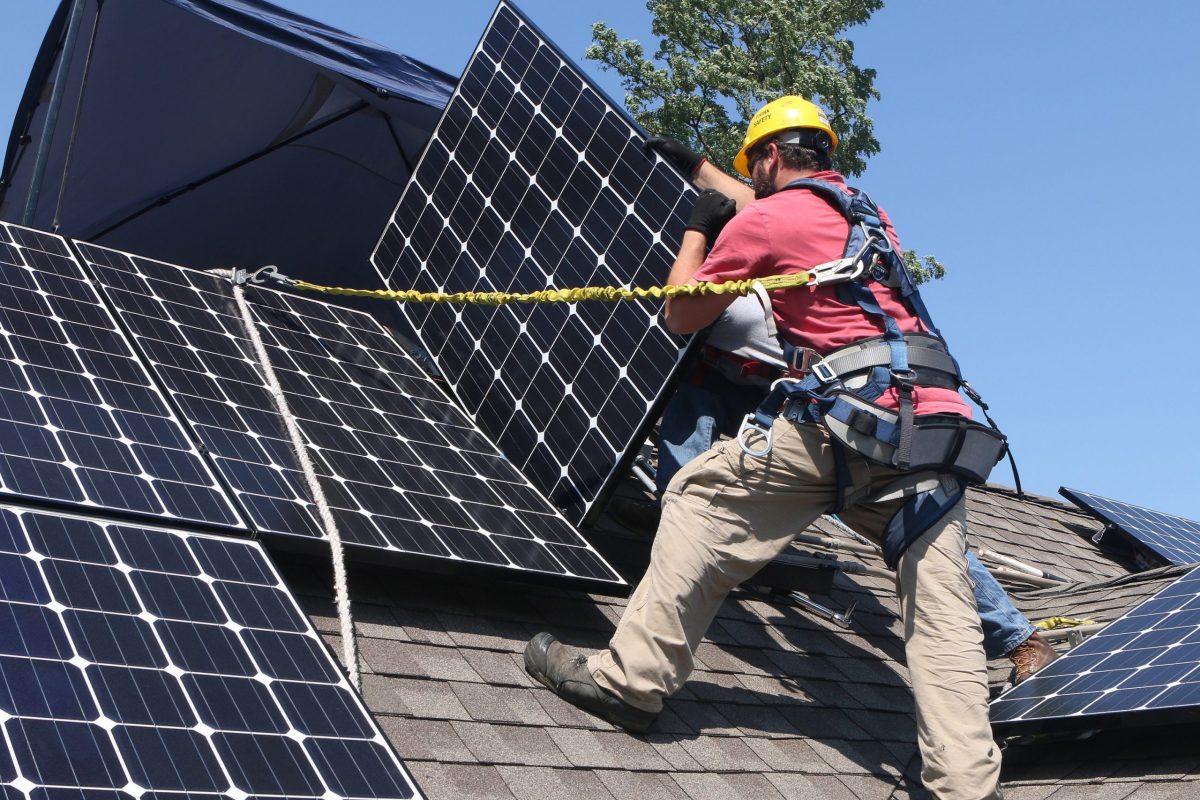
The retrofitting process is refreshingly straightforward. A qualified installer will assess your current setup, recommend a compatible battery system, and typically complete installation within one to two days. The battery connects to your existing solar equipment, often requiring only a battery inverter or a hybrid inverter upgrade depending on what you already have. Your panels keep doing their job while the battery captures and stores excess energy for later use.
Most modern battery systems are designed specifically with retrofitting in mind, making integration seamless regardless of when you installed your solar panels. You’ll maintain all the benefits you’re already enjoying while gaining energy independence and backup power protection. The investment enhances your existing system rather than starting from scratch, making it a cost-effective upgrade path.
Smart System Management
Modern battery storage systems work on autopilot, handling all the complex decisions for you. Think of them as having a smart assistant that constantly monitors energy prices, weather forecasts, and your household usage patterns. The system automatically decides whether to store excess solar energy, use it immediately, or send it back to the grid when rates are highest.
You don’t need to flip switches or check apps constantly. The system learns your household’s energy rhythms and adjusts itself accordingly. During peak electricity hours when rates spike, it automatically draws from your stored battery power instead of expensive grid electricity. When the sun is shining and your panels are producing more than you need, it stores the surplus for later.
Most systems include user-friendly monitoring apps that let you track your energy production, storage levels, and savings in real-time from your smartphone. You can see exactly how much money you’re saving and how much backup power you have available. These monitoring tools also alert you to any maintenance needs, making maintaining your solar system straightforward. The technology handles the complexity while you simply enjoy lower bills and energy independence.
What to Expect: Investment and Savings
Upfront Costs and Available Incentives
Home battery storage systems typically range from $8,000 to $15,000 installed, depending on capacity and brand. While that might sound steep, the actual out-of-pocket cost is often much lower thanks to valuable incentives. The federal tax credits cover 30% of your total system cost through 2032, immediately reducing your investment by thousands. Many states offer additional rebates or performance incentives that stack with federal benefits. Your local utility may provide rebates for battery installations, especially if you participate in demand response programs that help stabilize the grid during peak hours. Some utilities even offer special electricity rates for battery owners. When you factor in these incentives alongside long-term electricity savings and increased home value, the true cost becomes significantly more manageable than the sticker price suggests.
Calculating Your Payback Period
Understanding your payback period helps set realistic expectations for your investment. Start by examining your current electricity bill—specifically your rate per kilowatt-hour and monthly usage patterns. If you live in an area with high electricity rates (above $0.15/kWh) or time-of-use pricing, your savings potential increases significantly.
Next, calculate how much you’ll save by storing solar energy instead of buying from the grid during peak hours. Don’t forget to factor in any avoided demand charges or backup power value during outages. Most homeowners see payback periods between 7-12 years, though this varies based on local incentives and usage habits.
The good news? Battery costs have dropped nearly 90% since 2010 and continue falling. Plus, many systems qualify for the 30% federal solar tax credit, which directly reduces your upfront investment and accelerates your payback timeline considerably.
Adding battery storage to your solar panel system truly completes the picture, allowing you to capture financial benefits morning, noon, and night. While solar panels generate clean energy during the day, batteries ensure you’re not leaving money on the table by sending excess power back to the grid for minimal credit. Instead, you’re storing that energy for evening use, backup protection, and greater control over your electricity costs.
The decision to invest in battery storage isn’t one-size-fits-all. Your local utility rates, available incentives, typical energy usage patterns, and budget all play important roles in determining whether storage makes financial sense right now. Some homeowners see immediate value through time-of-use rate optimization and backup power peace of mind, while others may benefit from waiting as technology continues improving and prices decline.
The best next step is to assess your specific situation honestly. Review your electricity bills, consider your backup power needs, and research incentives available in your area. Consulting with a qualified solar professional can provide personalized insights based on your home’s unique characteristics and help you make an informed decision that aligns with both your environmental values and financial goals.