X10 technology pioneered affordable home automation decades ago, and it remains one of the most budget-friendly entry points into smart home automation today. While newer wireless systems dominate headlines, X10’s powerline communication approach offers surprising advantages for homeowners seeking to reduce energy bills without breaking the bank.
This proven technology works by sending control signals through your existing electrical wiring, eliminating the need for expensive hub systems or complicated Wi-Fi configurations. You can automate lights, appliances, and heating systems for a fraction of what modern alternatives cost, making it particularly attractive if you’re testing home automation waters or working with a tight budget.
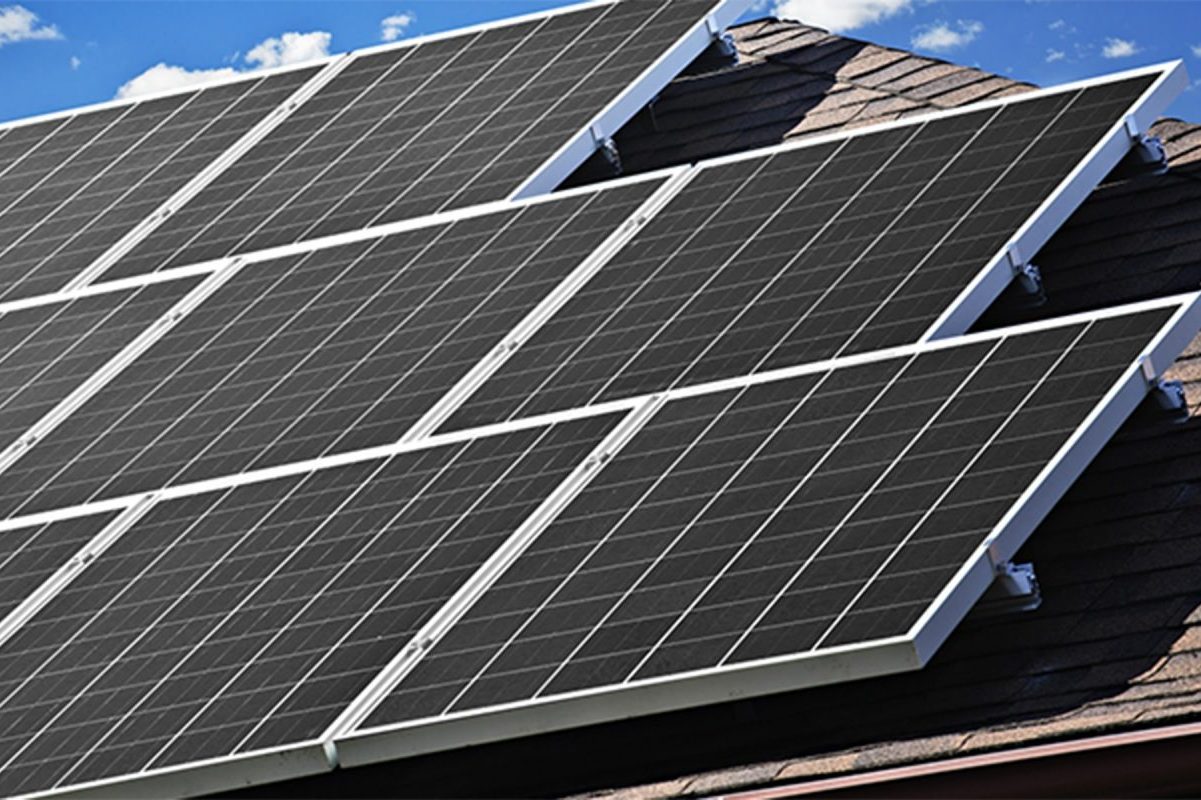
For solar panel owners, X10 systems deliver exceptional value by maximizing your renewable energy investment. Program your home to shift heavy electricity use to peak solar production hours, automatically manage phantom loads, and optimize heating and cooling cycles based on when your panels generate the most power. These simple automations can boost your solar savings by 15-30 percent annually.
Despite being labeled “outdated” by some tech enthusiasts, X10 continues serving millions of homes reliably. The real question isn’t whether X10 is obsolete, but whether its straightforward, cost-effective approach matches your automation goals. Understanding what X10 can and cannot do helps you make informed decisions about creating an energy-efficient home that aligns with both your sustainability values and financial priorities.
What X10 Home Automation Actually Is (In Plain English)
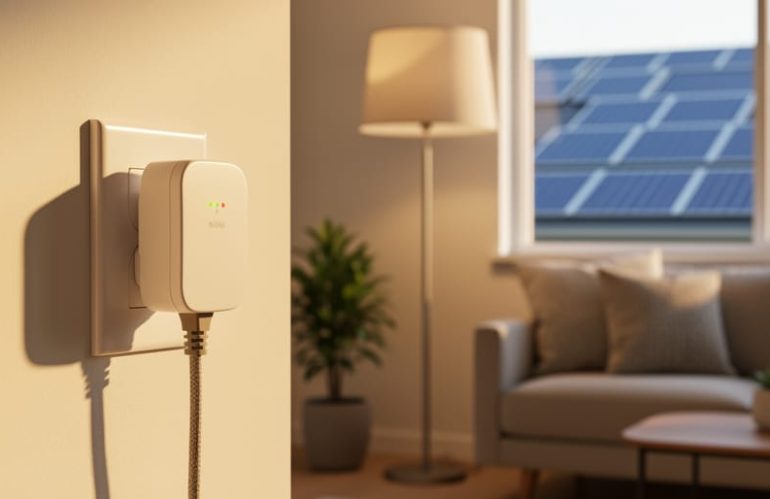
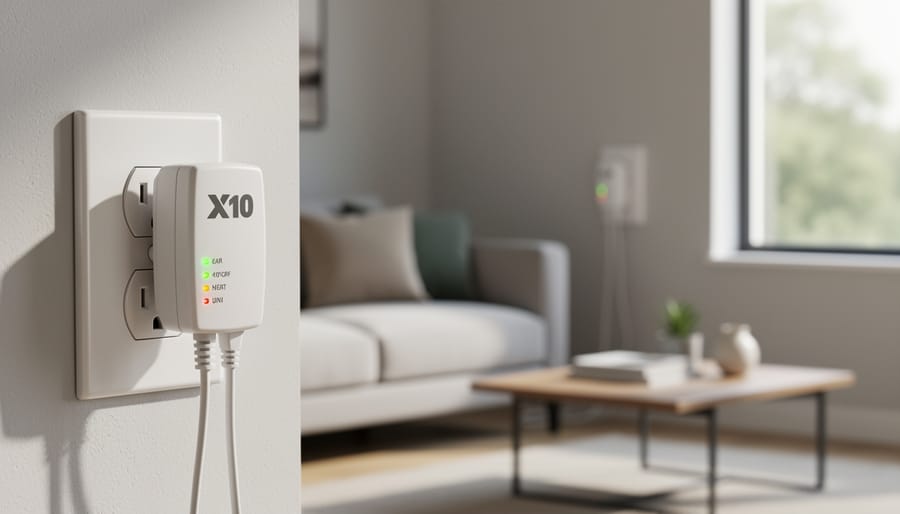
X10 is one of the earliest home automation technologies, and here’s the good news: it’s refreshingly straightforward. Instead of requiring expensive rewiring or complicated installations, X10 works through the electrical wiring already running through your walls. Think of it as a communication system that lets your devices talk to each other through your existing power lines.
Here’s how it actually works in practice. You plug X10 modules into your regular outlets or install them in place of light switches. These modules can control lamps, appliances, or other electrical devices. Then, you use a controller—anything from a simple remote to a timer or even a computer interface—to send signals through your electrical wiring. Those signals tell specific modules to turn on, turn off, or dim. It’s that simple.
What makes X10 different from today’s smart home systems? The biggest distinction is that X10 doesn’t rely on WiFi, Bluetooth, or internet connectivity. It’s purely electrical signal-based, which means it won’t stop working if your internet goes down. However, this also means it lacks some conveniences modern systems offer, like smartphone apps or voice control (unless you add extra components).
The technology uses a straightforward addressing system. Each module gets assigned a “house code” (A through P) and a “unit code” (1 through 16), giving you control over up to 256 different devices. When you press a button on your controller, it sends a signal for that specific address—say, “A1 on”—and only that device responds.
For homeowners focused on energy savings, X10’s simplicity is actually an advantage. You can automate lights and appliances to turn off when not needed without monthly subscription fees or cloud services.
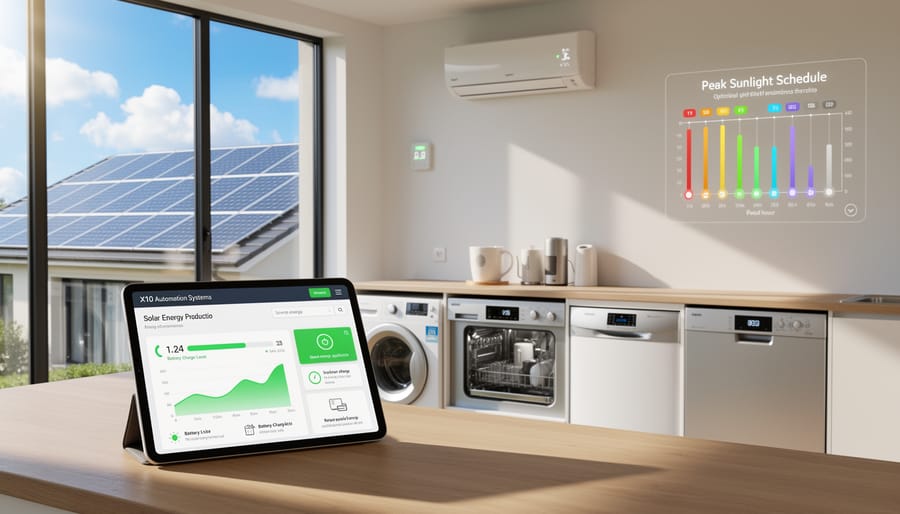
The Surprising Benefits of X10 for Solar-Powered Homes
Smart Energy Timing Without the Smart Price Tag
Here’s a common misconception: smart home automation has to cost a fortune. The truth is, X10 systems offer an affordable way to harness your solar panels’ full potential without expensive smart home hubs or monthly subscriptions.
Think about it—your solar panels produce the most energy during midday sunshine, but you’re probably at work while your dishwasher and washing machine sit idle. By the time you get home to run these appliances, you’re drawing from the grid instead of using your free solar power. That’s wasted energy and wasted money.
X10 automation solves this problem elegantly. Set your programmable modules to run major appliances during your solar system’s peak production hours—typically between 10 AM and 3 PM. Your water heater can warm up when the sun is strongest. Your pool pump runs on pure solar power. These simple energy management strategies maximize your solar investment while minimizing grid dependence.
The best part? You’re not paying premium prices for basic scheduling functions. X10 delivers real energy savings without the smart price tag.
Reducing Your Energy Waste While You Sleep
Your home continues using electricity even when you’re asleep, but X10 automation can dramatically cut this waste. Many devices draw power 24/7 simply by being plugged in—televisions, coffee makers, phone chargers, and computer equipment all contribute to phantom energy drain that can account for up to 10% of your monthly electric bill.
With X10 modules, you can program automatic shut-offs at bedtime. Set your entertainment center, gaming consoles, and office equipment to power down completely at 11 PM, then switch back on at 6 AM. This simple schedule eliminates hours of unnecessary consumption without requiring you to remember anything.
For homes with solar panels and battery storage, nighttime automation becomes even more valuable. X10 timers can shift energy-intensive tasks like dishwashers, washing machines, and water heater cycles to daytime hours when your panels are generating power. This maximizes your use of free solar energy and preserves battery reserves for essential overnight needs like refrigeration and security systems.
The beauty of X10 is its set-it-and-forget-it simplicity. Once programmed, these schedules run automatically every day, ensuring consistent savings without ongoing effort. Many homeowners report cutting their nighttime energy consumption by 20-30% within the first month of implementing basic X10 scheduling—savings that add up to real money back in your pocket year after year.
What X10 Can Control in Your Home (And What It Can’t)
X10 technology excels at controlling specific devices in your home, though it’s important to understand both its strengths and limitations before investing.
What X10 handles brilliantly is lighting control. You can dim table lamps, turn off overhead fixtures from across the house, or schedule porch lights to turn on at sunset. This works with standard incandescent and many LED bulbs, making it easy to eliminate wasted electricity from lights left burning in empty rooms. Many homeowners report saving 10-15% on lighting costs simply by automating their schedules.
For appliances, X10 works well with anything that plugs into a standard outlet and doesn’t have complex electronics. Coffee makers, space heaters, fans, and holiday decorations are perfect candidates. If you have solar panels, you can program energy-intensive appliances to run during peak production hours when your system generates the most power, maximizing your solar investment.
The technology also supports automated HVAC control through compatible thermostats, allowing you to adjust heating and cooling based on occupancy or time of day. This directly translates to lower energy bills without sacrificing comfort.
However, X10 has clear limitations. It cannot control devices requiring continuous power or those with built-in standby modes, like modern televisions or computers. Smart appliances with their own processors often won’t respond to X10 signals. The technology also struggles with high-wattage devices beyond its rated capacity, and signal reliability can vary depending on your home’s electrical wiring quality.
Security systems requiring instant response aren’t ideal for X10 either, as occasional signal delays can occur. While the technology works reliably for scheduled automation and basic control, it’s not designed for critical safety functions or complex smart home integrations with voice assistants and smartphone apps.
Understanding these boundaries helps you make realistic plans and avoid disappointment while still enjoying meaningful energy savings.
X10 vs. Modern Smart Home Systems: The Truth
Where X10 Still Wins
Despite newer technologies flooding the market, X10 still holds significant advantages for many homeowners, especially those watching their budgets and environmental footprint.
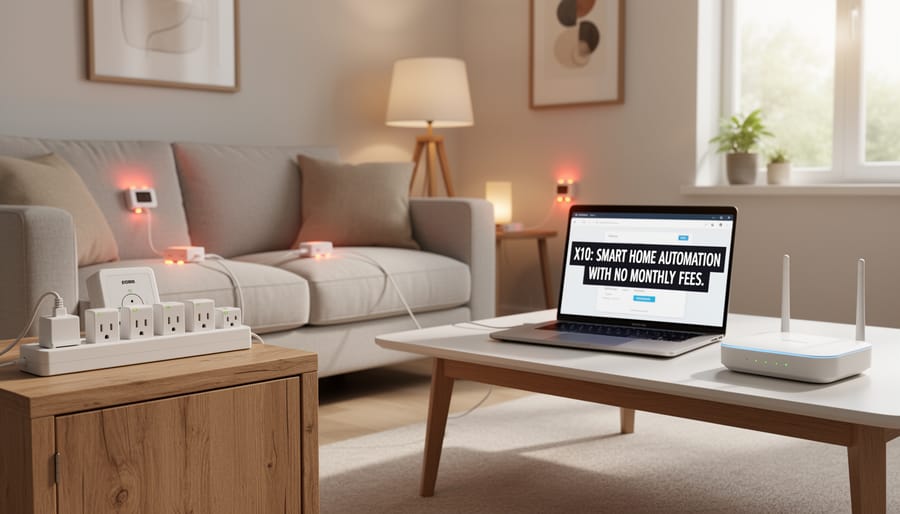
The most compelling reason to consider X10 is cost. You can automate several rooms for under $100—a fraction of what modern smart home systems demand. There are no monthly subscription fees, no cloud services to pay for, and no mandatory upgrades. Once you buy your X10 components, they’re yours to use indefinitely.
The simplicity factor shouldn’t be underestimated either. X10 works without internet connectivity, which means no Wi-Fi passwords to remember, no apps to update, and no privacy concerns about data collection. Your home automation stays completely under your control, functioning reliably even during internet outages.
For homeowners with solar panels, X10 offers a straightforward way to maximize energy savings. You can schedule heavy appliances to run during peak solar production hours without complicated programming or expensive integration fees. The technology is proven and stable—some X10 systems have operated flawlessly for over 20 years.
Compatibility is another strength. X10 components from different manufacturers generally work together seamlessly, giving you flexibility in building and expanding your system. This open standard approach means you’re not locked into a single brand’s ecosystem, keeping future costs predictable and manageable.
Where Newer Systems Pull Ahead
While X10 deserves credit as a pioneering technology, modern smart home systems have introduced conveniences that fundamentally change how you interact with your home. Voice control through Amazon Alexa, Google Assistant, or Apple HomeKit lets you adjust lighting, temperature, and appliances without lifting a finger—perfect when your hands are full or you’re across the room. This wasn’t even imagined when X10 launched.
Smartphone apps give you complete control from anywhere in the world. Forgot to turn off the lights before your vacation? No problem. Want to preheat your home before arriving? Done in seconds. Most newer systems also learn your habits over time, automatically adjusting settings to maximize comfort and energy savings without any programming on your part.
Advanced features like real-time energy monitoring show exactly how much power each device consumes, helping you identify energy waste and reduce your bills. Many systems integrate seamlessly with solar panels, optimizing when appliances run to use free solar power instead of grid electricity. You’ll also find better compatibility between brands, smoother setup processes, and regular software updates that add new features—luxuries that X10’s static hardware simply cannot match.
Getting Started With X10: Is It Right for You?
X10 might be the perfect starting point for your home automation journey if you’re looking for an affordable, low-commitment way to reduce energy waste without extensive renovations. This technology works especially well for homeowners who want to dip their toes into smart home features or maximize the efficiency of existing solar panels without breaking the bank.
Consider X10 if you own an older home where running new wires would be costly or disruptive, you’re working with a modest budget (starter kits begin around $50-$100), or you want simple automation like scheduling lights and appliances to run during peak solar production hours. The beauty of X10 is its flexibility—you can start with just a lamp module and expand gradually as your comfort level grows.
To get started, you’ll need three basic components: a controller (which sends commands through your existing electrical wiring), modules that plug into outlets or replace light switches, and the devices you want to automate. Installation is genuinely beginner-friendly for plug-in modules—literally just plug and play. Wall switch replacements require basic electrical knowledge, similar to changing a light fixture, though hiring an electrician remains an option if you’re not comfortable.
However, X10 may not suit everyone. If you want voice control, smartphone apps, or integration with modern smart home ecosystems right out of the box, newer technologies like Z-Wave or WiFi devices offer better compatibility. Homes with significant electrical noise from certain appliances may experience reliability issues, though filters can address this.
The bottom line? X10 remains a practical, budget-conscious choice for straightforward automation tasks, particularly for energy-saving schedules that complement solar systems or reduce phantom loads during expensive peak hours.
X10 automation proves you don’t need an expensive smart home system to take control of your energy use. By automating simple tasks like turning off lights, managing appliances, and optimizing your home’s energy flow, you’re making every kilowatt-hour count—whether it comes from your solar panels or the grid. This affordable, accessible technology puts sustainable living within reach for any homeowner, transforming everyday routines into opportunities for energy savings. The beauty of X10 lies in its simplicity: no complicated setup, no monthly fees, just practical automation that works quietly in the background to reduce waste and lower your bills. When you combine thoughtful automation with renewable energy, you’re not just cutting costs—you’re building real energy independence, one automated switch at a time.