You could be leaving thousands of dollars on the table right now. Energy communities represent one of the least-known yet most valuable additions to federal solar tax credits, potentially boosting your savings by an extra 10-20% beyond standard incentives. If you’re considering solar panels, understanding whether your home qualifies for energy community bonuses could mean the difference between a good investment and an exceptional one.
The confusion surrounding government energy incentives has led many homeowners to assume these benefits are too complicated or simply don’t apply to them. The reality is surprisingly straightforward: energy communities include areas with closed coal mines, retired power plants, or economically challenged regions transitioning away from fossil fuels. Your zip code alone determines eligibility, and checking takes less than five minutes using free online tools.
This guide cuts through the complexity to show you exactly how energy community designations work, how much extra money they put back in your pocket, and the simple steps to claim these benefits when you go solar. Whether you live in a former manufacturing hub or a rural coal country, these additional incentives make clean energy more affordable than ever. The best part? You don’t need to navigate bureaucratic red tape or hire expensive consultants. Understanding energy communities is your first step toward maximizing every available dollar for your solar investment while contributing to your community’s sustainable future.
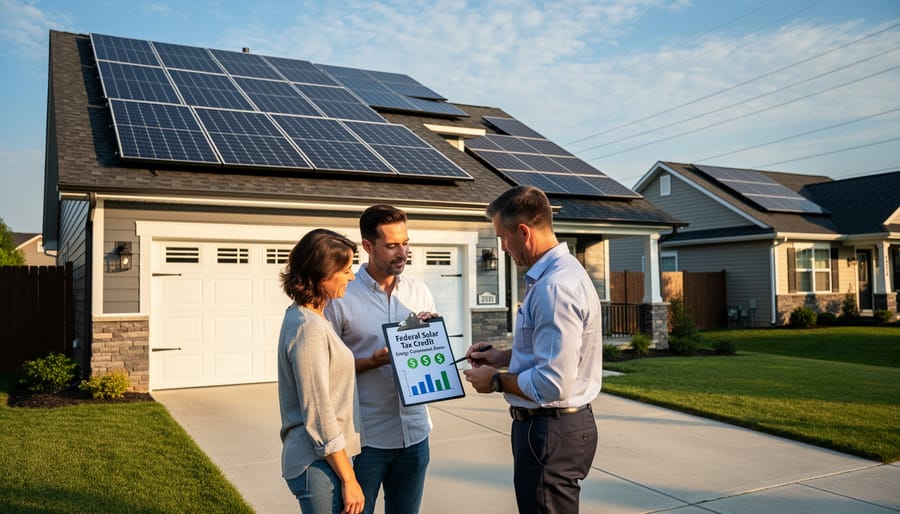
What Is an Energy Community? (The Simple Explanation)
The Three Types of Energy Communities That Qualify
The IRS recognizes three distinct types of Energy Communities, each with its own qualifying criteria. Understanding which category your home falls into is simpler than you might think, and one type is particularly relevant for homeowners going solar.
First, there are former coal communities. These are areas that previously depended on coal mining or coal power generation for employment and economic activity. If you live in or near a region where coal mines closed after 1999, or in a census tract adjacent to such areas, your home likely qualifies. The government identifies these communities using census tract data, which means you don’t need to prove anything yourself—either your address is in one or it isn’t.
Second, brownfield sites are properties designated as contaminated by hazardous substances. While this category exists, it’s rarely relevant for residential solar installations since most homes aren’t built on officially designated brownfield sites. These are typically old industrial or commercial properties undergoing cleanup and redevelopment.
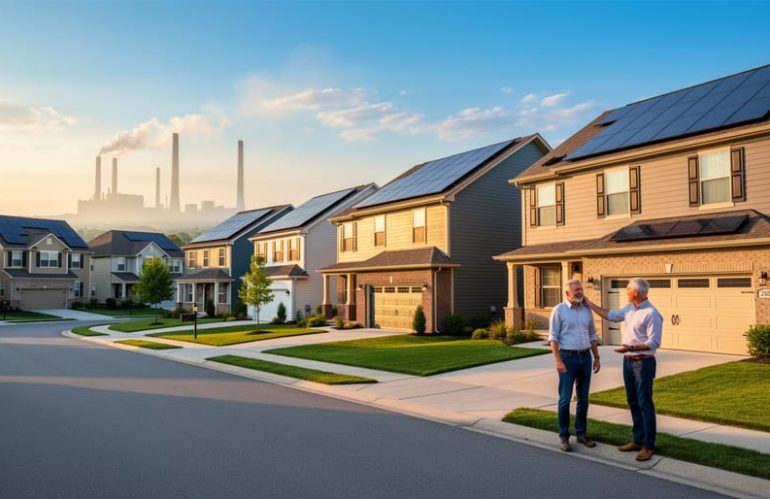
Third, and most commonly applicable to homeowners, are areas with retired fossil fuel generation facilities. If you live in a census tract where a coal, oil, or natural gas power plant closed after 2009, or in an adjacent census tract, you qualify. This category covers a surprisingly large portion of the country, especially in states that have been transitioning away from fossil fuel electricity generation.
For most homeowners considering solar, the coal community and retired fossil fuel categories are what matter. The good news? You don’t need to research historical records yourself. Simple online mapping tools provided by the Department of Energy instantly show whether your address qualifies, making verification quick and stress-free.
The Real Money: What Energy Community Status Means for Your Wallet
How the Bonus Stacks With Other Solar Incentives
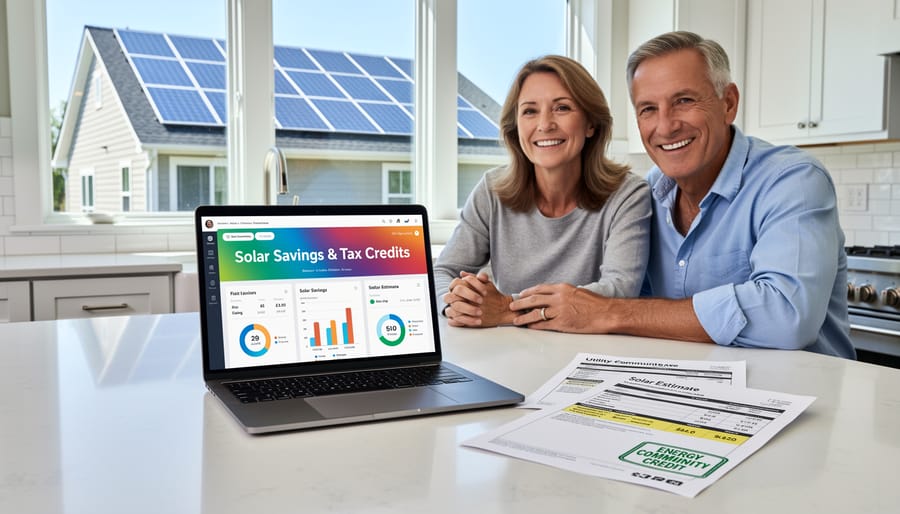
The energy community bonus works beautifully alongside other solar incentives to maximize your savings. Think of it as layering discounts at your favorite store—each one adds up to create substantial total savings.
Here’s how it works: The standard federal solar tax credit currently stands at 30% of your system cost. If you qualify for the energy community bonus, you add an extra 10% on top, bringing your total federal credit to 40%. This bonus doesn’t replace existing incentives; it supplements them.
You can also combine these federal benefits with state and local programs. Many states offer additional tax credits, rebates, or performance-based incentives that work independently of federal programs. Some utility companies provide extra cash incentives for solar installations. Since these programs operate separately, you can claim multiple benefits simultaneously.
The cumulative effect can be remarkable. For example, a homeowner installing a $20,000 solar system in an energy community area might receive $8,000 from the combined federal credits (40%), plus potential state rebates of $1,000 to $3,000, and utility incentives of $500 to $1,500. That’s potentially $9,500 to $12,500 in total savings—cutting your net cost nearly in half.
The key takeaway: Energy community bonuses don’t complicate your existing incentive strategy. They simply add another layer of savings, making solar more affordable than ever.
Does Your Home Qualify? How to Find Out in 5 Minutes
What to Do If You’re Just Outside an Energy Community Zone
If your property sits just outside a designated energy community zone, don’t let that discourage you from moving forward with solar. While Energy Community status offers a valuable 10% tax credit boost, waiting isn’t usually the best strategy since these zones rarely expand and the timelines for updates are unpredictable.
The good news? You’ll still benefit from the substantial federal solar Investment Tax Credit, which covers 30% of your installation costs through 2032. That’s a significant financial advantage on its own. Additionally, your state likely offers its own solar incentives, rebates, or net metering programs that can further reduce your costs and speed up your payback period.
Focus on what you can access right now rather than what might change later. Some solar installers can help you identify property-specific incentives you might qualify for, such as local utility rebates or state-level credits. If your home is close to a qualifying census tract boundary, it’s worth having your installer verify your exact location using the official mapping tools, as boundaries sometimes include more properties than expected. The combination of available incentives still makes solar an excellent investment for most homeowners.
Claiming Your Energy Community Benefits: The Process Demystified
Common Mistakes That Cost Homeowners Thousands
Even though energy community bonuses can add thousands to your tax savings, several common oversights can reduce or eliminate these benefits entirely. The good news? They’re all easy to avoid once you know what to watch for.
Missing the placement deadline is one of the most expensive mistakes. Your solar system must be placed in service during a tax year when your property qualifies as part of an energy community. If boundaries change or coal facility data updates between your installation quote and final inspection, you could miss out on that extra 10% credit. Always verify your status close to your actual installation date, not just when you sign the contract.
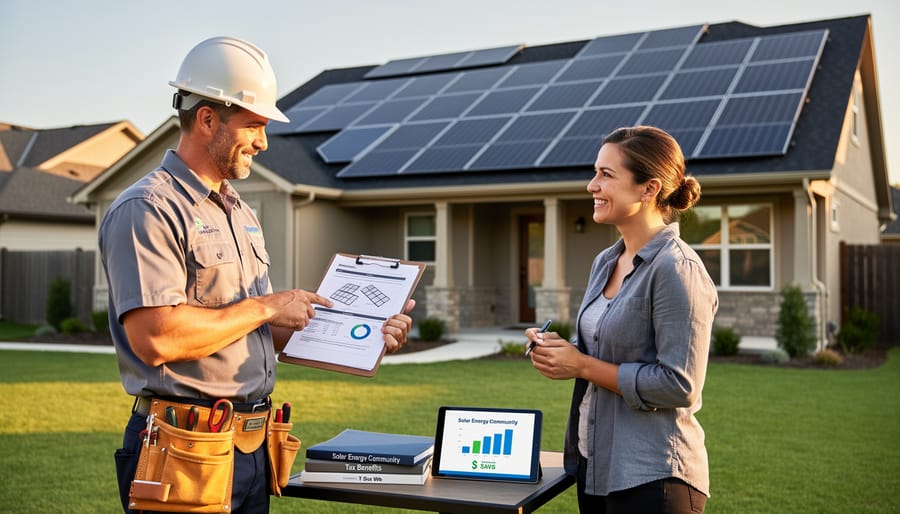
Incomplete documentation trips up many homeowners at tax time. You’ll need proof that your address falls within designated boundaries, typically requiring census tract information and coordinate verification. Working with an installer who doesn’t understand these requirements means you’re left scrambling for paperwork after the fact. Ask potential installers upfront if they’re familiar with energy community documentation and whether they’ll help gather the necessary proof.
Another costly error is assuming you automatically qualify without checking. Not all addresses within a county qualify, even if nearby homes do. Energy communities are defined by specific census tracts and statistical areas, so your neighbor might qualify while you don’t, even if you’re just streets apart. Taking ten minutes to verify your exact location can prevent disappointment and ensure you’re calculating potential savings accurately from the start.
Beyond Solar Panels: Other Energy Community Opportunities
While solar panels get most of the attention, energy community benefits extend to other clean energy solutions that can help you save money and reduce your carbon footprint. If you’re considering adding battery storage to your home, you’re in luck—these systems qualify for energy community incentives too. Battery storage lets you store excess energy for use during peak hours or power outages, and the added 10% bonus credit makes them even more affordable.
Wind turbines and geothermal systems also qualify when installed in eligible areas. These renewable energy systems offer homeowners alternative ways to generate clean power while taking advantage of the same community-based incentives available for solar installations.
Looking ahead, the energy community program may expand to include additional technologies as renewable energy advances. This means homeowners who invest now are positioning themselves to benefit from future opportunities while already enjoying substantial savings.
The key takeaway? You don’t need to limit yourself to solar panels alone. Whether you’re interested in backup power through batteries or exploring other renewable options, energy community status can boost your investment returns across multiple technologies. This flexibility gives you the freedom to choose the best clean energy solution for your home while maximizing your financial benefits.
The energy community bonus represents a significant financial opportunity that many homeowners overlook. With an additional 10-20% credit on top of the standard 30% federal solar tax credit, qualifying residents can access savings of up to 50% on their solar installation costs. That’s a game-changing discount that makes solar far more affordable than most people realize.
If you live in a low-income community or on eligible tribal land, you’re potentially leaving thousands of dollars on the table by not exploring this benefit. The good news? Checking your eligibility takes just minutes using the free online tools we’ve outlined.
Solar energy isn’t just for the wealthy or the tech-savvy anymore. These incentives were specifically designed to make clean energy accessible to everyday homeowners like you. When you combine energy community bonuses with net metering programs and other state incentives, you can maximize your solar savings and achieve faster payback periods.
Ready to take the next step? Consult with qualified solar installers in your area who understand energy community requirements and can help you claim every credit you deserve. Your path to affordable clean energy starts with one conversation.