Every time you flip a light switch, charge your phone, or run your dishwasher, you’re making a choice about your environmental impact. The average American home pumps approximately 7.5 tons of carbon dioxide into the atmosphere each year just from electricity use—equivalent to driving a car nearly 19,000 miles. That’s a staggering number, but here’s the good news: understanding your electricity’s carbon footprint is the first step toward dramatically reducing it, often while saving hundreds of dollars annually on your energy bills.
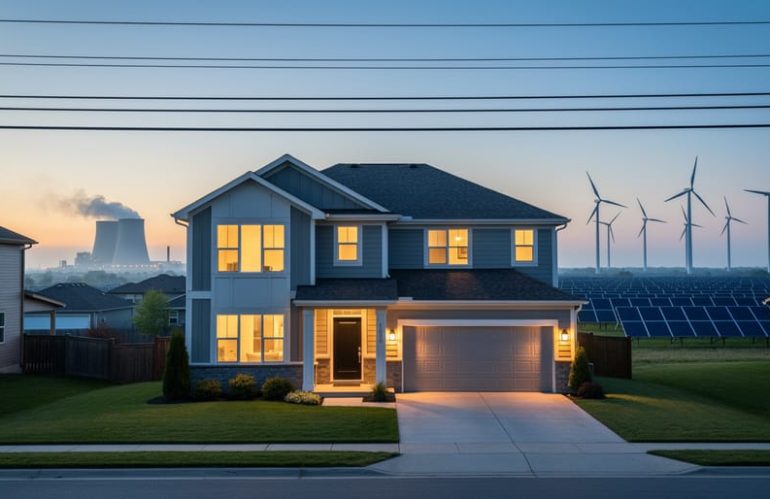
Your home’s electricity doesn’t come with a uniform environmental cost. The carbon footprint varies wildly depending on whether your local power plant burns coal, natural gas, or harnesses renewable sources like wind and solar. A kilowatt-hour of coal-generated electricity produces roughly twice the emissions of natural gas, while renewable energy sources produce virtually zero operational emissions. This means your geographic location and utility provider significantly influence your environmental impact before you even consider your consumption habits.
The real power lies in recognizing that you’re not helpless in this equation. Unlike many environmental challenges that feel abstract or beyond individual control, your electricity-related carbon footprint is something you can measure, understand, and actively reduce starting today. Whether through simple efficiency upgrades, conscious consumption changes, or transitioning to cleaner energy sources, the path to a smaller carbon footprint is clearer and more accessible than most people realize.
What Your Electricity’s Carbon Footprint Actually Means
Think of your electricity’s carbon footprint like the invisible exhaust pipe connected to your home. Just as a car running on gasoline emits carbon dioxide from its tailpipe, your home’s energy use creates emissions too—you just can’t see them because they happen at the power plant, not in your living room.
Here’s how it works: Every time you flip a light switch, charge your phone, or run your dishwasher, that electricity has to come from somewhere. In most areas, power plants burn fossil fuels like coal or natural gas to generate that energy. This burning process releases carbon dioxide and other greenhouse gases into the atmosphere, contributing to climate change.
The key point many homeowners don’t realize is that not all electricity is created equal. Your carbon footprint depends entirely on where your power comes from. If your local utility relies heavily on coal, your carbon footprint is much larger than someone whose electricity comes from wind or solar energy. It’s like the difference between driving a gas-guzzling SUV versus an electric vehicle—same destination, very different environmental impact.
Picture it this way: if your electricity were a meal, fossil fuel power would be fast food—cheap and convenient but not great for long-term health. Clean energy sources are like farm-fresh vegetables—better for everyone in the long run. The good news? You have more control over your electricity’s carbon footprint than you might think. Understanding where your power comes from is the first step toward reducing both your environmental impact and your energy bills, often at the same time.
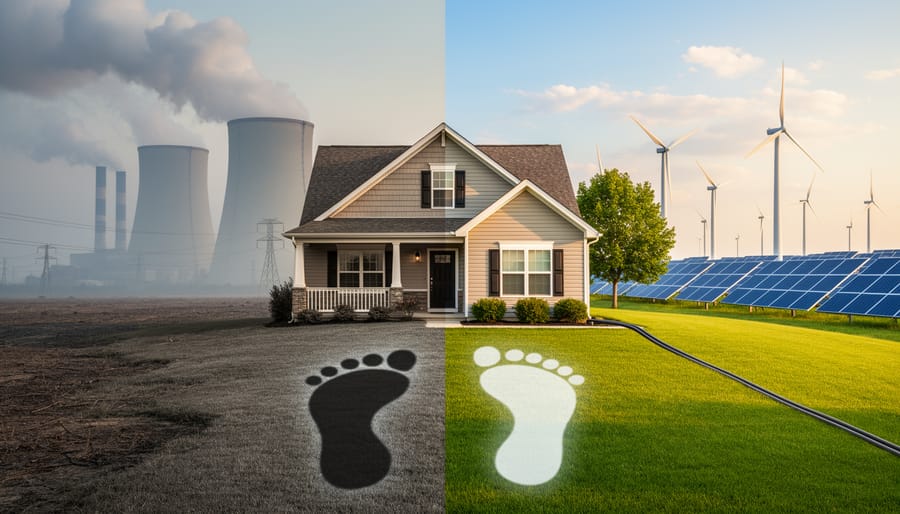
Where Your Electricity Comes From (And Why It Matters)
Fossil Fuels: The Heavy Hitters
When it comes to electricity’s carbon footprint, coal and natural gas are the main culprits. Coal plants release about 2.2 pounds of carbon dioxide for every kilowatt-hour (kWh) of electricity they produce—that’s roughly double what natural gas emits at around 0.9 pounds per kWh.
To put this in perspective, if your home uses the average 877 kWh monthly and your utility relies heavily on coal, that’s nearly a ton of CO2 each month just from keeping your lights on and appliances running. Natural gas is cleaner than coal, but it still contributes significantly to your carbon footprint.
Here’s the good news: understanding these numbers means you can make informed choices. Many utility companies now offer information about their energy mix, so you can see exactly what’s powering your home. Some even provide options to choose cleaner energy sources. The first step to reducing your electricity-related emissions is simply knowing where your power comes from—and that knowledge puts you in control of making positive changes for both the environment and potentially your wallet.
Clean Energy: The Game Changers
Here’s the good news: switching to clean energy sources can slash your electricity’s carbon footprint by up to 90%. Solar panels, wind turbines, and hydroelectric power generate electricity without burning fossil fuels, which means virtually zero emissions during operation.
Think of it this way—traditional coal plants release about 2.2 pounds of CO2 for every kilowatt-hour they produce. Solar panels? Practically nothing after manufacturing. That’s why homes powered by solar can eliminate several tons of carbon emissions annually, equivalent to planting hundreds of trees.
Wind energy has become incredibly cost-effective too, often matching or beating traditional electricity prices in many regions. Hydroelectric power has reliably provided clean energy for decades. Even geothermal systems tap into the earth’s natural heat without emissions.
The best part? These renewable energy choices aren’t just environmental wins—they’re financial ones too. Many homeowners see immediate savings on energy bills while dramatically reducing their environmental impact. As technology advances and costs continue dropping, clean energy becomes accessible to more households every year, making sustainable living both practical and affordable.
How Much Carbon Is Your Home Really Producing?
Let’s put this into perspective with some real numbers that might surprise you. The average American home uses about 877 kilowatt-hours of electricity per month. Depending on where you live and how your local power grid generates electricity, that translates to roughly 900 to 1,100 pounds of carbon dioxide emissions monthly, or about 6 tons per year.
To make this more tangible, your annual household electricity consumption produces about the same amount of carbon as driving a typical car for 7,500 miles. That’s like making a road trip from New York to Los Angeles and back. Put another way, you’d need to plant approximately 100 trees and wait a decade for them to mature to offset just one year of your home’s electricity emissions.
Here’s the good news: unlike your car, which you might genuinely need for work and daily life, your home electricity footprint is surprisingly flexible. Small changes can lead to meaningful reductions without sacrificing comfort.
Breaking it down by household size helps clarify your personal impact. A one-bedroom apartment typically produces about 3 tons of carbon annually from electricity, while a four-bedroom house might generate 8 to 10 tons. Homes in coal-dependent regions produce significantly more emissions than those powered by natural gas or renewable-heavy grids. For instance, the same amount of electricity in West Virginia creates nearly twice the carbon footprint as the same usage in California.
The appliances running quietly in the background matter more than you’d think. Your heating and cooling system alone accounts for nearly half your electricity-related emissions. Water heaters contribute another 14 percent, while lighting and refrigeration each add roughly 9 percent. Understanding these numbers isn’t about inducing guilt, it’s about recognizing where you have the most power to make impactful changes that benefit both the planet and your wallet.
The Biggest Energy Culprits Hiding in Your Home
Heating and Cooling: Your Climate Control’s Climate Cost
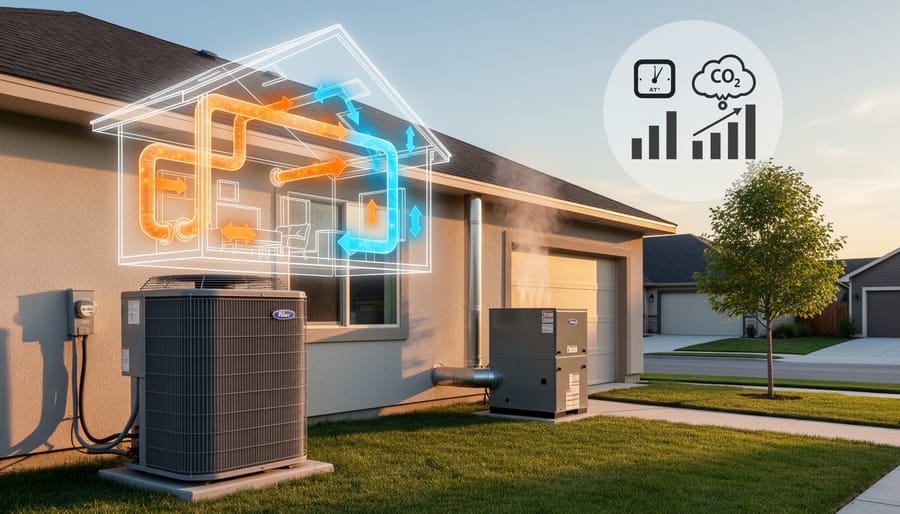
Your heating and cooling system is typically the biggest energy user in your home, accounting for nearly half of your electricity bill and a substantial portion of your carbon footprint. The good news? This also means it’s your greatest opportunity for impact.
During summer, air conditioners work overtime, especially in warmer regions where they can consume up to 3,000 kWh per season. Winter heating with electric systems shows similar patterns. A programmable thermostat alone can cut this energy use by 10-15% without sacrificing comfort—that’s both lower emissions and real money back in your pocket.
Simple maintenance matters too. Changing air filters regularly and sealing drafty windows can reduce energy waste by 20%. Smart strategies like using ceiling fans and adjusting temperatures by just a few degrees when you’re away can reduce cooling costs significantly while shrinking your environmental impact. Small changes to how you manage indoor climate create surprisingly large benefits.
Water Heating: The Silent Energy Drain
Your water heater quietly works around the clock, and that dedication comes with a surprising carbon cost. Heating water accounts for roughly 18% of your home’s energy use—second only to heating and cooling. Every hot shower, load of laundry, and sink full of dishes requires electricity or gas to warm that water from cold to comfortable.
Here’s the good news: small changes deliver big results. Lowering your water heater temperature from 140°F to 120°F can cut heating costs by 6-10% without sacrificing comfort. Switching to cold water for laundry eliminates up to 90% of the energy used per load while getting clothes just as clean with modern detergents. A low-flow showerhead saves both water and the energy needed to heat it, reducing your bills and carbon footprint simultaneously—proof that what’s good for the planet is often great for your wallet too.
Always-On Devices: Death by a Thousand Watts
Here’s a surprising fact: devices you’re not actively using could be responsible for up to 20% of your home’s electricity consumption. These sneaky energy vampires include phone chargers left plugged in, cable boxes, gaming consoles on standby, and that microwave clock blinking 12:00.
The good news? Tackling phantom loads is one of the easiest ways to shrink both your carbon footprint and electricity bill. A typical household wastes $100-200 annually powering devices in standby mode. Simply unplugging chargers when not in use or using smart power strips that cut power to idle devices can eliminate this waste entirely.
Constantly-running appliances like refrigerators, water heaters, and HVAC systems deserve attention too. While you can’t unplug your fridge, upgrading to Energy Star certified models can reduce consumption by 40%. Small changes here create outsized environmental and financial benefits without sacrificing comfort.
Taking Control: Reducing Your Electricity Carbon Footprint
Quick Wins That Cost Nothing
You don’t need to spend a dime to start reducing your electricity’s carbon footprint today. Simply unplugging devices when not in use eliminates “phantom power” drain—those chargers, TVs, and kitchen appliances silently consume energy even when switched off, adding unnecessary carbon emissions and costs to your bill. Shifting energy-intensive tasks like laundry and dishwashing to peak electricity hours when cleaner energy sources are more available can make a real difference.
Adjusting your thermostat by just 2-3 degrees (lower in winter, higher in summer) significantly reduces HVAC energy consumption—the biggest electricity user in most homes. Opening curtains on sunny winter days for free heating, or closing them during summer afternoons, works with nature instead of against it. Switching your computer’s power settings to sleep mode after 10-15 minutes of inactivity prevents wasted energy during breaks. These simple habits collectively reduce your carbon footprint while trimming your monthly bills, proving that environmental responsibility and financial savings go hand in hand.
Smart Upgrades That Pay You Back
Making the switch to energy-efficient upgrades isn’t just good for the planet—it puts money back in your pocket. LED bulbs use 75% less electricity than traditional incandescent lighting and last up to 25 times longer, meaning you’ll recoup your investment within months through lower electricity bills. Most homeowners save around $225 annually just by switching to LEDs throughout their home.
Smart thermostats with smart energy control capabilities learn your schedule and adjust temperatures automatically, typically paying for themselves within two years through 10-23% savings on heating and cooling costs. That translates to roughly $180 yearly for the average household.
When it’s time to replace major appliances, choosing ENERGY STAR certified models makes financial sense. A new refrigerator uses about 40% less energy than models from 2001, saving approximately $270 over its lifetime. High-efficiency washing machines cut both electricity and water usage, reducing your carbon footprint while delivering $370 in savings over the appliance’s lifespan. These aren’t sacrifices—they’re smart investments that reduce emissions while improving your bottom line from day one.
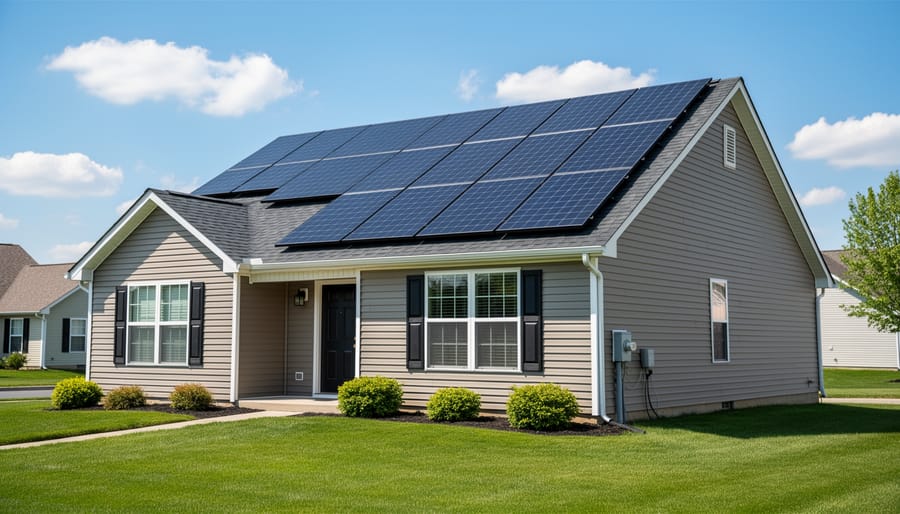
Going to the Source: Residential Solar Power
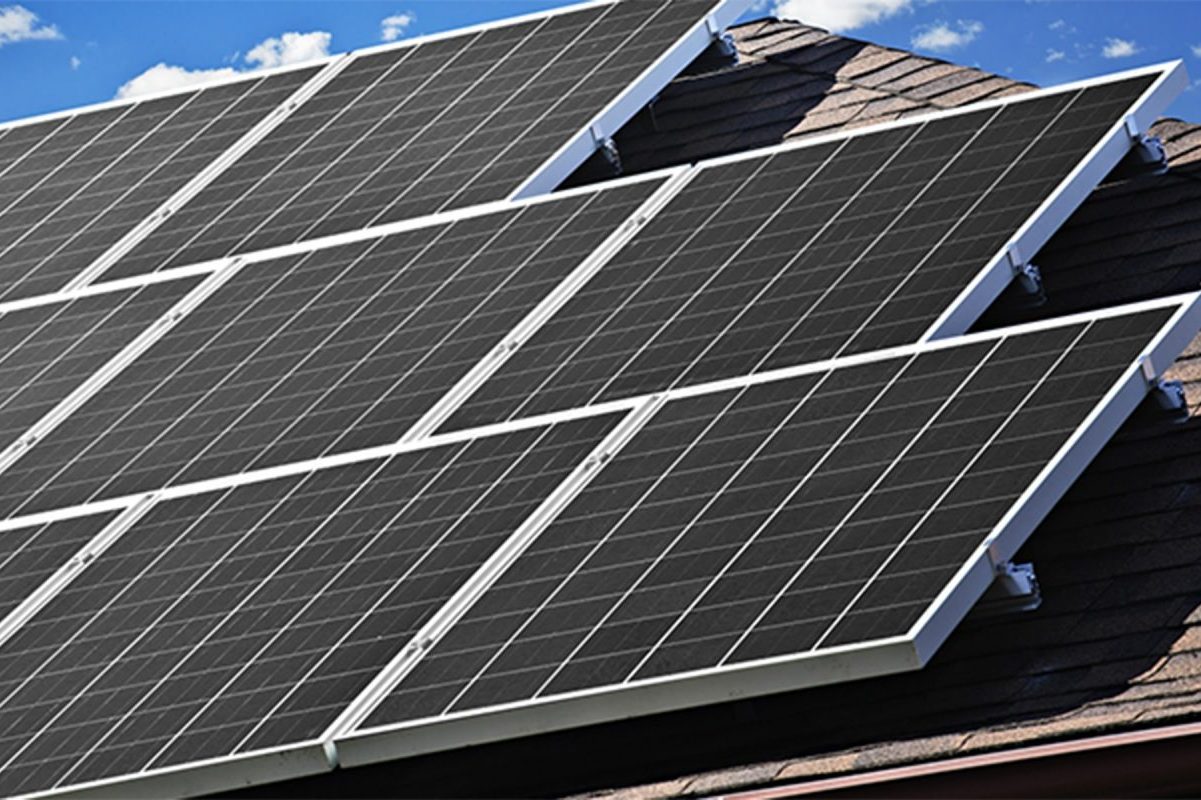
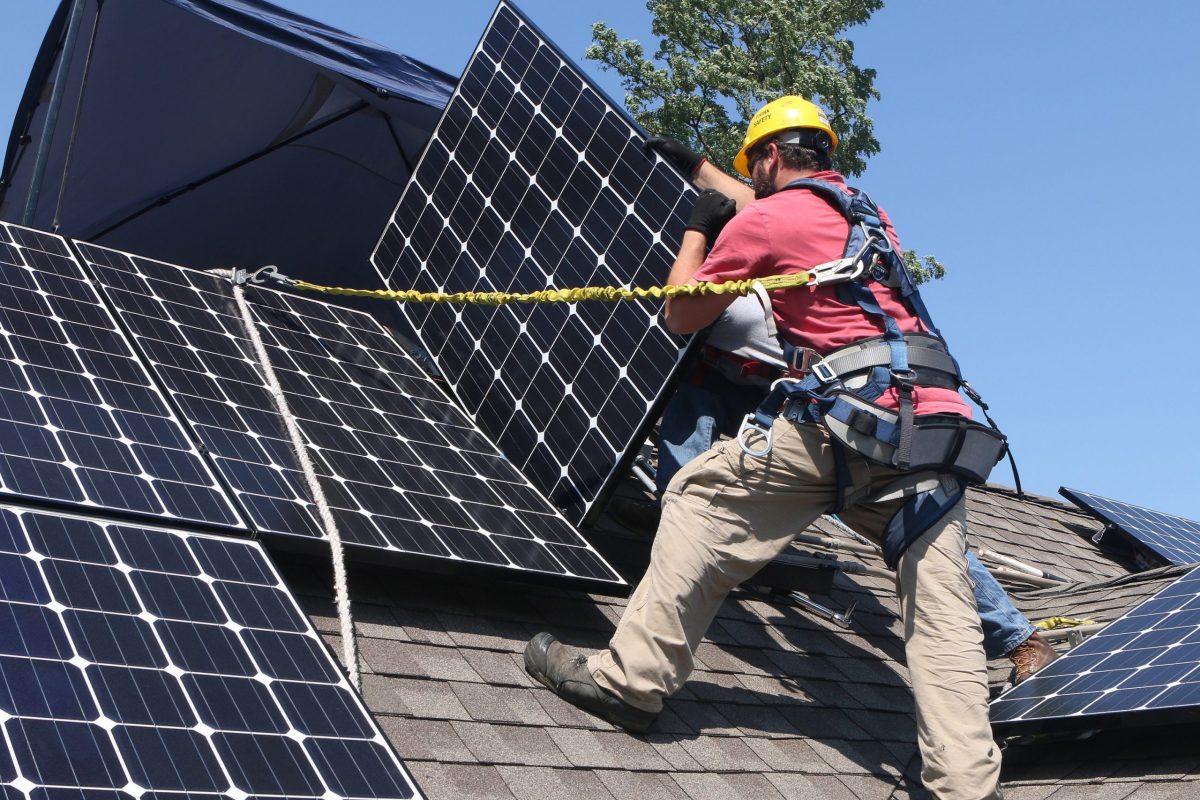
Residential solar panels offer the most direct way to eliminate your electricity carbon footprint—right at the source. By generating clean energy from sunlight, your home produces zero emissions while drastically cutting your monthly electric bills.
Let’s clear up a common myth: solar isn’t just for sunny climates. Modern panels work efficiently even on cloudy days, and systems in northern states deliver impressive returns. Another misconception? The upfront cost. With government energy incentives, tax credits, and financing options, most homeowners see immediate savings that offset installation costs within years, not decades.
The benefits start from day one. You’ll notice lower bills immediately while reducing your carbon emissions by several tons annually—equivalent to planting hundreds of trees. Over 25 years, a typical residential system prevents roughly 100 tons of carbon dioxide from entering the atmosphere.
Beyond environmental impact, solar panels increase home value, protect against rising electricity rates, and provide energy independence. Many homeowners even earn credits by selling excess power back to the grid, turning their roof into a income-generating asset.
Here’s the empowering truth: you have far more control over your electricity carbon footprint than you might think. Every choice you make about how you power your home creates a ripple effect that extends well beyond your property line. The connection is direct and measurable. When you switch to energy-efficient appliances, adjust your thermostat by a few degrees, or choose a cleaner energy source, you’re not just reducing numbers on a utility bill. You’re actively participating in the solution to one of our generation’s most pressing challenges.
The good news keeps getting better. Reducing your electricity carbon footprint isn’t about sacrifice or inconvenience. It’s about making smarter choices that benefit both the planet and your wallet. Those energy-efficient upgrades lower your monthly bills while cutting emissions. Solar panels generate clean power while protecting you from rising energy costs. Even simple behavioral changes, like running your dishwasher during off-peak hours, add up to meaningful savings over time.
You don’t need to overhaul your entire life overnight. Start with one change. Swap out those old light bulbs. Get a home energy audit. Research your utility’s renewable energy programs. Each small step builds momentum and confidence for the next one.
The future of home energy is cleaner, more affordable, and more accessible than ever before. Technology continues to improve, costs continue to fall, and incentives continue to expand. Your electricity choices matter, your timing is perfect, and the benefits are real. The question isn’t whether you can make a difference. It’s simply which positive change you’ll make first.