Power outages don’t have to leave you in the dark. Energy resilience means having reliable electricity when the grid fails, whether from storms, wildfires, or infrastructure problems. Think of it as an insurance policy that actually saves you money while protecting your home.
The concept is straightforward: combine solar panels with battery storage and backup systems to keep your lights on, refrigerator running, and devices charged during blackouts. You’re not just preparing for emergencies—you’re taking control of your energy costs and reducing your environmental footprint every single day.
What makes energy resilience different from simply buying a generator? It’s a complete system that works seamlessly. Your solar panels generate clean power during the day, your batteries store excess energy for nighttime use, and when the grid goes down, your home automatically switches to backup power without you lifting a finger.
The benefits extend far beyond emergency preparedness. Homeowners with resilient energy systems typically see lower monthly bills, protection from rising utility rates, and increased home value. You’re also supporting a cleaner environment by reducing reliance on fossil fuels.
This isn’t about going completely off-grid or making drastic lifestyle changes. Energy resilience is about smart, practical steps that give you peace of mind while delivering real financial returns. The technology has become more affordable and accessible than ever, making now the perfect time to explore your options.
What Energy Resilience Really Means for Your Home
Energy resilience is about more than keeping the lights on—it’s your home’s ability to maintain power independently when the grid can’t deliver. Think of it as your energy safety net during storms, wildfires, heat waves, or utility failures that are becoming increasingly common.
Here’s what many homeowners miss: solar panels alone don’t provide energy resilience. When the grid goes down, standard solar systems shut off automatically for safety reasons. True energy resilience requires three components working together: solar panels to generate power, battery storage to hold that energy, and smart backup systems that seamlessly switch your home to stored power when needed.
The difference is significant. A home with just solar panels goes dark during outages, just like everyone else on the block. A home with energy resilience keeps essential appliances running—your refrigerator stays cold, medical devices remain powered, and you maintain comfort while neighbors scramble for generators.
Why does this matter now more than ever? Climate patterns are shifting, bringing more extreme weather events that stress our aging electrical infrastructure. The grid wasn’t designed for the demands we’re placing on it, from summer cooling needs to winter heating spikes. Understanding energy decision factors helps you recognize that resilience isn’t just about emergency preparedness—it’s about taking control of your energy future.
Energy resilience gives you independence from rising utility rates, protection from planned outages, and peace of mind knowing your family stays comfortable and safe regardless of what’s happening with the power grid. It’s transitioning from being at the mercy of external systems to having reliable backup power you control.
Why Traditional Grid Dependence Leaves You Vulnerable
Most homeowners don’t think much about their electrical grid until the lights go out. But the reality is that power outages are becoming increasingly common across the country. The average U.S. customer experienced over eight hours of power interruptions in 2020, and that number has been climbing steadily.
The reasons are straightforward. Much of America’s electrical infrastructure was built decades ago and wasn’t designed to handle today’s energy demands or weather patterns. Utility poles, transformers, and transmission lines that were installed in the 1960s and 70s are still in service, operating well beyond their intended lifespan.
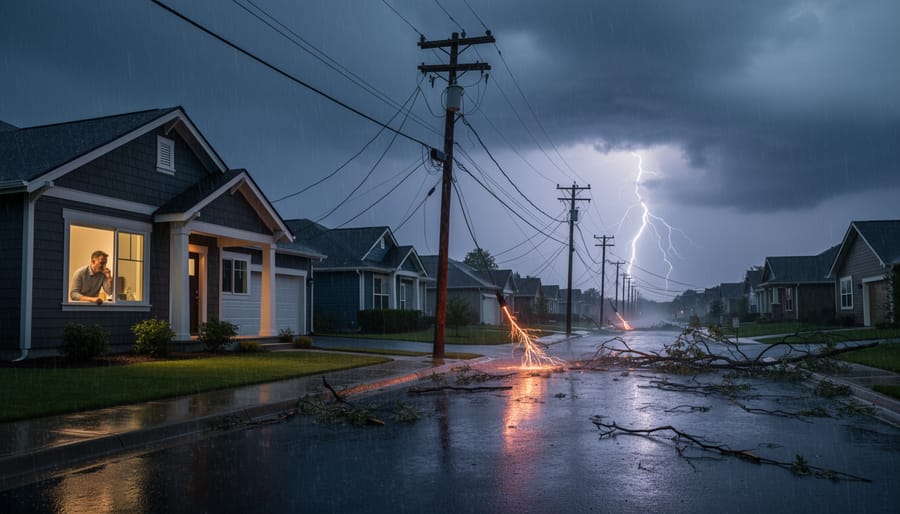
Meanwhile, extreme weather events are happening more frequently. Summer heat waves strain the grid as air conditioners run full blast. Winter storms can knock out power lines for days. Even a strong thunderstorm or high winds can leave neighborhoods in the dark.
The financial impact of these outages adds up quickly. A refrigerator and freezer full of groceries can spoil in just 24 hours, potentially costing hundreds of dollars. If you run a home-based business, every hour without power means lost productivity and income. For families with medical equipment, health considerations become paramount.
Beyond the immediate costs, there’s the simple disruption to daily life. No internet means no remote work or online school. No power for heating or cooling affects your family’s comfort and safety. These aren’t worst-case scenarios, they’re situations thousands of homeowners face every year.
The traditional approach of simply waiting for utility companies to restore power puts you in a reactive position. You’re at the mercy of repair crews who might be dealing with thousands of outages across a wide area. Depending solely on the grid means accepting that you have no control over when your power comes back or how often it might go out in the future.
Understanding these vulnerabilities isn’t about fear, it’s about making informed decisions to protect your home and family.
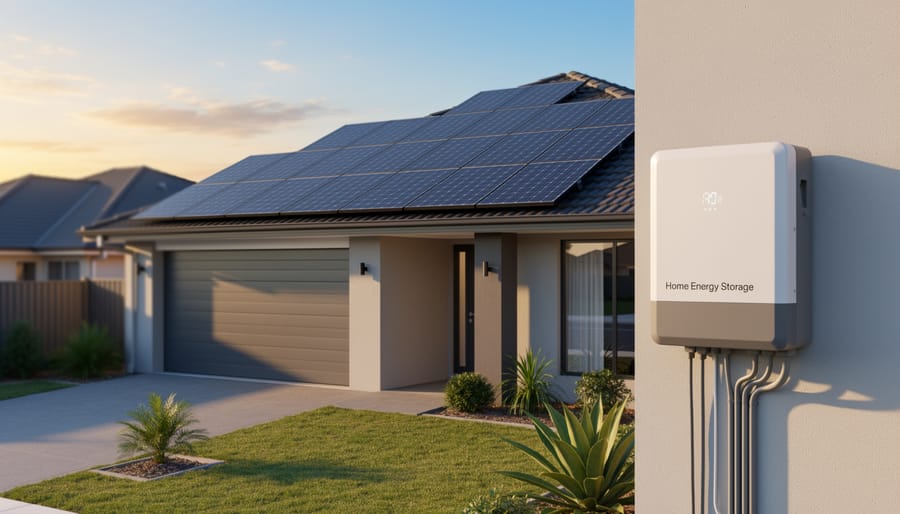
The Three Pillars of a Resilient Home Energy System
Solar Panels: Your Primary Power Source
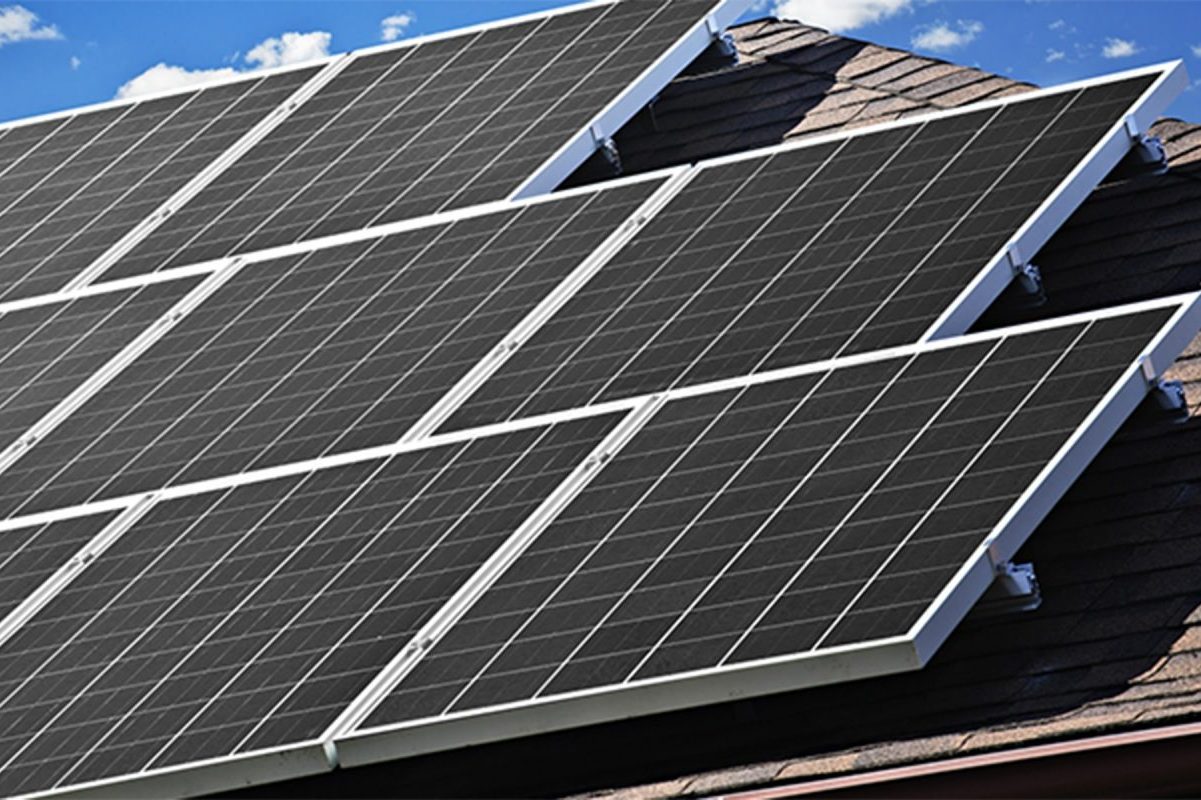
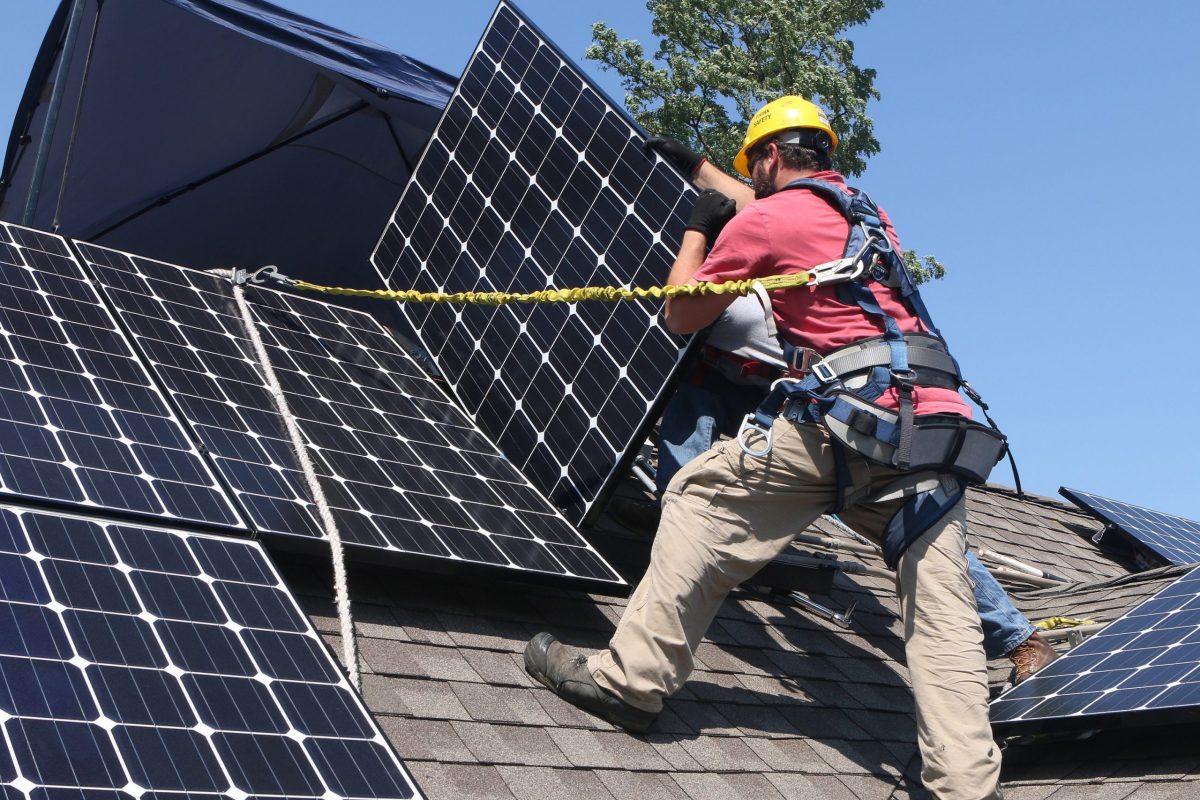
Solar panels are the cornerstone of any energy resilient home, converting sunlight into clean electricity that powers your daily life. During daylight hours, these systems work continuously to reduce your dependence on the grid, often covering most or all of your household energy needs. Thanks to recent solar energy breakthroughs, today’s panels are more efficient and affordable than ever, making them an increasingly practical investment for homeowners.
Here’s what many people don’t realize: solar panels alone won’t keep your lights on during a power outage. This is a common misconception that deserves clarification. When the grid goes down, standard solar systems automatically shut off for safety reasons, protecting utility workers from unexpected electrical backflow. Your panels might be generating power, but without additional equipment, you can’t access it during an outage.
That’s where the complete energy resilience picture comes in. Solar panels provide the foundation by generating abundant electricity during the day and significantly lowering your monthly energy bills. When paired with battery storage and backup systems, which we’ll explore next, those same panels become part of a comprehensive solution that actually does keep your power flowing when others lose theirs. Think of solar as the essential first step in building true energy independence for your home.
Battery Storage: Power When You Need It Most
Think of a battery storage system as a piggy bank for sunshine. When your solar panels produce more electricity than you’re using—which typically happens during sunny afternoons—that extra energy doesn’t go to waste. Instead, it gets stored in batteries at your home, ready and waiting for when you actually need it.
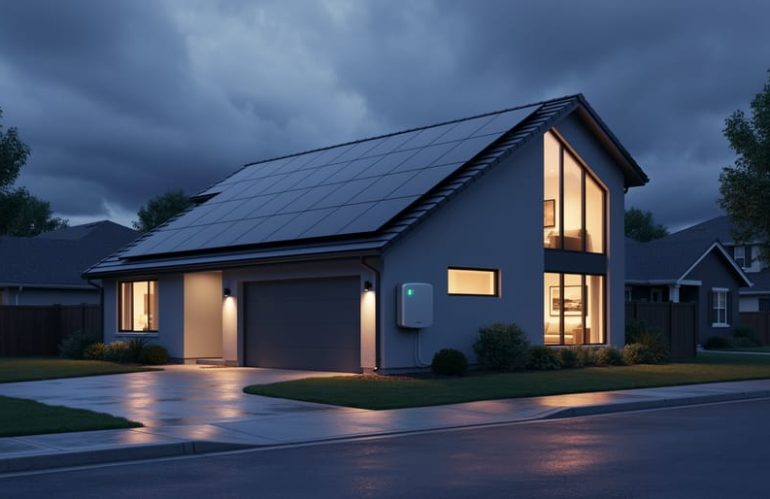
The real magic happens when the grid goes down or after the sun sets. While your neighbors are fumbling for flashlights during an outage, your lights stay on, your refrigerator keeps running, and your phone keeps charging. You’re drawing from the energy you captured earlier, giving you genuine independence from the grid.
Battery storage also means you can use your own solar power during expensive peak hours in the evening, rather than buying electricity from the utility when rates are highest. You’ve already paid for that energy when the sun was shining—why not use it on your terms?
Many homeowners worry that battery systems are complicated or require constant monitoring. The truth is quite the opposite. Modern systems work automatically in the background, managing themselves without any input from you. You simply enjoy the peace of mind knowing that whether it’s a planned evening at home or an unexpected blackout, you have reliable backup power standing by. It’s energy security that works while you sleep.
Backup Generators: Your Safety Net
Think of a backup generator as your insurance policy for energy resilience. While solar panels and battery storage handle most of your power needs beautifully, a generator provides that extra peace of mind for those rare but challenging situations.
Here’s where generators really shine: during extended cloudy periods in winter when solar production naturally dips, or during multi-day outages when even the best battery system might need support. Rather than replacing your clean energy setup, a modern generator works alongside it, kicking in only when necessary.
The beauty of this three-layer approach is efficiency. Your solar system generates clean power daily, your battery stores excess energy for nighttime and cloudy days, and your generator serves as the final backup. You’re not running a noisy, fuel-guzzling machine constantly—it only activates during genuine emergencies or extreme weather events.
Modern generators have come a long way too. Today’s models are quieter, more fuel-efficient, and can be powered by cleaner options like propane or natural gas. Some even integrate seamlessly with your solar and battery system, automatically detecting when they’re needed and shutting down once conditions improve.
The investment in a generator is modest compared to the security it provides. You’re essentially guaranteeing that no matter what happens with the grid or the weather, your home stays powered. For families with medical equipment, home offices, or simply those who value complete energy independence, that assurance is invaluable.
Real-World Benefits: What Energy Resilience Does for You
Keep Your Family Comfortable and Safe
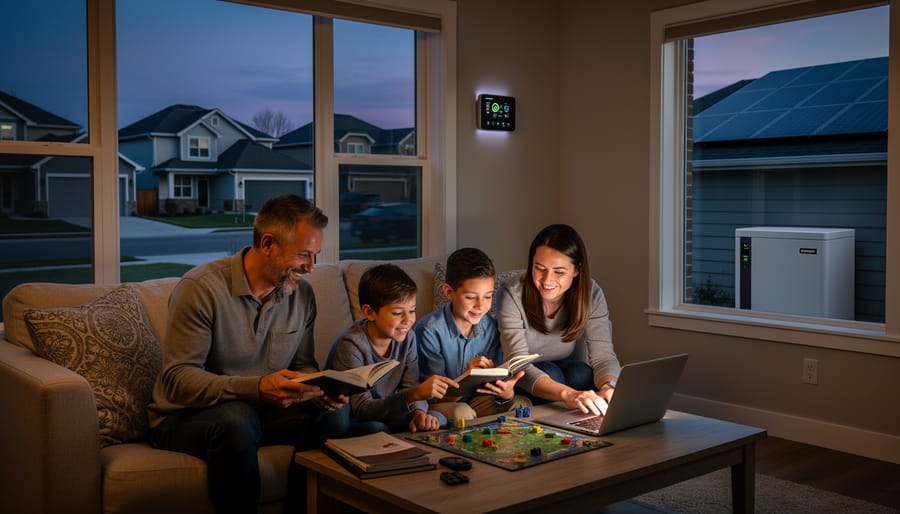
When the power goes out, energy resilience means your daily life doesn’t have to. Your refrigerator keeps running, protecting hundreds of dollars worth of groceries from spoiling. Your heating and cooling systems continue working, so your family stays comfortable regardless of the weather outside. For households with medical equipment like CPAP machines, nebulizers, or refrigerated medications, backup power isn’t just convenient—it’s essential for health and safety.
Beyond the basics, energy resilience keeps you connected during emergencies. Your internet router stays online, allowing you to check weather updates, communicate with family members, and work from home if needed. You can charge phones and devices without rationing battery life or searching for open coffee shops with power.
The peace of mind that comes from knowing you’re prepared for outages is invaluable. You’re not scrambling for ice, wondering if your sump pump will fail, or worrying about frozen pipes. Instead, your home continues functioning normally while neighbors deal with disruption. Energy resilience transforms power outages from stressful emergencies into minor inconveniences you barely notice.
Protect Your Wallet
Energy resilience delivers real financial protection that extends far beyond backup power. When the grid goes down, you avoid costly food spoilage—a typical refrigerator and freezer hold $200-400 worth of groceries that can spoil during extended outages. If you work from home, maintaining power means keeping your income flowing without interruption or scrambling for alternative workspace.
Your energy-resilient system pays for itself through multiple channels. Solar panels reduce your monthly electric bills, often by 50-90%, while battery storage lets you use stored energy during expensive peak-rate hours. Many homeowners see complete system payback within 7-12 years, with incentives and net metering programs making solar more affordable than ever before.
Beyond direct savings, some insurance companies offer premium discounts for homes with backup power systems, recognizing reduced risk of claims from power-related damage. You’re also protecting property value—homes with solar and storage sell faster and command premium prices. Think of energy resilience as an investment that simultaneously cuts expenses, generates savings, and safeguards your lifestyle against an increasingly unpredictable grid.
Increase Your Home’s Value
Today’s homebuyers are paying attention to energy resilience, and it’s starting to show up in home values. Properties equipped with solar panels, battery storage, and backup power systems are standing out in competitive real estate markets. Think of it as similar to how updated kitchens or finished basements add appeal—except energy resilience offers ongoing financial benefits too.
Real estate agents report that homes with comprehensive energy systems often sell faster and can command premium prices, particularly in areas that have experienced frequent outages. Beyond the immediate financial return, you’re also future-proofing your investment. As extreme weather events become more common and grid reliability concerns grow, buyers are actively seeking homes that can maintain power independently. Installing an energy-resilient system now means you’re not just improving your daily life—you’re making a smart investment that positions your home as a desirable, forward-thinking property in tomorrow’s market.
Adapting Your Energy Strategy: Starting Where You Are
Building energy resilience doesn’t require a complete home overhaul overnight. The key is starting from where you are right now, with whatever budget and circumstances you’re facing. Think of it as a journey rather than a destination, where each step forward increases your home’s independence and your peace of mind.
If you’re just beginning to explore energy independence, start with an energy audit to understand your current usage patterns. Many utility companies offer these for free or at minimal cost. This baseline knowledge helps you make informed decisions about which improvements deliver the biggest impact first. Simple weatherization improvements like sealing air leaks and adding insulation can reduce your energy needs by 20-30 percent, making any future solar investment more cost-effective.
For homeowners ready to take the next step, solar panels alone offer substantial benefits even without battery storage. You’ll immediately reduce your monthly bills and contribute clean energy to the grid. Understanding why homeowners choose solar helps clarify whether this makes sense for your situation right now.
When your budget allows, adding battery storage transforms your solar system into a true resilience solution. Many homeowners start with partial backup coverage for essential circuits like refrigerators, medical equipment, and communication devices, then expand over time.
The good news is that today’s modular systems grow with you. Federal tax credits and state incentives significantly reduce upfront costs, and financing options make monthly payments comparable to or less than typical utility bills. You don’t need to do everything at once. Each improvement builds on the last, creating a customized energy resilience strategy that fits your unique situation.
Common Myths About Energy Resilience (Debunked)
Let’s clear up some common misunderstandings that might be holding you back from achieving energy resilience.
“It’s too expensive.” This is perhaps the biggest myth. With federal tax credits covering 30% of system costs, declining equipment prices, and financing options that require little or no money down, most homeowners find their monthly loan payments are lower than their previous electricity bills. You’re essentially trading one expense for another while building equity in your home. The upfront investment pays for itself through energy savings, and many families see positive cash flow from day one.
“Solar doesn’t work in my climate.” Solar panels actually perform well in diverse climates. They generate electricity from daylight, not heat, so cloudy or cooler regions still see excellent results. Germany, with weather similar to Alaska, is a solar leader. Snow can even boost efficiency by reflecting additional light onto panels. Modern systems are engineered to maximize production regardless of your local weather patterns.
“Batteries are complicated to maintain.” Today’s battery systems are designed for simplicity. They operate automatically, require virtually no maintenance, and most homeowners never think about them after the solar installation process is complete. Your smartphone app shows you everything you need to know at a glance, and the system manages charging, discharging, and grid interaction without any input from you.
“I’ll wait for technology to improve.” While technology always advances, today’s systems are proven, reliable, and backed by extensive warranties of 25 years or more. Waiting means missing out on immediate savings, current incentives that may decrease, and years of energy independence. The best time to invest in energy resilience is when you need it, and with climate-related outages increasing, that time is now. The technology available today delivers real value that improves your life immediately.
Energy resilience isn’t about preparing for disaster—it’s about taking control of something that matters to you and your family every single day. When you invest in a resilient energy system, you’re not just protecting against what might happen; you’re improving how you live right now. Lower monthly bills, cleaner energy, and the confidence that comes from knowing you’re ready for whatever comes your way. That’s real peace of mind.
The great news? Achieving energy resilience is more accessible than ever before. Solar technology has become incredibly affordable, battery storage systems are more efficient and cost-effective, and the benefits start adding up from day one. You don’t need to overhaul your entire life or become an energy expert. You just need to take that first step.
As our energy landscape continues to evolve, homeowners who embrace resilience today are positioning themselves for decades of benefits. You’re not just adapting to change—you’re staying ahead of it. Whether you start with solar panels, add battery backup later, or design a complete system from the beginning, every step forward is a step toward greater independence and security.
Your energy future is worth planning for, and it’s entirely within your reach. The question isn’t whether energy resilience makes sense for your home—it’s simply when you’ll make it happen.