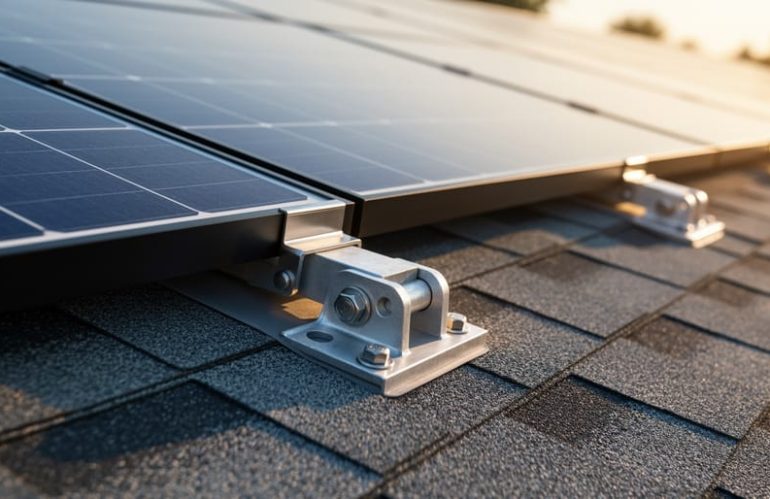
Your solar panels are only as good as what holds them in place. Racking systems—the metal frameworks that anchor panels to your roof or ground—directly impact your installation’s durability, energy production, and long-term costs. Yet most homeowners focus exclusively on panel wattage and inverter brands, overlooking the foundation that determines whether their system weathers decades of storms or requires expensive repairs within years.
The right racking protects your roof from leaks, optimizes panel angles for maximum sunlight capture, and withstands wind loads that would rip poorly-mounted systems away. The wrong choice leads to voided warranties, structural damage, and thousands in premature replacement costs. With racking accounting for 10-15% of total installation expenses, understanding your options isn’t technical nitpicking—it’s protecting your investment and ensuring the energy savings you’re counting on actually materialize.
This guide cuts through installer jargon to reveal what makes quality racking systems worth the investment, which mounting types suit different roof materials and climates, and the specific questions that separate experienced professionals from shortcuts-takers. Whether you’re evaluating quotes or questioning your installer’s recommendations, you’ll gain the clarity to make confident decisions about the invisible infrastructure supporting your solar future.
What Solar Racking Actually Does (Beyond Just Holding Panels)
If you think solar racking is just a fancy bracket system, think again. While it certainly keeps your panels securely in place, a quality racking system is actually a hardworking multitasker that protects your investment in several crucial ways.
First and foremost, racking provides rock-solid structural support. Your solar panels need to withstand decades of weather conditions, from heavy snow loads to high winds. The racking system distributes the weight evenly across your roof and anchors everything safely, ensuring your panels stay put during storms while protecting your roof structure from unnecessary stress.
Beyond stability, racking positions your panels at the optimal angle to capture sunlight. This isn’t just about slapping panels on your roof at whatever angle happens to exist. Professional racking systems allow installers to tilt panels to match your geographic location, maximizing energy production throughout the year. Even a few degrees of difference can significantly impact how much electricity your system generates and how quickly you see returns on your investment.
Here’s something most homeowners don’t realize: quality racking actually protects your roof. Properly installed systems include weatherproof seals and flashing that prevent water intrusion at mounting points. Rather than creating leak risks, good racking systems shield these vulnerable areas from the elements.
Finally, racking creates essential airflow beneath your panels. Solar panels get hot, and excessive heat reduces their efficiency. The gap between your panels and roof allows air to circulate freely, keeping panels cooler and maintaining peak performance. This ventilation can improve energy output by several percentage points compared to panels mounted flush against surfaces.
In short, racking isn’t just about holding panels up; it’s about making your entire solar system work better, last longer, and protect your home.
The Main Types of Racking Systems for Your Home
Roof-Mounted Racking
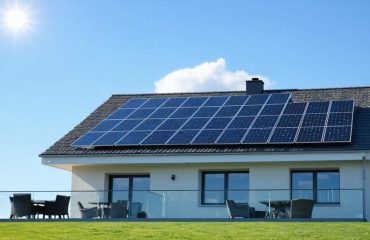
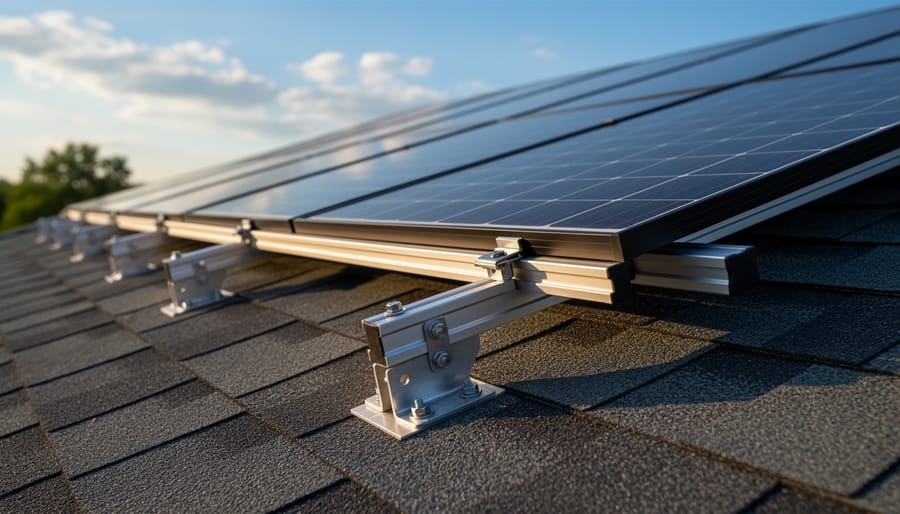
For most homeowners, roof-mounted racking is the go-to choice for installing solar panels, and for good reason. It maximizes your existing space without requiring additional land, keeps installation costs reasonable, and gets those panels up high where they can soak up unobstructed sunlight.
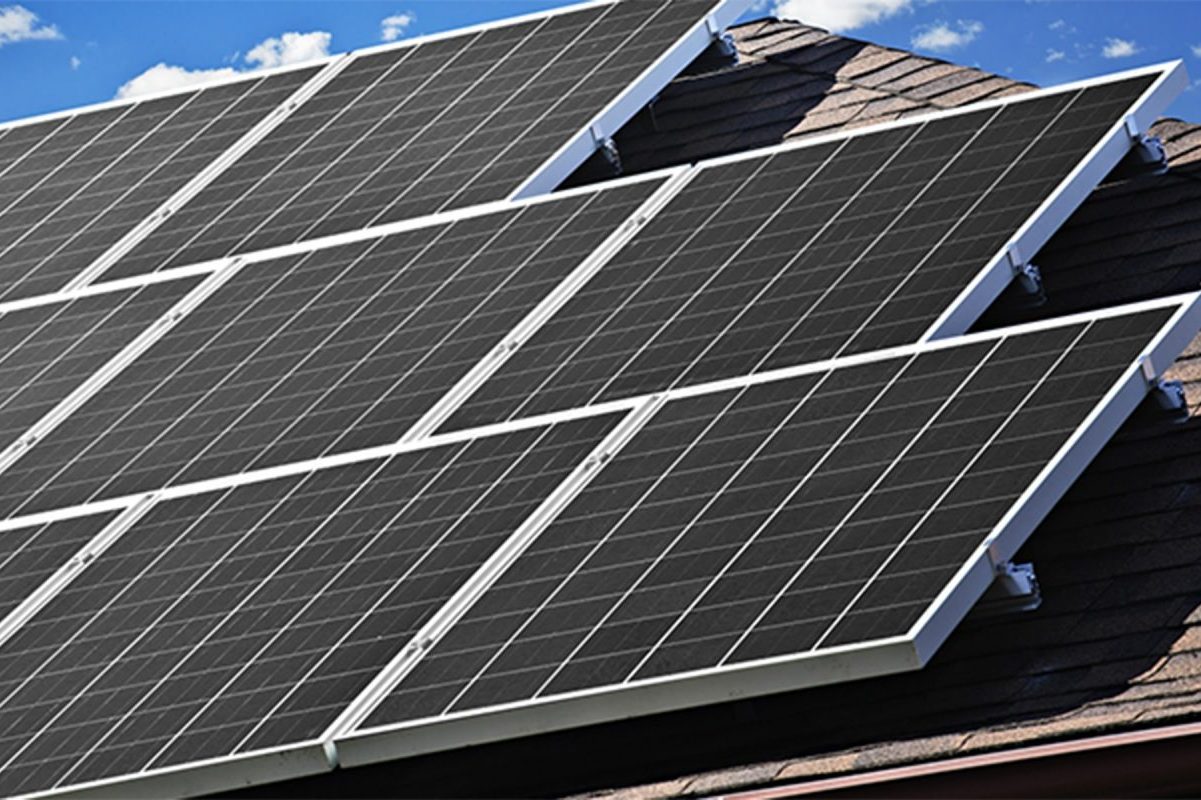
When it comes to roof-mounted systems, you’ll typically choose between two main approaches. Flush-mount racking sits close to your roof’s surface, creating a sleek, low-profile appearance that many homeowners prefer for aesthetic reasons. This option works beautifully on sloped roofs and minimizes wind resistance. Tilt systems, on the other hand, angle your panels at the optimal position to capture sunlight, which can be particularly beneficial if your roof doesn’t naturally face the ideal direction or has a less-than-perfect pitch.
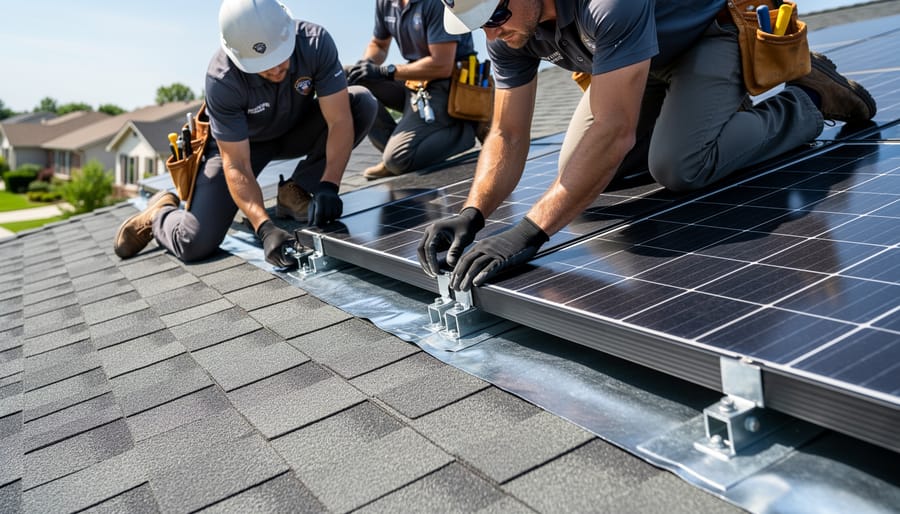
The good news is that modern racking systems work with virtually any roof type you might have. Whether you’ve got asphalt shingles (the most common), clay or concrete tiles, or metal roofing, there’s a compatible racking solution designed specifically for your situation. Each roof material requires specialized mounting hardware that protects your roof’s integrity while creating a watertight seal. Quality installers use flashing and proper sealing techniques to ensure your roof remains completely protected from the elements.
The benefits for typical homeowners are substantial. You’re using space that’s otherwise just sitting there, avoiding the expense of ground-mounted alternatives, and your panels are positioned away from ground-level shade sources like trees or fences. Plus, roof-mounted systems actually provide a layer of protection to your roof underneath, shielding it from weather while generating clean energy and lowering your electricity bills.
Ground-Mounted Racking
Not everyone has a roof that’s ideal for solar panels. Whether your roof is shaded, facing the wrong direction, or structurally unsuitable, ground-mounted racking offers a practical alternative. These systems are installed in your yard, giving you complete control over panel placement and angle.
Ground-mounted systems shine when it comes to flexibility. You can position panels at the optimal angle and direction for maximum sun exposure, regardless of your roof’s orientation. Many ground mounts are adjustable, letting you tweak the tilt seasonally to capture more sunlight year-round. This can translate to 10-20% more energy production compared to fixed installations.
Maintenance becomes simpler too. With easier maintenance access at ground level, you won’t need ladders or professional help for routine cleaning and inspections. This saves money over time and helps your system perform at peak efficiency.
Ground-mounted systems make financial sense if you have unused yard space and want to explore alternative solar solutions. While installation costs run slightly higher than rooftop systems, the increased energy production and convenience often offset the difference within your system’s lifespan.
Specialty Mounting Solutions
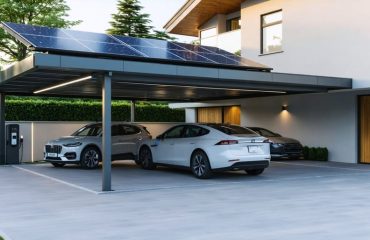
Not every home fits the standard solar installation mold, and that’s perfectly fine. If your roof isn’t ideal or you want to get creative with your solar setup, specialty mounting solutions offer excellent alternatives. Carport systems turn your parking area into a power generator while protecting your vehicle from the elements. Pergola mounts blend solar panels seamlessly into your outdoor living space, generating electricity while providing shade for your patio. For flat roofs, ballasted systems use weighted platforms instead of roof penetrations, protecting your roof’s integrity while keeping installation costs down. These innovative options prove that going solar doesn’t require a perfect south-facing pitched roof. Your installer can help you explore which specialty solution maximizes your property’s unique potential.
What Quality Racking Means for Your Wallet (And Your Peace of Mind)
Choosing quality racking isn’t just about keeping your panels secure—it’s a decision that impacts your finances and long-term satisfaction with your solar investment. Here’s what good racking really means for you.
First, quality racking protects your roof warranty. Many homeowners don’t realize that improper installation can void their existing roof warranty. Premium racking systems are designed to seal penetration points properly and distribute weight evenly, keeping your roof manufacturer happy and your coverage intact. This alone can save you thousands if roof issues arise down the road.
Longevity is another major financial consideration. While you might save a few hundred dollars upfront with budget racking, quality systems last the full 25-30 year lifespan of your panels. Cheap racking can corrode, loosen, or fail within 10-15 years, forcing you into expensive mid-life repairs or complete re-installation. That initial savings quickly disappears when you’re paying for emergency roof work and system downtime.
Speaking of efficiency, stable racking maintains optimal panel positioning over decades. When inferior systems shift or sag, your panels lose their ideal angle to capture sunlight. Even a few degrees of deviation can reduce energy production by 10-15 percent, directly cutting into your monthly savings. Quality racking holds firm through wind, snow, and thermal expansion, ensuring you get every kilowatt-hour you paid for.
The peace of mind factor shouldn’t be underestimated either. Knowing your system is anchored with properly engineered, corrosion-resistant materials means fewer worried glances at your roof during storms. Quality installers who use premium racking typically offer better warranties too, giving you recourse if anything does go wrong.
Bottom line: investing in quality racking protects your home, maximizes your energy savings, and eliminates the headache of premature repairs. It’s the foundation that makes your entire solar investment worthwhile.
The Materials That Matter: Aluminum vs. Steel and What It Means for You
When it comes to securing your solar panels, the material choice boils down to two main contenders: aluminum and steel. Understanding the differences helps you make the right choice for your home and climate.
Aluminum is the lighter champion of the racking world. It naturally resists rust and corrosion, making it ideal for coastal areas where salt air can wreak havoc on metal components. This lightweight nature also means less stress on your roof structure, which is particularly important for older homes or those with weight restrictions. The trade-off? Aluminum typically costs more upfront, though many homeowners find the longevity worth the investment since it can last 25 years or more without degradation.
Steel racking offers impressive strength at a lower price point, which appeals to budget-conscious homeowners. However, steel requires protective coatings to prevent rust, and these coatings can wear down over time, especially in humid or salty environments. Modern galvanized or powder-coated steel performs admirably in dry, inland climates where corrosion isn’t a major concern. The extra weight does mean your roof bears more load, so a structural assessment becomes especially important.
Here’s the practical takeaway: if you live near the ocean or in areas with high humidity, aluminum’s corrosion resistance justifies the higher cost. For inland, drier climates, quality steel racking provides excellent durability at a friendlier price. Either material works well when properly installed, but matching the material to your environment ensures your investment stays secure and functional for decades. Don’t hesitate to ask your installer which material they recommend based on your specific location and roof type.
Busting the Myth: Will Solar Racking Damage Your Roof?
One of the biggest concerns homeowners have about going solar is whether those mounting brackets will damage their roof. Here’s the good news: when installed correctly, solar racking actually protects your roof rather than harming it.
The worry makes sense. After all, installers do need to attach the racking system to your roof structure, which typically involves making penetrations through the roofing material. However, professional solar installation teams use specialized flashing and waterproofing techniques that create watertight seals around every attachment point. These protective barriers are often more secure than the roof itself.
Think of it this way: the panels and racking create a protective shield over the covered portions of your roof, shielding those areas from weather, UV rays, and general wear and tear. Many homeowners find that the roof sections under their solar arrays actually age more slowly than exposed areas.
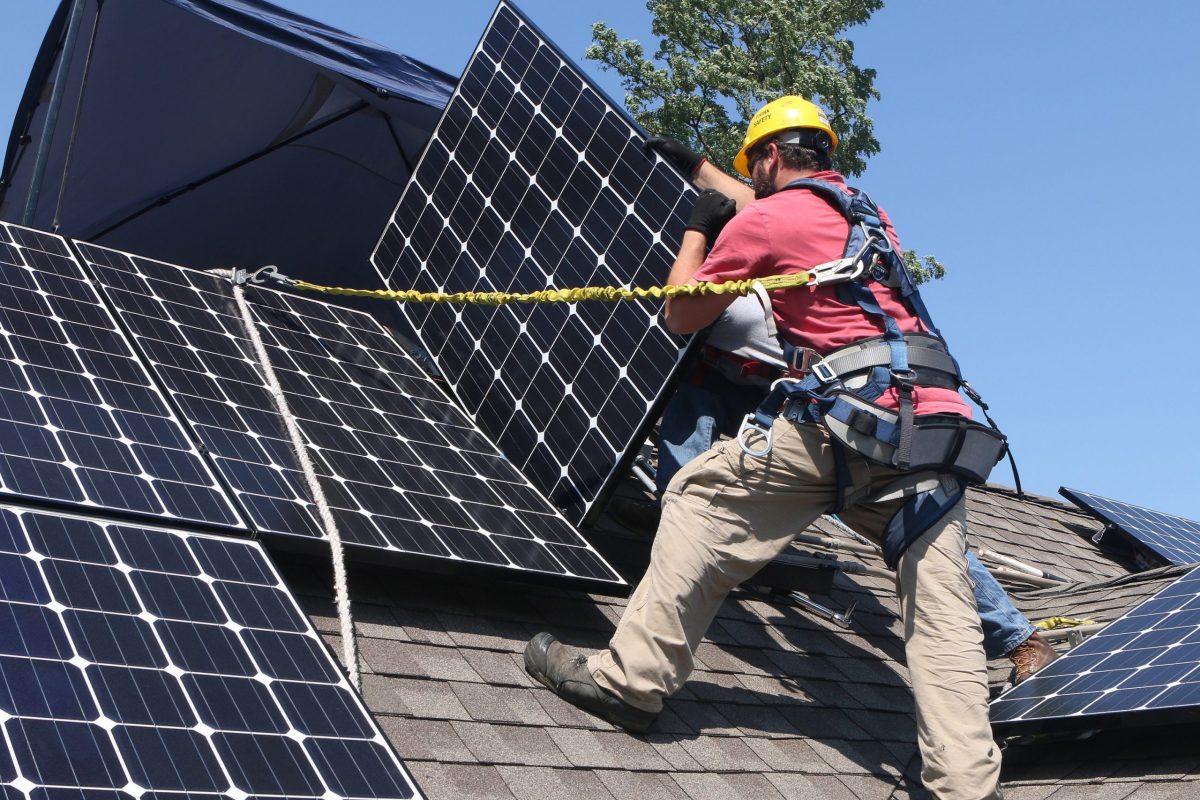
The key is working with quality installers who follow industry best practices. Reputable solar companies carry proper insurance, employ certified installers, and stand behind their work with warranties that cover both the system and any roof-related issues. They’ll also assess your roof’s current condition and remaining lifespan before installation, recommending any necessary repairs upfront.
Bottom line: roof damage from solar isn’t about the technology itself but about installation quality. Choose experienced professionals, and your roof will be in good hands.
What to Ask Your Solar Installer About Racking
Your solar racking system is a long-term investment in your home, so asking the right questions upfront protects both your wallet and your roof. During installer consultations, take charge by requesting specific details that matter.
Start with warranty coverage. Ask how many years the racking system is guaranteed and what exactly it covers—materials, labor, or both. Quality manufacturers typically offer 10 to 25-year warranties, which should match or exceed your panel warranty.
Next, discuss wind and snow load ratings. Your installer should confirm that the racking system meets or surpasses local building codes for your specific area. If you live in a region with heavy snowfall or hurricane-prone zones, you need assurance that your system can handle extreme weather conditions without damage.
Don’t skip questions about roof attachment methods. Ask how the mounting hardware will penetrate and seal your roof, and what measures prevent leaks. Request details about flashing materials and waterproofing techniques—this protects your most valuable asset.
Finally, inquire about material specifications. Are the rails aluminum or steel? What’s the coating that prevents corrosion? Understanding these details helps you compare quotes fairly and avoid installers cutting corners with cheaper materials.
Remember, reputable installers welcome these questions and provide clear answers. If someone seems evasive or dismissive, that’s a red flag. You’re making a significant investment in your home’s future—you deserve complete transparency and confidence in every component.
Solar racking might not be the flashiest part of your home solar system, but it’s absolutely the foundation of your investment’s success. Think of it as the unsung hero working quietly on your roof, protecting your panels and your home for decades to come. While shoppers often focus on panel efficiency and warranty details, the quality of your racking system directly impacts how well those panels perform and how long they last.
When you’re evaluating solar quotes, make racking part of your conversation with installers. Ask about materials, warranties, and how the system protects your roof. Quality racking doesn’t have to break your budget, but cutting corners here can cost you significantly more in repairs, reduced energy production, or even roof damage down the road.
The good news? You’re already ahead by understanding what matters. Armed with this knowledge, you can confidently choose a solar system built to deliver reliable savings and environmental benefits for 25 years or more. Your solar investment deserves a rock-solid foundation, and prioritizing quality racking ensures you’ll enjoy worry-free clean energy and maximum returns for decades to come.