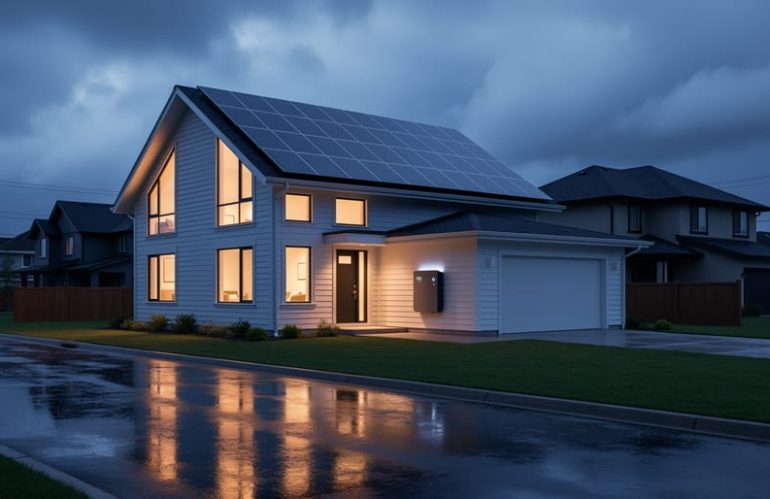
Picture your home staying fully powered during the next grid outage while your neighbors sit in darkness—that’s the promise of residential microgrids. Unlike standard residential solar systems that shut down when the utility grid fails, microgrids with islanding capability automatically disconnect from the main power supply and continue running independently, keeping your lights on, refrigerator cold, and essential devices charged.
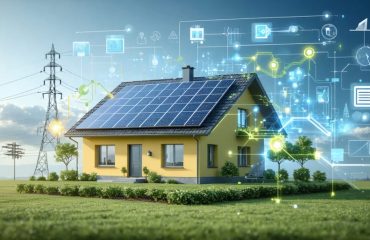
Think of a residential microgrid as your home’s personal power plant. It combines solar panels, battery storage, and intelligent controls that work together to generate, store, and manage electricity on-site. When the grid goes down—whether from storms, wildfires, or equipment failures—your microgrid seamlessly switches to island mode, drawing power from your batteries and solar panels without interruption. You won’t even notice the transition.
The real advantage goes beyond emergency backup. Microgrids give you unprecedented control over your energy costs by storing excess solar power during the day and using it during expensive peak evening hours, potentially slashing your electricity bills by 70% or more. You’re no longer at the mercy of utility rate hikes or time-of-use pricing structures.
This isn’t futuristic technology reserved for tech enthusiasts or the ultra-wealthy. Today’s residential microgrids are more affordable, user-friendly, and accessible than ever, transforming how everyday homeowners think about energy independence and resilience.
What Is a Residential Microgrid? (And Why It’s Not Just a Fancy Battery)
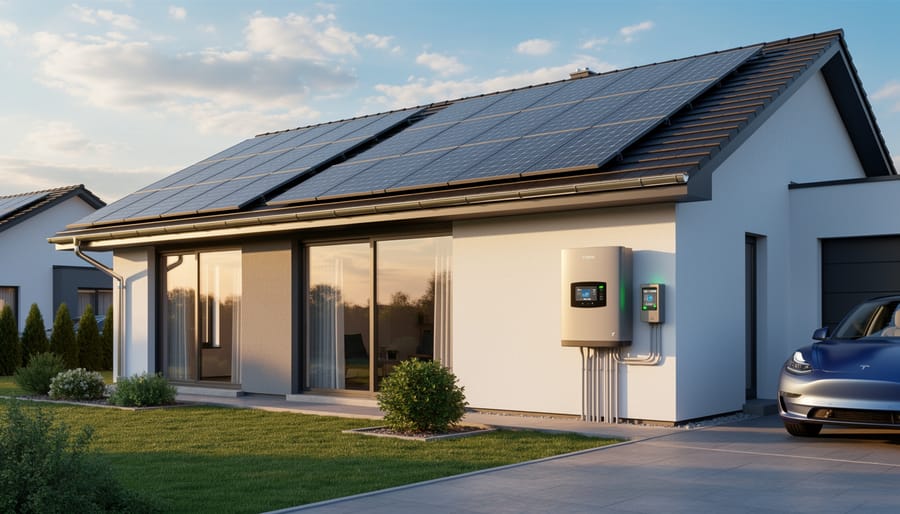
The Three Core Components Working Together
Think of a residential microgrid as a three-legged stool—each component supports the others to keep your home powered reliably. Understanding how these pieces work together helps you see why this technology delivers such impressive results.
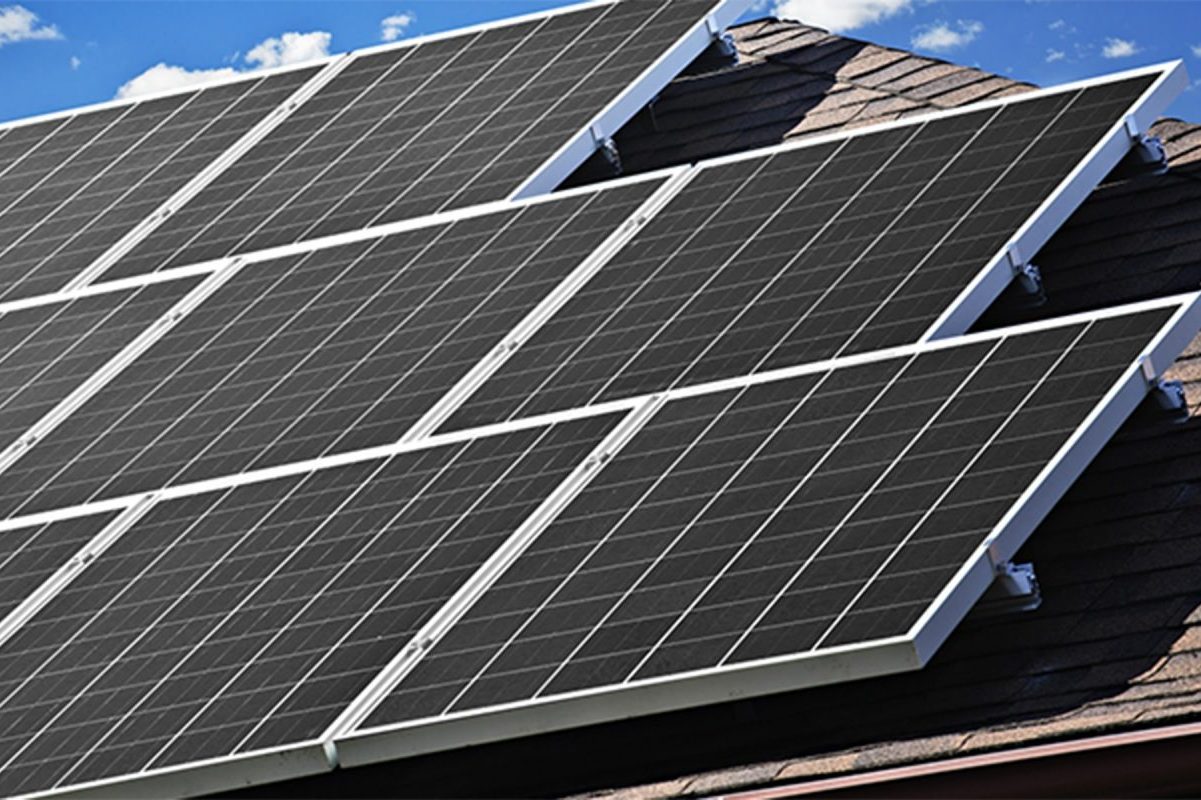
First, you have solar panels generating electricity from sunlight during the day. They’re your primary power source, converting free sunshine into usable energy for your home. When the sun’s shining, your panels produce electricity that flows directly to your appliances and outlets.
Second, battery storage systems capture excess solar energy you don’t immediately use. Think of them as your energy savings account—storing power during sunny periods so you can tap into it at night or during cloudy weather. This storage capacity is what allows your home to keep running even when the grid goes down.
The third component is the intelligent management system, the brain of your microgrid. This technology constantly monitors your energy production, storage levels, and household consumption. It automatically decides when to use solar power, when to charge your batteries, when to draw from storage, and when to connect or disconnect from the utility grid.
When these three elements work in harmony through smart microgrids, you get seamless, reliable power that maximizes your solar investment while protecting your home from outages—all happening automatically in the background.
Islanding: Your Home’s Emergency Power Mode
What Happens When the Grid Goes Down
When the power goes out in your neighborhood, here’s what happens with a residential microgrid: absolutely nothing you’ll notice. That’s the beauty of modern islanding technology.
Within milliseconds of detecting a grid outage, your system automatically disconnects from the utility line and switches to island mode. Your solar panels and battery storage seamlessly take over, keeping your lights on, refrigerator running, and Wi-Fi connected. There’s no manual switchover, no fumbling for flashlights, and no interruption to whatever you’re doing. Most homeowners don’t even realize the transition has occurred until they notice their neighbors’ homes are dark.
This automatic transfer happens faster than your computer can reboot. Advanced electronics constantly monitor the grid connection, ready to spring into action the instant they detect any irregularity. It’s like having an invisible backup generator that requires no fuel, makes no noise, and needs no intervention from you.
The system intelligently manages your energy during island mode, prioritizing essential loads and optimizing battery usage based on available sunlight and stored energy. You’re not left guessing how long your power will last or rationing electricity. The microgrid handles these calculations automatically, ensuring you stay comfortable throughout the outage.
When grid power returns, the reconnection is equally smooth. Your system verifies the utility power is stable, then automatically resynchronizes and reconnects. You continue your day uninterrupted, protected by technology that works tirelessly in the background to maintain your energy independence.
Safety Features That Protect Your Family and Utility Workers
Modern residential microgrids include sophisticated safety features that work automatically in the background, protecting both your household and utility workers in your community. The most important is anti-islanding protection, which instantly disconnects your system from the main power grid during outages. This prevents your solar panels from accidentally sending electricity into power lines that utility crews believe are safe to repair.
Think of it as an automatic circuit breaker that’s always monitoring the grid. When your microgrid detects an outage, it seamlessly switches to island mode within milliseconds, keeping your home powered while ensuring no electricity flows back to the grid. This happens so quickly you might not even notice your lights flicker.
These systems also include multiple layers of monitoring that constantly check voltage levels, frequency, and power quality. If anything falls outside safe parameters, the system automatically shuts down to prevent damage to your equipment or potential hazards. You don’t need to manage any of this manually. These protections are built-in, certified by safety organizations, and designed to work reliably for decades without requiring your attention.
The Real-World Benefits You’ll Actually Notice
Uninterrupted Power During Outages
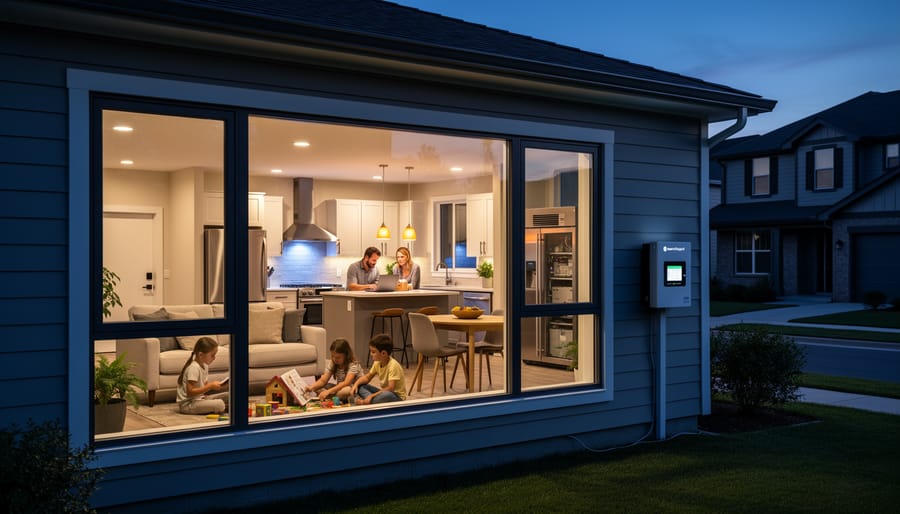
When the power grid goes down in your neighborhood, your home doesn’t have to go dark. With a residential microgrid, life continues remarkably close to normal while your neighbors scramble for flashlights and ice.
Picture this scenario: A storm knocks out power across your area. Your refrigerator keeps humming, preserving all your groceries. Your Wi-Fi router stays online, so you can work from home or stream entertainment. Your heating or air conditioning maintains a comfortable temperature. You can charge devices, brew coffee, and even do laundry, depending on your system’s size.
The transition happens seamlessly. Most homeowners don’t even notice the switch from grid power to their microgrid—lights might flicker briefly, but that’s it. Your solar panels and battery storage kick in automatically, drawing from stored energy and continuing to generate power during daylight hours.
This isn’t about roughing it with minimal backup power. It’s about genuine energy independence that lets you maintain your lifestyle during outages lasting hours or even days. No spoiled food, no uncomfortable temperatures, and no disconnection from the digital world. You’re simply insulated from grid disruptions, enjoying the same comfort and convenience you expect every day.
Lower Energy Bills Through Smart Energy Management
Residential microgrids use smart energy management systems to automatically decide the most cost-effective power source at any given moment. During sunny daytime hours, your system prioritizes solar energy for immediate use. Excess solar generation charges your battery storage rather than sending it back to the grid at minimal compensation rates. When evening arrives and your solar panels stop producing, the system draws from your stored battery power instead of purchasing expensive peak-rate electricity from your utility company.
This intelligent optimization delivers real financial benefits. Homeowners with microgrids typically save 40-60% on their monthly electricity bills compared to grid-only households. In states with time-of-use pricing, where evening electricity can cost three times more than midday rates, the savings become even more dramatic. For example, a typical family spending $200 monthly on electricity might reduce that to $80-120 with a properly configured microgrid, translating to annual savings of $960-1,440. The system constantly monitors electricity prices and your consumption patterns, making split-second decisions that keep more money in your pocket.
Energy Independence Without Lifestyle Sacrifice
One of the biggest misconceptions about going solar is that you’ll need to ration your energy use or constantly monitor your consumption. The truth? A properly designed residential microgrid gives you more freedom, not less. Unlike basic solar setups that only work when the grid is up, microgrids with battery storage let you use energy exactly as you always have—running your air conditioning, charging electric vehicles, doing laundry, and keeping all your devices powered simultaneously.
The difference is where that power comes from. Instead of drawing entirely from the utility company, you’re generating and storing your own clean energy. During an outage, your system seamlessly switches to backup mode without you lifting a finger or choosing which appliances to keep running. Modern battery systems are designed to handle typical household loads, meaning you don’t sacrifice comfort for independence. You’re simply taking control of your energy source while maintaining the lifestyle you already enjoy. The goal isn’t to use less—it’s to use smarter, cleaner energy that works for you around the clock.
How Residential Microgrids Actually Work in Your Daily Life
A Day in the Life of Your Microgrid
Let’s follow your home’s energy through a typical day to see how a microgrid works in real life.
At 6 AM, your solar panels wake up with the sunrise and begin generating electricity. Your microgrid’s control system automatically directs this clean energy to power your morning coffee, lights, and shower. Any excess electricity flows into your battery storage system, building up your energy reserves for later.
By midday, your panels are producing peak power while you’re at work. The system prioritizes filling your batteries to full capacity. Once charged, any surplus energy either powers your home or feeds back to the utility grid, potentially earning you credits on your bill through net metering.
As evening arrives and your family returns home, energy demand increases. Your integrated solar solutions seamlessly shift gears. Solar production decreases, so your microgrid draws from battery storage to power dinner preparation, entertainment systems, and lighting. You’re using the sunshine you captured earlier in the day.
Late at night, when your batteries run low, the system automatically pulls supplemental power from the grid. But here’s the beauty: if the grid goes down at any point, your microgrid instantly disconnects and continues running independently using your stored solar energy. You might not even notice the outage while your neighbors’ lights go dark.
This intelligent dance happens automatically every day, maximizing your energy independence and savings.
Is Your Home Ready for a Microgrid System?
Homes That Benefit Most
Residential microgrids shine brightest in specific scenarios, though they can enhance virtually any home. If you experience frequent power outages—even just a few times per year—a microgrid transforms those frustrating blackouts into barely noticeable blips. Remote or rural properties without reliable grid connections gain exceptional value, enjoying the same energy security as urban homes while reducing dependence on diesel generators.
Homes with high energy consumption, whether from home offices, medical equipment, or electric vehicles, appreciate the uninterrupted power and potential cost savings. Similarly, properties in areas prone to severe weather—hurricanes, ice storms, wildfires—benefit from the peace of mind that comes with guaranteed backup power.
That said, microgrids aren’t exclusively for these situations. Even suburban homes with relatively stable power can enjoy lower energy bills, increased property value, and the satisfaction of energy independence. The technology scales beautifully, meaning you can start small and expand as your needs or budget allow. The key question isn’t whether your home qualifies, but rather how much value energy resilience and sustainability bring to your specific lifestyle and location.
What to Consider Before Installation
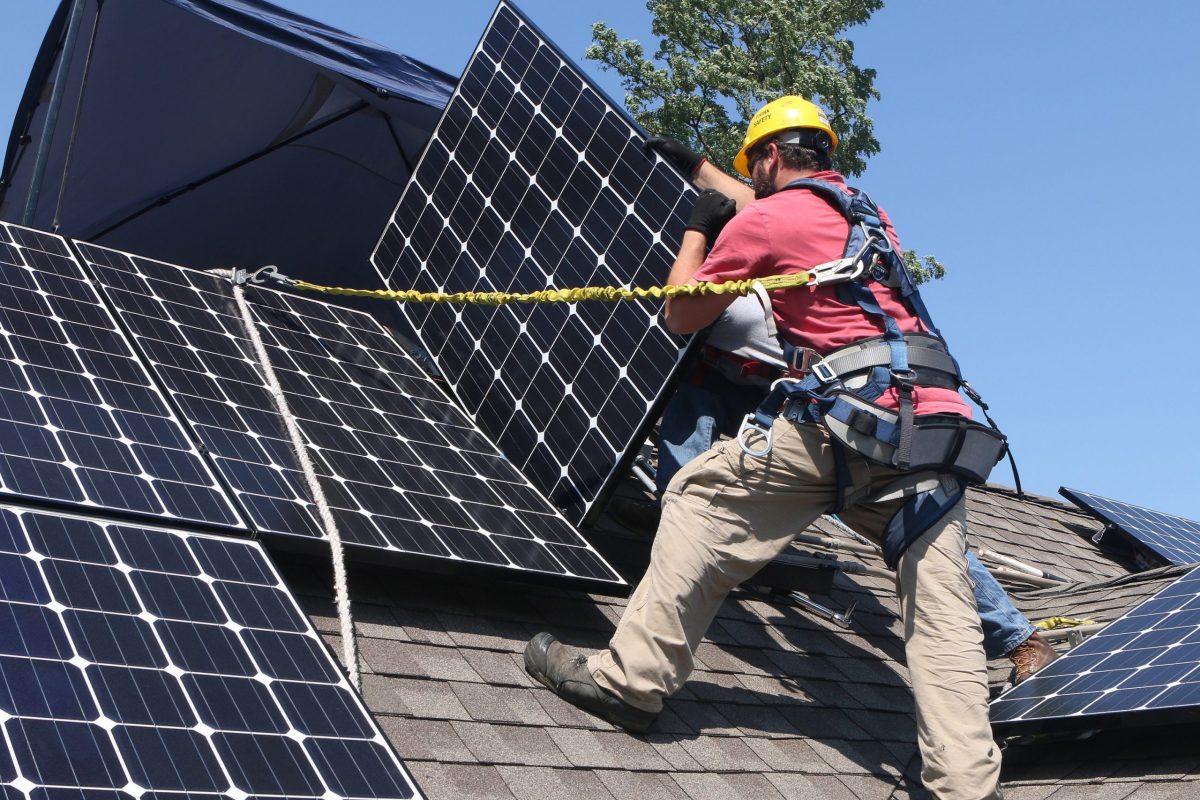
Before diving into a residential microgrid, take stock of three key factors that will shape your system. First, assess your roof space or available property area. Solar panels need adequate square footage with good sun exposure throughout the day. Don’t worry if your roof isn’t perfect—ground-mounted options exist, and a professional assessment can identify opportunities you might miss.
Next, consider your home’s electrical panel capacity. Older panels may need an upgrade to safely handle the two-way flow of electricity that microgrids require. This isn’t a dealbreaker, just an important piece of the puzzle that affects your initial investment.
Finally, take a realistic look at your household energy needs. Review your utility bills from the past year to understand your consumption patterns. Do you use more energy during certain seasons? Are there times when backup power would be especially valuable? This information helps size your system correctly, ensuring you get the independence and savings you’re after without overspending on unnecessary capacity. Many installers offer free energy audits that make this process simple and straightforward.
Debunking Common Microgrid Myths
“It’s Too Complicated to Manage”
Modern residential microgrids are designed to run themselves. Once installed, sophisticated software automatically manages energy flow between your solar panels, battery storage, and home—without you lifting a finger. You won’t need an engineering degree or constant monitoring.
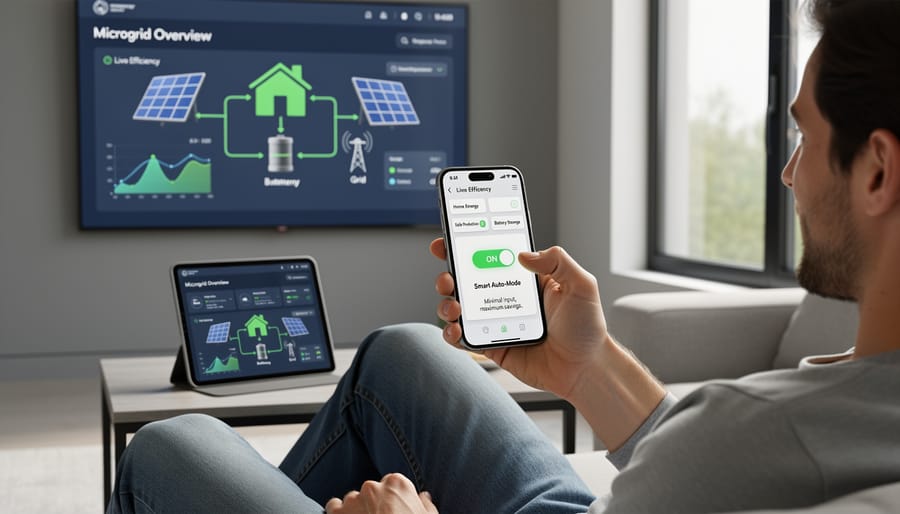
Most systems come with intuitive smartphone apps that display your energy production and consumption in simple, visual dashboards. Think of it like checking your bank account—you can glance at your energy savings anytime, but the system handles all the complex decisions behind the scenes.
These smart systems automatically switch to backup power during outages, optimize battery charging based on your usage patterns, and even predict when to store extra energy. Maintenance alerts appear directly on your phone when needed, typically just once or twice a year. The technology works quietly in the background, letting you enjoy energy independence without the hassle.
“The Upfront Cost Is Too High”
Yes, the initial investment for a residential microgrid is higher than a standard solar setup, but here’s the bigger picture: you’re not just buying equipment, you’re purchasing energy security and long-term savings. When you factor in federal tax credits (currently 30% for solar and battery systems), state incentives, and utility rebates, the actual out-of-pocket cost drops significantly.
Consider this against the backdrop of increasing grid instability. Power outages are becoming more frequent and longer-lasting due to extreme weather and aging infrastructure. Each outage costs you in spoiled food, lost productivity, and discomfort. A microgrid eliminates these hidden expenses while slashing your monthly electricity bills.
Most homeowners see payback periods of 7-12 years, but your system will last 25+ years. That’s over a decade of nearly free electricity after break-even. Plus, financing options like solar loans and leases make monthly payments comparable to current utility bills, meaning you start benefiting immediately without the sticker shock. Think of it as redirecting money you’re already spending on electricity toward an asset you actually own.
Residential microgrids represent more than just a backup power solution—they’re an investment in your family’s comfort, financial stability, and energy future. By combining solar panels, battery storage, and smart control systems, you gain the peace of mind that comes with knowing your home can weather any storm, both literally and financially. Lower monthly bills, protection from grid outages, and independence from utility rate increases add up to real savings that grow year after year.
The technology has matured beautifully. What once seemed complex is now surprisingly straightforward, with professional installers handling the heavy lifting and manufacturers offering user-friendly monitoring tools. You don’t need to be an engineer to benefit from a microgrid—you just need to understand your household’s energy needs and priorities.
Looking ahead, energy independence isn’t just a possibility; it’s becoming increasingly accessible and affordable. As battery technology improves and incentives continue to support renewable energy adoption, there’s never been a better time to explore what a residential microgrid could mean for your home.
Ready to take the next step? Start by assessing your current energy usage and outage concerns. Reach out to qualified installers in your area for consultations—most offer free assessments with no obligation. You’re not committing to anything by asking questions; you’re simply gathering the information you need to make the best decision for your household’s unique situation.