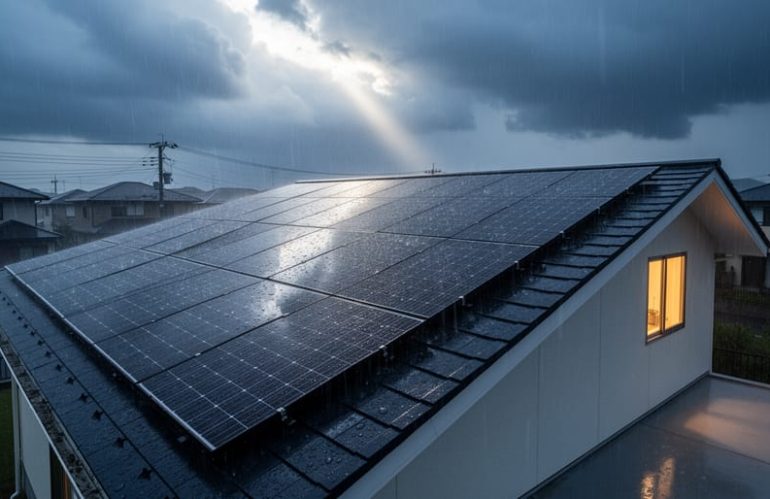
Your solar panels keep generating power during grid outages, but here’s the problem most homeowners don’t realize: when the grid goes down, your ability to monitor that power generation often disappears too. Standard solar monitoring systems rely on your home internet connection, which means during emergencies—exactly when you need visibility most—you’re flying blind, unable to track performance, catch issues, or verify your system is protecting your investment.
This is where resilience communities come in. Think of them as neighborhoods that maintain essential communication networks even when traditional infrastructure fails. For solar owners, this means backup communication systems that keep your monitoring active regardless of internet or grid status, ensuring you never lose sight of your solar system’s performance.
The financial implications are significant. Without monitoring during outages, small problems can escalate undetected, costing you thousands in lost production and delayed repairs. More importantly, during grid failures when your solar system becomes your lifeline, you deserve complete confidence that it’s working properly. Resilience-focused communication solutions give you that peace of mind while maximizing the return on your solar investment, transforming your system from a fair-weather asset into a true energy security tool.
The Hidden Weakness in Your Solar System
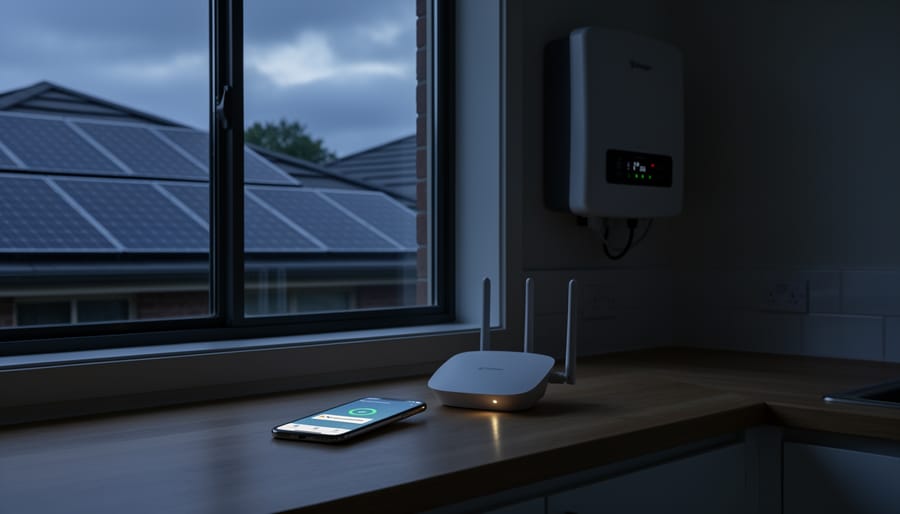
When Your Internet Goes Down, Your Control Goes With It
Most solar monitoring systems rely on your home internet connection to show you how much energy you’re producing and whether everything’s working properly. This setup works great on a typical sunny afternoon, but here’s the catch: when the power goes out or your internet fails during a storm or emergency, you lose visibility into your system right when you need it most.
Think about it – a severe weather event knocks out your neighborhood’s internet service. Your solar panels might still be generating power, but without connectivity, you can’t check if they’re operating efficiently or troubleshoot any issues. If your battery storage isn’t charging properly or your system encounters a problem, you won’t know until the internet comes back online. This blind spot can cost you money in lost production and leave you uncertain about your backup power supply during critical moments. For homeowners who invested in solar specifically for energy independence and emergency preparedness, losing this connection creates an unexpected vulnerability that undermines those very goals.
The Real Cost of Going Dark
When your internet connection drops during a power outage, you’re essentially flying blind with your solar system. You can’t check whether your batteries are charging properly, how much stored energy you have left, or if your high-performance solar system is even functioning correctly. This matters most when you need the information urgently.
During a prolonged outage, you might unknowingly drain your battery reserves too quickly, leaving you without power when you need it most. You can’t remotely adjust your energy usage patterns or switch between different power modes to conserve battery life. If something goes wrong with your system, you won’t receive alerts or error messages, potentially allowing small issues to become expensive problems.
Many homeowners discover these limitations only when disaster strikes. Without monitoring access, you’re making decisions about running appliances or charging devices based on guesswork rather than real data. This uncertainty can lead to either overcautious energy rationing or accidentally depleting your backup power supply.
What Resilience Communities Actually Mean for Your Home
Beyond Individual Solar Systems
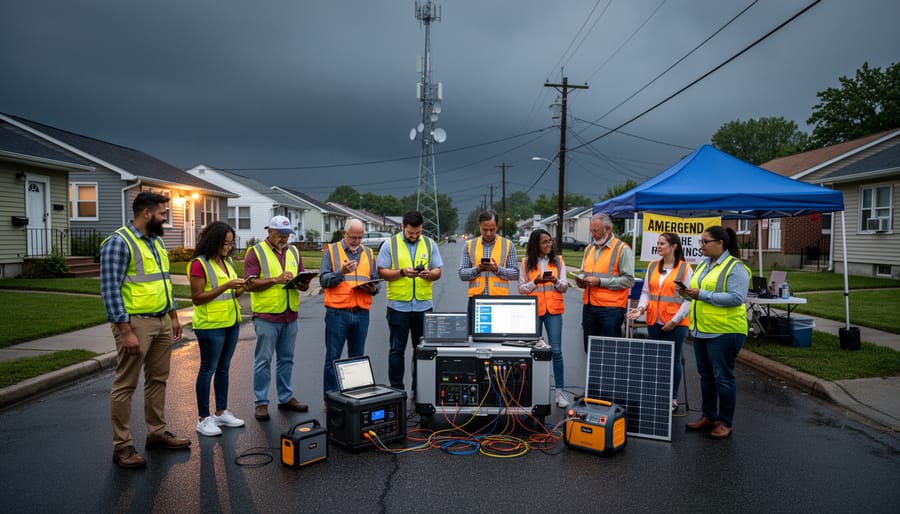
Resilience communities take solar protection a step further by establishing backup communication networks that keep your system monitored even when your primary internet connection fails. Think of it as a neighborhood watch for your solar investment. These networks use alternative communication methods like mesh networks, radio frequencies, or satellite connections to ensure your solar monitoring stays active during emergencies.
The real power lies in shared infrastructure. Instead of each homeowner investing thousands in individual backup systems, resilience communities pool resources to create a reliable network that benefits everyone. If your home internet goes down during a storm, your solar data can route through a neighbor’s connection or the community’s dedicated backup link. This means you’ll still catch issues like unexpected production drops or system failures that could cost you money.
For homeowners, this approach offers significant financial benefits. You maintain visibility into your solar system’s performance without the hefty price tag of standalone backup solutions. Plus, you gain peace of mind knowing that your solar investment stays protected even when the grid doesn’t cooperate. It’s practical disaster preparedness that actually saves you money.
Your Safety Net When the Grid Fails
When the power grid goes down, your solar panels might still be generating electricity, but here’s the catch: standard monitoring systems often lose connection too. Without internet or cellular service, you’re left in the dark about whether your system is working properly or how much power you’re producing. This is where resilience communities shine.
Think of a resilience community as your backup communication network. When traditional connections fail, these communities use alternative pathways—like local mesh networks or satellite links—to keep your monitoring active. You’ll still see real-time data about your system’s performance, track your resiliency zone output, and receive alerts if something goes wrong.
This visibility matters more than you might think. During extended outages, knowing your solar system is functioning correctly protects your investment and helps you make smart decisions about energy use. You’re not just hoping everything works—you have confirmation. Plus, if a problem does arise, you can address it quickly rather than discovering issues weeks later when your utility bill arrives or when grid power returns.
How Communication Backup Systems Keep Your Solar Working
Cellular Backup: Your Solar System’s Emergency Line
Cellular backup monitoring offers a simple safety net when your home internet goes down. Think of it as giving your solar system its own cell phone—one that doesn’t rely on your WiFi or router to communicate with your monitoring platform.
These devices use the same cellular networks as your smartphone, connecting directly to your solar system’s data stream. If a storm knocks out your internet or you experience a router malfunction, your system keeps sending performance updates without interruption. You’ll still receive alerts about production issues, outages, or system errors in real time.
The installation is straightforward and typically doesn’t require professional networking knowledge. Most cellular monitoring devices plug directly into your inverter or monitoring equipment with minimal setup. Monthly data plans are usually affordable, often costing less than a streaming subscription.
The real value becomes clear during emergencies. When grid failures or natural disasters disrupt traditional communications, cellular networks often remain operational longer. This means you maintain visibility into your solar production exactly when you need it most—whether that’s verifying your backup power is functioning during an outage or catching a problem before it costs you money in lost production.
For many homeowners, the peace of mind alone justifies the modest investment in cellular backup.
Local Network Solutions That Don’t Need the Internet
When traditional internet goes down, resilience communities rely on mesh networks—a clever technology that lets devices talk directly to each other without needing a central internet connection. Think of it like a neighborhood walkie-talkie system for your solar equipment and home devices.
Here’s how it benefits you: mesh networks create a web of local connections between homes, allowing your solar monitoring to continue working even during widespread outages. Your system keeps tracking energy production, battery levels, and usage patterns right on your property. You’ll still see real-time data on your phone or computer, just through local connections instead of the internet.
The practical advantage is significant. During storms or grid failures—exactly when you need to know your solar system’s status most—you maintain complete visibility. You can check if your batteries have enough charge, monitor which appliances are running, and make smart decisions about energy use without any outside connectivity.
Many resilience communities combine mesh networks with local monitoring hubs that store your solar data on-site. This means you’re never left guessing about your system’s performance, maintaining the financial control and peace of mind that drew you to solar energy in the first place.
Community-Level Communication Networks
Imagine your entire neighborhood staying connected to their solar systems even when the internet goes down. That’s the power of community-level communication networks. Instead of each home relying on individual internet connections to monitor their solar panels, neighborhoods can establish shared, redundant communication systems that keep everyone informed.
These networks work like community microgrids for data, creating a mesh of interconnected homes that can relay information even when traditional networks fail. Your neighbor’s working connection becomes your backup, and vice versa. This approach costs less per household since families split infrastructure expenses, and it’s more reliable because multiple pathways exist for your solar data to reach you.
The setup is surprisingly simple. Neighborhoods can install local radio systems or mesh networks that communicate directly between homes without depending on external internet providers. You’ll maintain full visibility of your system’s performance, catch problems quickly, and maximize your energy savings regardless of what happens with the local grid or internet service.
Real Benefits You’ll Actually Notice
Never Miss a System Alert Again
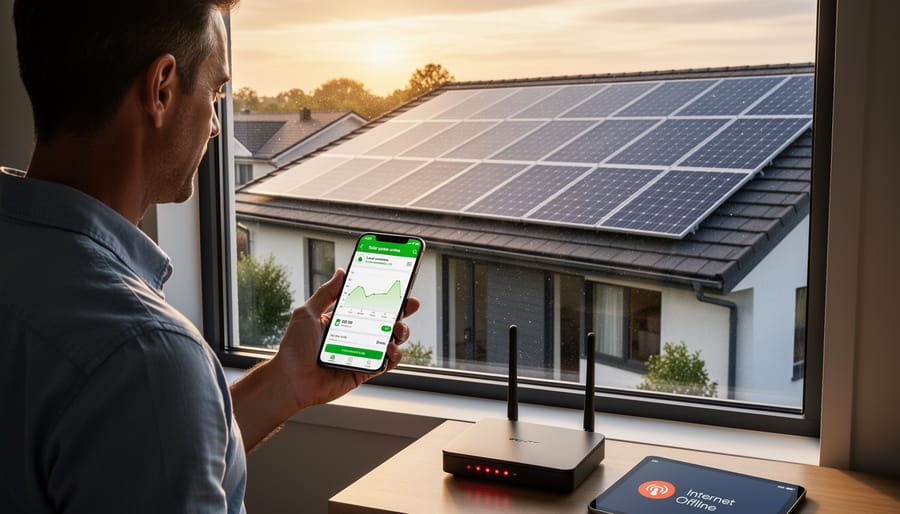
When your internet goes down during a storm, standard solar monitoring systems go silent—leaving you in the dark about potential problems. Resilience communities solve this by using backup communication methods like cellular networks to keep your system connected. Think of it as having a spare key for your home. If your primary internet fails, your solar system automatically switches to cellular communication, ensuring you still receive alerts about performance issues, equipment failures, or maintenance needs. This means you can catch problems early, before they cost you money in lost energy production. You’ll continue receiving notifications on your phone or email, just as you normally would, giving you complete visibility into your system’s performance no matter what’s happening with your home internet connection. It’s simple peace of mind that protects your investment.
Protect Your Investment During Emergencies
During power outages, losing contact with your solar system means flying blind when it matters most. Without monitoring, you can’t tell if your battery storage systems are charging properly, discharging too quickly, or experiencing issues that could shorten their lifespan. Resilience communities solve this by keeping your monitoring active, letting you spot problems before they become expensive repairs. You’ll know if someone needs to adjust usage to preserve battery power or if everything’s running smoothly. This visibility protects your investment by preventing unnecessary wear and tear, helping your batteries last their full expected lifespan of 10 to 15 years. Simply put, staying connected means staying in control, maximizing the value of your solar investment even when the grid goes down.
Sleep Better Knowing You’re Always Connected
There’s something reassuring about knowing your solar system keeps working even when traditional communication networks go down. Redundant communication systems act like a safety net for your solar investment, ensuring you can always monitor performance and catch issues before they cost you money. During severe weather events when cell towers or internet connections fail, backup communication methods like satellite links or mesh networks keep you connected to your system’s real-time data. This means you’ll know immediately if a storm has damaged panels or if your battery storage is performing as expected during a power outage. Think of it as having multiple paths to the same destination—if one route closes, you’ve got alternatives ready. The financial benefit is clear: catching a malfunction within hours instead of days can prevent thousands in lost energy production. You’ll rest easier knowing your clean energy investment remains visible and protected, regardless of what nature throws your way.
Making Your Solar System Resilience-Ready
Questions to Ask Your Solar Provider
Before installing a new system or upgrading your existing setup, have an open conversation with your solar provider about communication resilience. Start by asking whether their monitoring systems include cellular backup connectivity as a standard feature or available upgrade. Find out what happens to your system’s monitoring capabilities during internet outages and how long you’d remain in the dark without visibility into your energy production.
Request specific details about how you’ll receive alerts during grid failures. Can you still check your battery levels and energy usage through a mobile app when the power goes out? What communication methods does the system use as backups?
It’s also worth asking whether they offer participation in resilience communities or virtual power plant programs. These programs can provide additional income opportunities while strengthening your backup capabilities.
Don’t hesitate to inquire about the costs involved. Some providers include cellular connectivity at no extra charge, while others may require monthly fees or one-time hardware upgrades. Understanding these expenses upfront helps you make an informed decision that protects your investment and ensures you maintain control over your energy system when it matters most.
Affordable Upgrades That Make a Difference
You don’t need to start from scratch or spend a fortune to protect your solar investment. Most existing solar systems can gain communication resilience with straightforward, budget-friendly additions. A cellular backup module costs between $200-$400 and plugs directly into your monitoring system, automatically switching to cell networks when your internet goes down. These compact devices require no monthly fees for basic monitoring and install in minutes.
For homeowners in areas with frequent outages, a simple battery backup unit for your router ($50-$150) keeps your existing internet connection alive for several hours during power interruptions. This proven solution works perfectly if your solar system already produces power during outages.
Radio frequency mesh systems represent another practical option, creating neighborhood-wide communication networks that operate independently from traditional infrastructure. When several homes participate, the cost drops to $150-$300 per household.
The smartest approach? Start with what addresses your specific vulnerability. If internet outages are your main concern, begin with router backup. If you’re in a remote area with unreliable connectivity, cellular backup makes more sense. These incremental improvements deliver immediate peace of mind without requiring system overhauls or breaking your budget.
Your solar system represents a significant investment in energy independence, but without resilient communications, it’s only a partial solution. When the grid fails and you need your solar backup most, standard monitoring systems go dark, leaving you blind to your energy production and consumption. This transforms what should be a reliable emergency resource into an uncertain gamble.
The good news? Communication resilience is achievable and affordable. By incorporating backup connectivity solutions like cellular modems, satellite links, or mesh networks into your solar setup, you ensure complete visibility and control regardless of grid conditions. These technologies allow your system to continue reporting performance data, alert you to issues, and enable remote troubleshooting even when traditional internet fails.
Think of communication resilience as the final piece completing your energy independence puzzle. Your solar panels generate power, your batteries store it, and resilient communications give you the confidence to manage it all during emergencies. When planning your solar investment, prioritize systems that include backup communication options. This small addition transforms your solar array from a fair-weather convenience into a true emergency backup system you can depend on when it matters most.