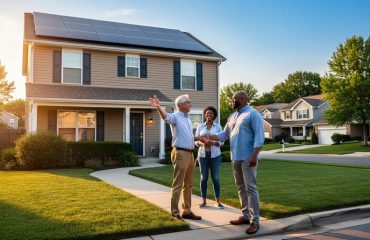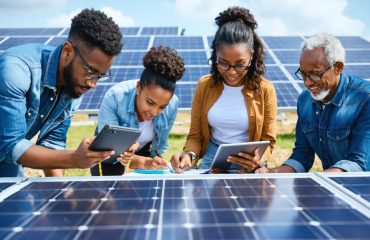
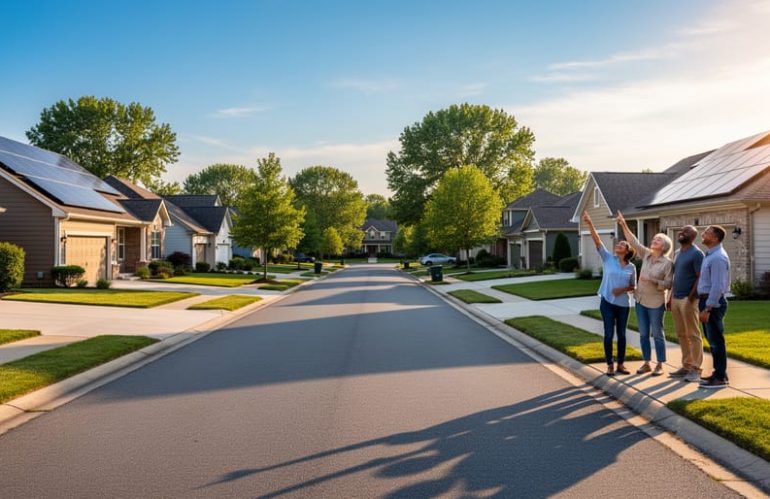
Your neighbors’ opinions can make or break your solar installation timeline and costs. When communities embrace solar collectively, permit approvals accelerate, installation expenses drop through bulk purchasing, and property values rise uniformly across neighborhoods. The difference between a smooth solar transition and months of delays often hinges on whether your community views panels as neighborhood eyesores or smart investments.
Community solar projects transform individual homeowner decisions into collective action. Instead of navigating objections alone, you’ll join forces with neighbors to negotiate better rates with installers, share maintenance resources, and create a unified voice with local authorities. These projects eliminate the biggest barrier most homeowners face: the perception that they’re going rogue on neighborhood aesthetics or energy choices.
The reality contradicts common fears. Communities with higher solar adoption rates experience faster property appreciation, lower electricity costs for participants and non-participants alike through reduced grid strain, and enhanced resilience during power outages. Understanding how to build this acceptance, whether through formal community solar programs or informal neighborhood coalitions, directly impacts your wallet, your installation timeline, and your long-term satisfaction with going solar.
What Community Solar Acceptance Really Means for Homeowners
When most homeowners think about installing solar panels, they picture it as a solo decision—just them, their roof, and their energy bills. But here’s what many don’t realize: community acceptance plays a surprisingly big role in whether your solar journey becomes smooth sailing or an uphill battle.
Community acceptance simply means how your neighbors, local government, and surrounding area view solar energy. Think of it as the social climate around solar in your specific location. When your community embraces solar, everything gets easier. When there’s resistance or skepticism, you might face unexpected roadblocks.
Here’s where it gets practical. In solar-friendly neighborhoods, you’ll typically find more installers competing for business, which drives down costs. Permitting offices familiar with solar applications process paperwork faster because they’ve handled dozens of similar requests. Your property value often benefits too—research shows homes with solar panels in accepting communities sell faster and for premium prices compared to areas where solar is still considered unusual or controversial.
On the flip side, being the first solar adopter in a skeptical neighborhood can mean longer wait times for permits, fewer installer options willing to work in your area, and potentially stricter scrutiny from homeowner associations. You might even face informal pressure from neighbors who don’t understand the benefits yet.
The good news? Community acceptance is growing rapidly nationwide as more people recognize solar’s financial advantages. What seemed radical ten years ago is now mainstream in many areas. And contrary to the myth that you’re going it alone, your decision to go solar actually paves the way for neighbors considering the same move. You become a visible success story that shifts community attitudes.
Understanding your local acceptance level before starting your solar journey helps set realistic expectations. It also reveals opportunities—if your area has low acceptance, you might be eligible for additional incentives designed to encourage early adopters. Either way, knowing where your community stands empowers you to plan accordingly and advocate effectively if needed.
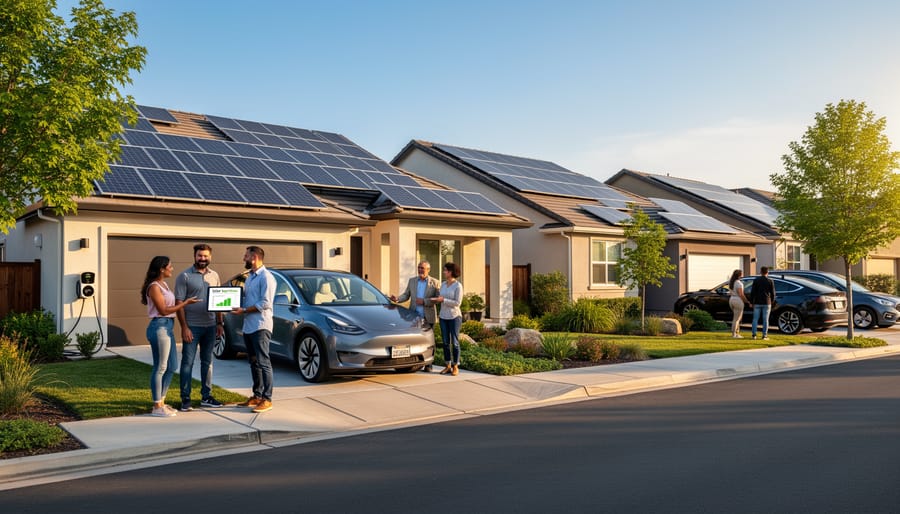
The Real Benefits When Your Community Embraces Solar
Lower Installation Costs Through Group Buying Power
When you team up with your neighbors to go solar, everyone saves money. Neighborhood solar programs leverage group buying power to negotiate better rates with installers, typically reducing costs by 10-30% compared to going solo.
Here’s how it works: installers offer volume discounts when multiple homes sign up together because they save on marketing, administrative overhead, and travel time between job sites. Instead of making separate trips to ten different neighborhoods, they complete ten installations in one area, passing those savings directly to you.
Community solar initiatives also streamline the permit process and share educational resources, cutting down on soft costs that often inflate individual projects. Some programs even negotiate better financing terms or access to group purchasing cooperatives that secure equipment at wholesale prices.
The numbers are compelling. If a typical residential solar installation costs $20,000, a 20% group discount saves you $4,000 right off the bat. That’s money back in your pocket before any tax credits or utility savings kick in, making solar accessible to more homeowners while building community connections with like-minded neighbors.
Faster Permitting and Fewer HOA Headaches
Here’s the good news: once a neighborhood embraces solar, the red tape tends to disappear faster than you’d expect. Communities with multiple solar installations create a well-worn path through the permitting process, making your journey significantly smoother.
When local building departments regularly process solar permits, they develop standardized procedures and timelines. What might take months in a solar-skeptical area often wraps up in weeks where solar is commonplace. Inspectors become familiar with installations, reducing delays and back-and-forth communications that can stall your project.
The HOA advantage is even more compelling. In neighborhoods where solar panels dot the rooftops, homeowners associations have typically updated their guidelines to accommodate installations. Many have established clear approval processes or removed solar restrictions entirely. You’re less likely to face arbitrary denials or lengthy approval battles when your neighbors have already paved the way.
This bureaucratic efficiency translates directly to cost savings. Fewer delays mean your installer spends less time managing paperwork and more time actually installing your system. Some solar companies even offer better pricing in solar-friendly communities because they know the process will run smoothly. It’s a win-win that puts money back in your pocket while getting your system up and running faster.
Higher Property Values in Solar-Friendly Neighborhoods
Good news for homeowners considering solar: installing panels could boost your property’s resale value, especially in neighborhoods where solar is already embraced. Recent studies from Lawrence Berkeley National Laboratory found that homes with solar systems sell for an average of $15,000 more than comparable properties without them. Even better, this premium increases in communities where solar adoption is already strong.
When multiple homes in your neighborhood go solar, it creates a positive ripple effect. Buyers increasingly view solar as a desirable feature rather than a quirky addition, making your home more marketable. Research shows that solar-equipped homes in accepting communities sell approximately 20% faster than non-solar homes in areas where solar is uncommon.
The financial benefits extend beyond the sale price itself. Homes in solar-friendly neighborhoods attract environmentally-conscious buyers willing to pay premium prices for move-in-ready sustainable features. Real estate agents report that solar homes generate more showing requests and competitive offers in these areas.
This trend makes sense: when neighbors embrace solar, new buyers feel confident the technology works and is socially accepted. They’re buying into a forward-thinking community, not taking a risk on unproven technology. Your solar investment doesn’t just lower your energy bills today—it’s building equity for tomorrow.
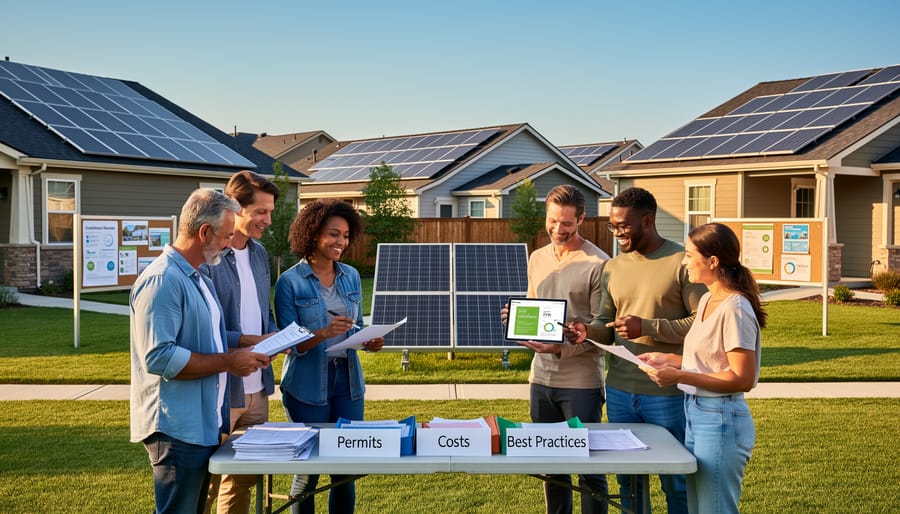
How to Build Solar Support in Your Neighborhood
Start Conversations That Change Minds
When talking with neighbors about solar community projects, focus on two compelling benefits that everyone cares about: saving money and protecting the environment we all share.
Start with the financial angle. You can mention that many homeowners see their electricity bills drop by 50-70% after joining a community solar program. That’s real money back in their pockets every month, and unlike individual rooftop installations, community projects often require little to no upfront investment. It’s like getting the benefits of solar panels without the hassle of putting them on your own roof.
Then connect it to environmental impact in personal terms. Point out that joining a community solar project is equivalent to planting hundreds of trees or taking a car off the road for a year. These tangible comparisons help neighbors visualize their positive impact.
Keep your conversations light and friendly. Share how the project benefits the whole neighborhood through increased property values and cleaner local air quality. When people understand they can save money while doing something good for their community, resistance typically melts away. Focus on opportunities rather than problems, and let the practical benefits speak for themselves.
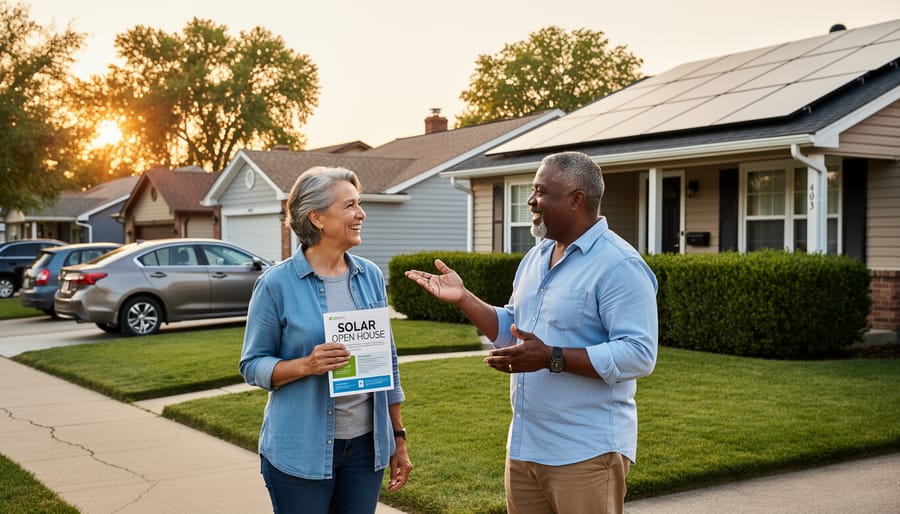
Share Your Solar Success Story
One of the most powerful ways to build community acceptance is simply talking about your solar experience. When neighbors ask about those panels on your roof, share real numbers—your reduced electric bills, payback timeline, and any challenges you faced. This transparency helps demystify solar and shows it’s a practical choice, not just an environmental statement.
Consider posting occasional updates on neighborhood social media groups about your energy savings or how your system performed during different seasons. You don’t need to be preachy—just share facts. When people see that your summer electric bill dropped from $200 to $35, it becomes tangible and relatable.
Many homeowners find that participating in solar education programs gives them confidence to answer questions accurately. You become an informal resource for curious neighbors, which naturally builds acceptance and interest.
Remember, your willingness to discuss both benefits and honest challenges (like installation day disruptions or learning to read your monitoring app) makes solar feel achievable rather than intimidating. Every conversation normalizes renewable energy and potentially helps another family make an informed decision about their own energy future.
Connect With Local Solar Groups
Connecting with like-minded neighbors can make your solar journey easier and more affordable. Local solar groups offer support, shared knowledge, and often access to group purchasing discounts that can save you hundreds or even thousands of dollars on installation costs.
Start by searching online for existing solar co-ops or renewable energy groups in your area. Many communities already have established networks where homeowners share experiences, recommend trusted installers, and organize bulk-buying opportunities. Check social media platforms, community bulletin boards, and local environmental organizations for leads.
If you can’t find an existing group, consider starting one yourself. It’s simpler than you might think to launch a community solar project. Begin by chatting with interested neighbors or posting in neighborhood forums. Even informal coffee meetups can help you gauge interest and share information about solar benefits.
Your local utility company or municipal energy office can also point you toward community solar programs or group-buy initiatives. These programs pool together multiple homeowners to negotiate better rates with installers while maintaining individual system ownership.
Hosting or attending information sessions demystifies the solar process for everyone involved. When neighbors learn together, they overcome common concerns about costs, maintenance, and installation logistics. This collective knowledge creates a supportive environment where going solar feels less daunting and more achievable.
Overcoming Common Community Concerns About Solar
When you’re excited about solar but worried about pushback from neighbors, understanding the most common concerns—and how to address them—can make all the difference.
One frequent worry is that solar panels will lower property values in the area. The good news? Research consistently shows the opposite is true. Homes with solar installations typically sell for more than comparable homes without them, and neighborhoods with multiple solar adopters often see increased interest from environmentally-conscious buyers willing to pay a premium.
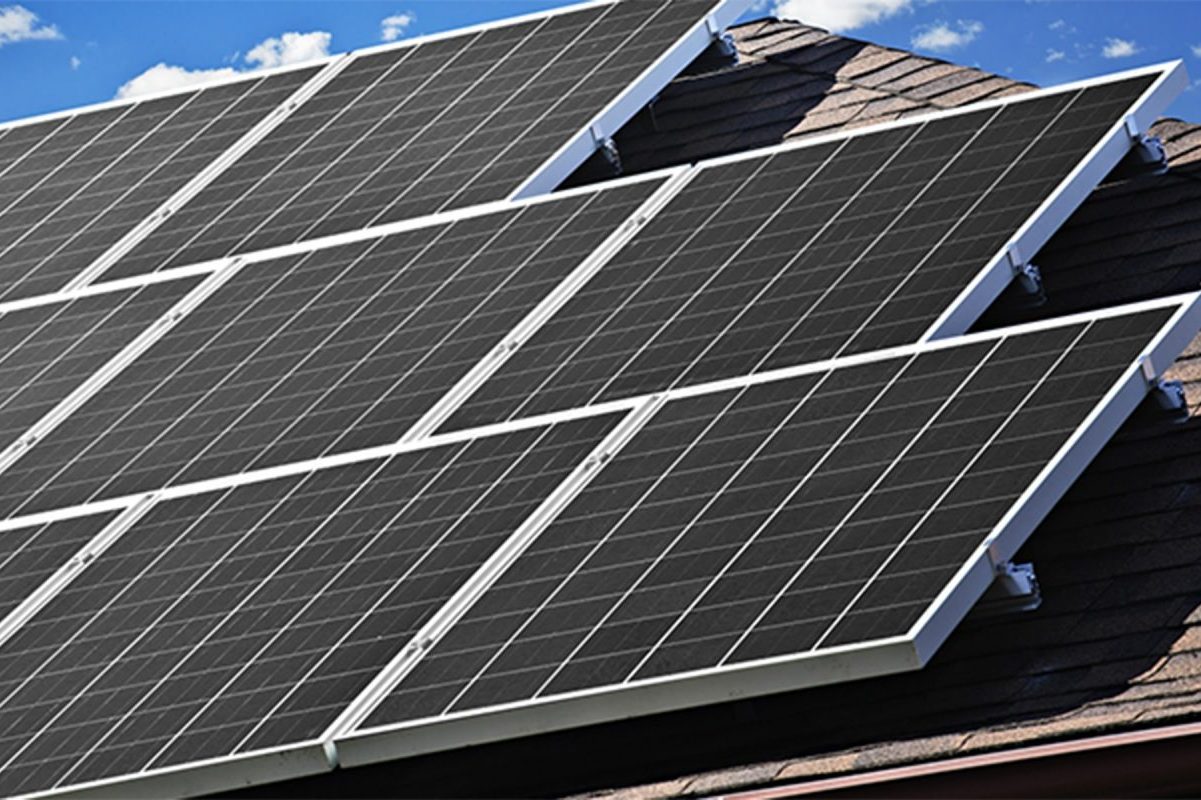
Some neighbors may worry about aesthetics, fearing that panels will create an eyesore. Modern solar installations are sleeker and more attractive than ever, sitting flush against rooflines. Sharing photos of contemporary installations can help others visualize how unobtrusive today’s systems really are. You might also mention that many homeowners associations now have guidelines that protect your right to install solar while maintaining community standards.
Concerns about noise or maintenance issues are usually based on outdated information. Solar panels operate silently—there are no moving parts—and require minimal upkeep beyond occasional cleaning. They’re actually far quieter than traditional HVAC systems most homes already have.
Financial worries sometimes arise, with neighbors questioning whether solar is actually affordable or if it signals gentrification. Emphasize that community solar projects and group purchasing programs make solar accessible at various price points, and lower energy costs benefit entire neighborhoods by reducing strain on local power grids during peak demand.
When addressing concerns, lead with empathy and facts. Share your own research process, invite neighbors to ask questions, and offer to connect them with installers who can provide personalized information. Building understanding transforms skeptics into supporters, creating momentum that benefits everyone.
Why Solar Companies Care About Community Acceptance
The best solar companies understand that their long-term success depends on happy customers and supportive neighborhoods. When installers prioritize community acceptance, it creates a ripple effect that benefits you as a homeowner in tangible ways.
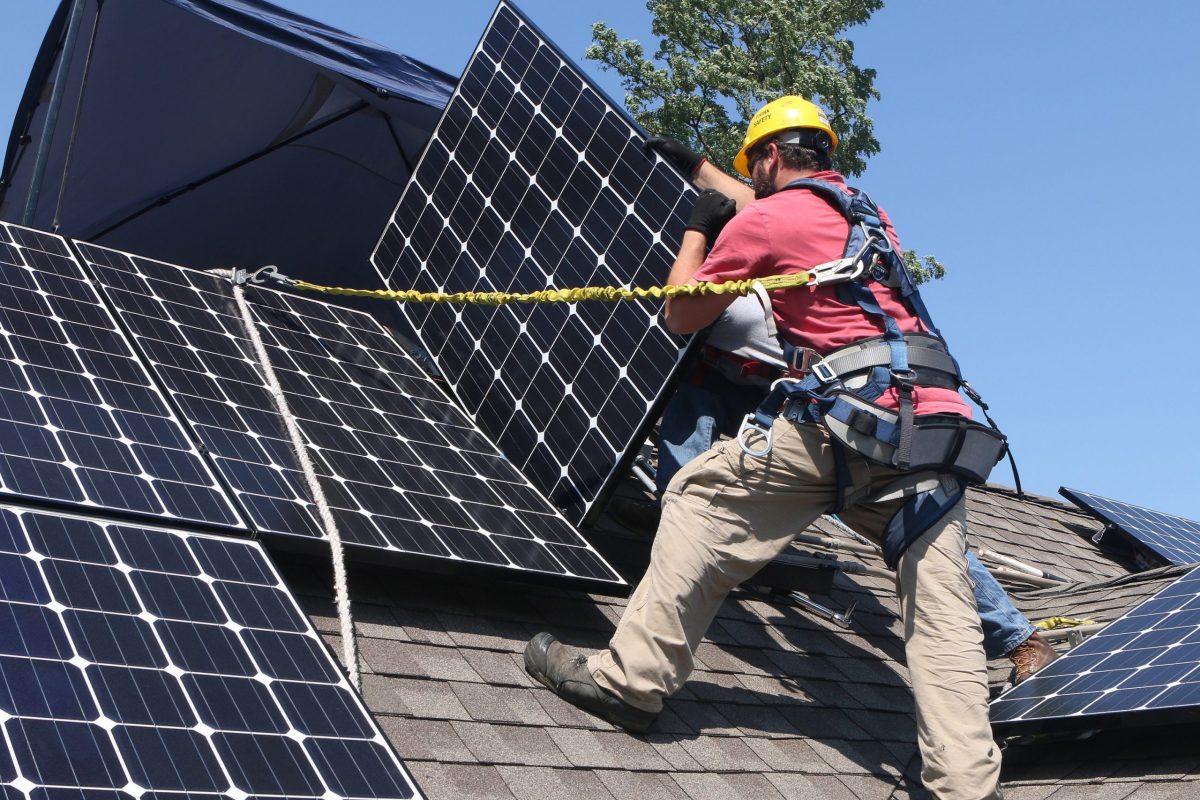
Reputable solar companies invest time in building trust through transparent communication, quality workmanship, and responsive customer service. They know that word-of-mouth recommendations from satisfied neighbors are far more valuable than any advertising campaign. This means they’re motivated to get your installation right the first time and remain available for ongoing support.
When evaluating solar companies, look for these community-minded qualities: clear explanations of the installation process, willingness to address neighbor concerns, proper permitting procedures, and visible local references. Companies that participate in community events, offer educational workshops, or maintain active relationships with local officials demonstrate genuine commitment to the area.
This community focus directly benefits you through better service quality. Companies invested in their reputation provide more thorough consultations, use experienced installers who respect your property, and offer stronger warranties backed by their desire to maintain community standing. You’ll also find they’re more responsive to questions or issues because they understand every interaction affects their local reputation.
Additionally, established community relationships often mean faster permit approvals and smoother installations. Companies familiar with local regulations and building departments can navigate paperwork efficiently, reducing delays and headaches for you.
Your decision to go solar doesn’t just impact your electricity bill—it strengthens an entire movement toward cleaner, more affordable energy. Every home that installs panels makes solar more visible, more accepted, and ultimately more accessible for neighbors who are still considering the switch. When you embrace solar technology, you’re simultaneously reducing your energy costs while helping normalize renewable energy in your community.
The benefits work both ways. As community acceptance grows, you’ll find it easier to navigate installation processes, potentially access group purchasing discounts, and enjoy rising property values as solar becomes a neighborhood standard. Your financial gains from lower utility bills and tax incentives are real and immediate, but they’re amplified by being part of a collective shift toward sustainable living.
Whether you’re ready for rooftop panels or exploring community solar options, now is the time to take that first step. Request quotes from local installers, talk to neighbors who’ve already made the switch, and discover how much you could save. Your home, your wallet, and your community will all benefit from your decision to go solar today.