Humidity doesn’t just make your home uncomfortable—it damages furniture, triggers mold growth, and drives up electricity bills when conventional dehumidifiers run around the clock. If you’re spending monsoon season battling dampness while watching your energy costs climb, solar dehumidification offers a surprisingly practical solution that pays for itself while protecting your home.
Solar dehumidifiers harness the sun’s energy to remove excess moisture from indoor air, combining two powerful advantages: they work hardest during bright, humid days when traditional units would drain your wallet, and they operate with minimal to zero electricity costs. Unlike the energy-hungry conventional models that can add $30-50 monthly to your power bill, solar-powered systems turn your biggest humidity challenge—those intense sunny periods between rain showers—into your greatest asset.
The technology isn’t complicated. Solar panels capture sunlight and convert it to power for the dehumidification process, whether through desiccant materials that naturally absorb moisture or compressor-based systems that extract water vapor. The result? Dryer air, lower energy bills, and a healthier living environment without the carbon footprint.
This guide walks you through everything you need to know: how solar dehumidification actually works, what it costs versus traditional options, and whether it’s the right fit for your humid climate home.
Why Humidity Hits Your Home (and Wallet) So Hard
If you live in a humid or monsoon-prone area, you already know the daily battle against moisture. That musty smell greeting you at the door, the perpetual dampness that clings to towels and bedding, and the creeping worry about what’s growing behind your walls—these aren’t just minor inconveniences. High humidity creates a cascade of problems that affect both your home’s condition and your family’s wellbeing.
Excess moisture is an open invitation for mold and mildew, which can trigger allergies, respiratory issues, and unpleasant odors throughout your living space. Your belongings suffer too: wooden furniture warps, electronics malfunction, documents yellow and deteriorate, and that sticky feeling on every surface makes your home feel less inviting. During monsoon season, it often feels like you’re fighting a losing battle as moisture seeps into every corner.
The real wallet shock comes from your energy bills. Conventional electric dehumidifiers work overtime during humid months, running constantly to keep moisture at bay. These machines are notorious energy hogs, easily consuming 300-700 watts per hour. When you’re running one or more units around the clock during peak humidity season, you’re looking at a substantial monthly expense. Many homeowners report their electricity bills doubling or tripling during the wettest months, with dehumidification accounting for a significant chunk of that increase.
Add in the environmental cost of burning through electricity generated from fossil fuels, and the traditional approach to humidity control becomes expensive, unsustainable, and frustrating. There’s got to be a better way to keep your home comfortable without breaking the bank or compromising your environmental values—and fortunately, there is.

What Solar Dehumidification Actually Means for Your Home
Solar-Powered Electric Dehumidifiers
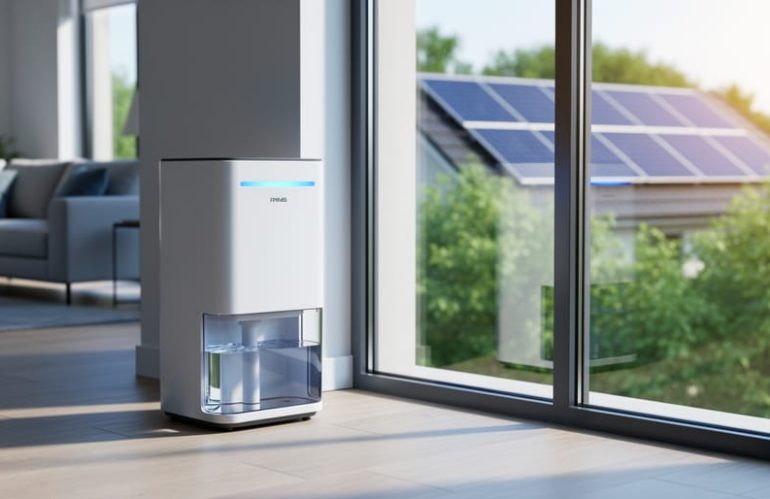
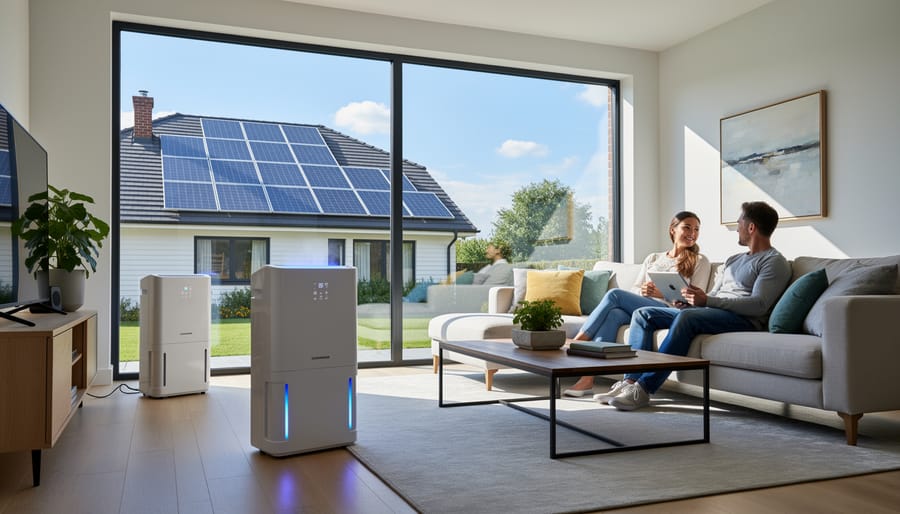
Here’s a simple truth that many homeowners overlook: if you already have solar panels on your roof, you can run a regular electric dehumidifier during the day at virtually no cost. The electricity your panels generate directly powers your dehumidifier, meaning you’re pulling moisture from the air without adding a penny to your utility bill.
This approach works beautifully during monsoon season when humidity peaks during daylight hours. Your solar panels produce the most energy precisely when you need dehumidification the most. A typical dehumidifier uses between 300-700 watts, which most residential solar systems handle easily while still powering other household needs.
The beauty of this setup is its simplicity—no special equipment required beyond what you likely already have. Just plug in your dehumidifier during peak sun hours, and you’re essentially getting free moisture control. For homes without solar panels yet, the combined savings from reduced electricity bills (both from overall solar use and running a dehumidifier) can make the investment pay off even faster than anticipated.
Solar Thermal Dehumidifiers
For those seeking the ultimate in energy savings, passive solar thermal dehumidifiers operate without a single watt of electricity. These ingenious systems harness the sun’s warmth to regenerate moisture-absorbing desiccant materials, creating a completely off-grid solution for humidity control.
Here’s how they work: moisture-laden desiccant materials (like silica gel or specialized salts) are placed in specially designed solar collectors. As sunlight heats these materials throughout the day, the absorbed water evaporates and vents outside, refreshing the desiccant for another cycle of moisture removal. At night or during cooler periods, the recharged desiccant returns to your living space to absorb humidity again.
The beauty of this approach lies in its simplicity and zero operating costs. Unlike electric dehumidifiers that can add $30-50 monthly to your energy bills, passive solar systems cost nothing to run once installed. They’re particularly effective in sunny climates where consistent solar radiation ensures reliable regeneration.
While these systems work more gradually than electric models, they excel as supplementary solutions for moderate humidity problems or specific areas like closets and storage rooms. You’re essentially getting free dehumidification powered entirely by nature’s most abundant resource.
The Real Benefits: Beyond Just Dry Air
Slash Your Energy Bills During Peak Humidity Season
During peak humidity season, your dehumidifier works overtime to keep moisture at bay, but that comfort comes at a steep price. Traditional electric dehumidifiers typically consume 300-700 watts per hour, and when running 12-16 hours daily during humid months, they can easily add $50 to $150 or more to your monthly electricity bill. For many homeowners, this seasonal spike creates an unwelcome choice between comfort and cost.
Solar dehumidification eliminates this financial burden entirely. By harnessing free energy from the sun, these systems operate without drawing power from the grid. The upfront investment in solar technology pays for itself through eliminated operating costs, typically within 2-4 years depending on your climate and usage patterns. Better yet, solar dehumidifiers often work most efficiently during the brightest, most humid times of day, perfectly matching peak moisture conditions with peak solar production. You get optimal moisture control exactly when you need it most, without watching your electricity meter spin.
Protect Your Home and Belongings
Excess moisture doesn’t just feel uncomfortable—it can cost you thousands in home repairs and replacements. When humidity levels stay consistently high, mold spreads quickly through walls and ceilings, weakening your home’s structure and requiring expensive remediation. Your furniture warps, fabrics develop musty odors, and electronics fail prematurely due to moisture damage. Even worse, clothing and valuable documents become breeding grounds for mildew. Solar dehumidification offers a protective shield without the financial burden of high electricity bills. By maintaining optimal humidity levels naturally, you’re actually saving money twice: preventing costly damage while reducing energy consumption. Think of it as an insurance policy that pays you back month after month, protecting your investments while keeping your home healthy and comfortable for years to come.
Breathe Easier (Literally)
Excess humidity isn’t just uncomfortable—it’s a health hazard hiding in plain sight. Damp environments create the perfect breeding ground for mold spores, dust mites, and other allergens that can trigger asthma attacks, worsen allergies, and irritate sensitive respiratory systems. By effectively controlling moisture levels, solar dehumidification helps eliminate these invisible threats from your living space. The result? Fresher air, fewer sniffles, and better breathing for everyone in your household. It’s a win for your wallet and your wellbeing, proving that sustainable solutions can deliver genuine health improvements without the hefty electricity bills of conventional dehumidifiers.
Energy Independence When You Need It Most
Monsoon season often brings power outages right when you need moisture control most. That’s where solar dehumidification really shines. With a battery backup system, your solar-powered dehumidifier keeps working even when the grid goes down. Think of it as having your own mini power station dedicated to keeping your home dry and comfortable, no matter what’s happening outside. While your neighbors wait for electricity to return, you’re maintaining healthy humidity levels and protecting your belongings from mold and mildew. This independence becomes especially valuable during extended outages that typically coincide with the wettest, most problematic weather. You’re not just saving money on energy bills – you’re gaining peace of mind knowing your home stays protected around the clock, regardless of grid reliability.
Setting Up Solar Dehumidification: What Homeowners Need to Know
If You Already Have Solar Panels
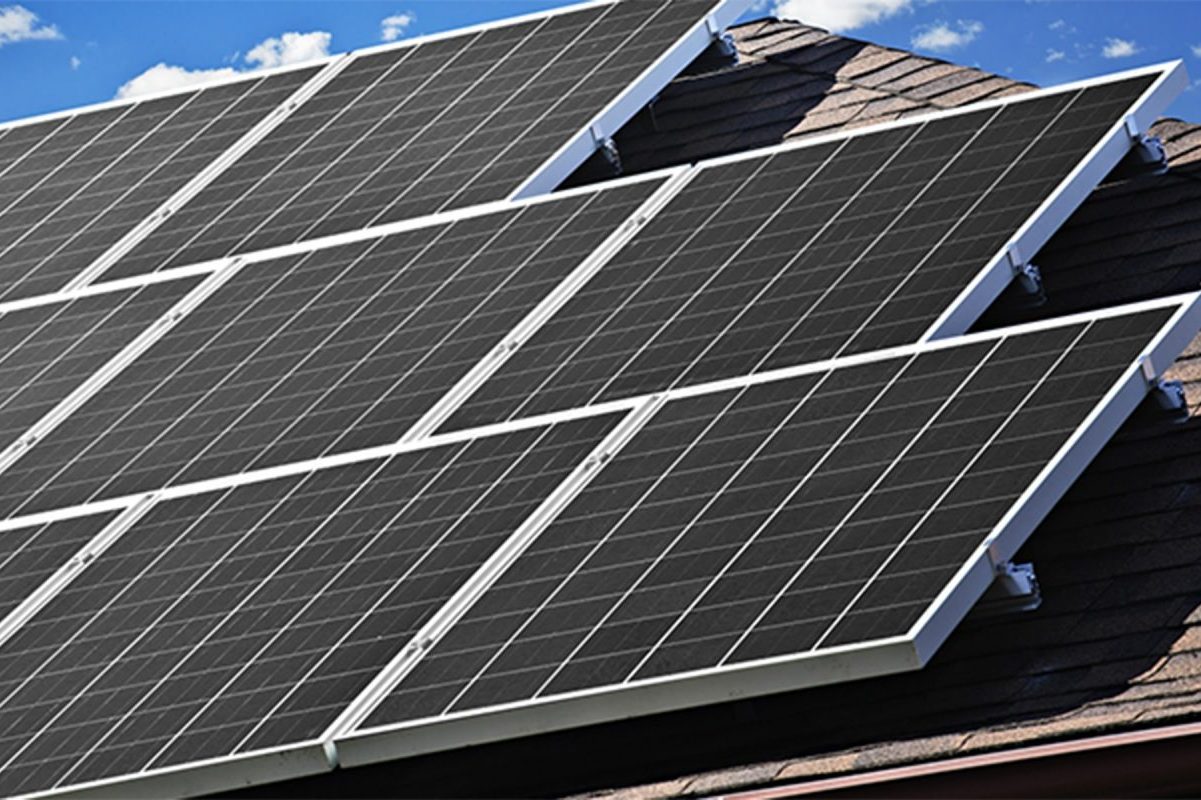
Good news—if you’ve already invested in solar panels, adding dehumidification to your home is remarkably straightforward. Your existing system can power a standard electric dehumidifier just like any other appliance in your home. The beauty here is that you’re already generating clean energy, so you simply add the dehumidifier to your daily electrical load.
To maximize your savings, consider running your dehumidifier during peak sunlight hours when your panels produce the most power. This ensures you’re using your own electricity rather than drawing from the grid. Smart plugs or programmable timers make this effortless—set your dehumidifier to operate between 10 a.m. and 4 p.m., and you’re golden.
Many homeowners find their existing solar systems have extra capacity during sunny days, making this addition cost-free in terms of energy use. You’re essentially turning excess solar production into a more comfortable, healthier home environment without increasing your electricity bills.
Starting Fresh: Sizing Your System
Calculating your solar needs isn’t a one-size-fits-all process. A typical dehumidifier pulls between 300-700 watts, but your total system needs to account for all household electricity use. Start by checking your utility bills to understand your average daily consumption in kilowatt-hours. Then factor in your dehumidifier’s expected run time based on your humidity levels.
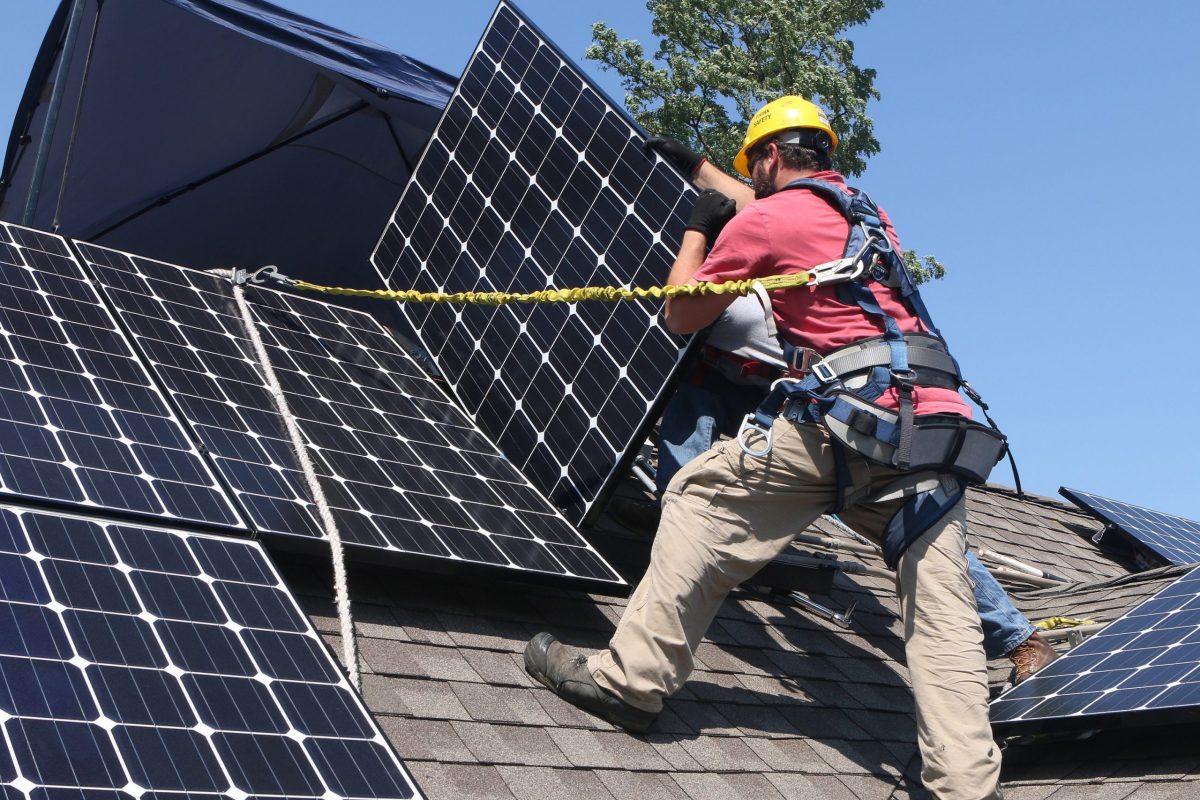
While online calculators provide ballpark estimates, professional assessment is worth the investment. A qualified solar installer will evaluate your roof’s orientation, shading patterns, and local weather data to design an optimized system. They’ll also account for seasonal variations, which matters especially in harsh coastal environments where humidity fluctuates dramatically.
Most homes running dehumidifiers alongside standard appliances need between 15-25 panels, though your specific requirements may differ. The good news? Sizing up slightly now means you’re prepared for future electric vehicle charging or other additions, maximizing your long-term savings and energy independence.
Battery Storage Makes It Work Around the Clock
Humidity doesn’t take breaks, and neither should your dehumidifier. This is where battery storage solutions become game-changers for solar dehumidification systems. During sunny days, your solar panels generate more power than your dehumidifier needs. That excess energy gets stored in batteries, keeping your system running through the night and cloudy periods when moisture problems often worsen. This is particularly important during storms when humidity spikes but solar production drops. With adequate battery backup, you maintain consistent moisture control without pulling from the grid during expensive peak hours. The result? True energy independence and round-the-clock protection from dampness, mold, and that musty smell that invades humid homes.
Busting Myths About Solar in Humid Climates
“Solar Panels Don’t Work in Cloudy, Rainy Weather”
Here’s a common concern: many homeowners worry that solar panels won’t power their dehumidifier during rainy weather, which is precisely when they need it most. The good news? This is largely a myth. While solar panels do produce less electricity on cloudy days, they still generate power—typically 10-25% of their normal capacity. Modern solar panels are surprisingly efficient even with diffused sunlight filtering through clouds.
The real game-changer is battery storage. By pairing your solar panels with a battery system, you store excess energy generated during sunny periods. This stored power keeps your dehumidifier running smoothly during storms and overcast stretches. Think of it as your energy savings account, ready when you need it. Many homeowners find their systems perform reliably year-round, maintaining comfortable humidity levels regardless of weather conditions. This means consistent moisture control and ongoing energy savings, even during your region’s wettest seasons.
“Humidity Will Damage Solar Equipment”
Good news for anyone worried about moisture damaging their investment: modern solar panels are built tough. Today’s equipment is specifically engineered to handle high humidity conditions, heavy rainfall, and even extreme weather conditions. Panels come with waterproof seals and corrosion-resistant frames, while inverters are designed with protective casings rated for outdoor use in all climates.
In fact, solar systems routinely perform well in some of the world’s wettest regions, from tropical areas to coastal zones with constant sea spray. The irony here is beautiful: the same equipment that withstands monsoons can power your dehumidifier to protect your home’s interior. Your panels are actually more resilient to humidity than many items inside your house. With proper installation and occasional cleaning, solar equipment typically lasts 25-30 years regardless of your local moisture levels, making it a reliable long-term solution for humid environments.
Living in a humid, monsoon-prone area doesn’t mean you have to accept sticky air, musty smells, and sky-high electricity bills. Solar dehumidification offers a proven path to transform your home from uncomfortable and expensive to comfortable and energy-efficient. By harnessing free sunshine to power your moisture control, you’ll enjoy healthier indoor air quality while watching your energy costs drop month after month.
The beauty of solar dehumidification lies in its simplicity: nature’s problem meets nature’s solution. Your home can operate efficiently even during the wettest seasons, all while reducing your environmental footprint and increasing your property value.
Ready to discover how solar technology can solve your specific humidity challenges? Residential Solar Panels specializes in assessing homes just like yours and designing custom solutions that address your unique moisture concerns. Let’s work together to create the dry, comfortable, cost-effective home you deserve.